First Orion cuts QA cycles 25% with Amazon Nova Act agents
Branded communications firm replaces brittle Selenium scripts with natural-language test automation that survives UI changes.
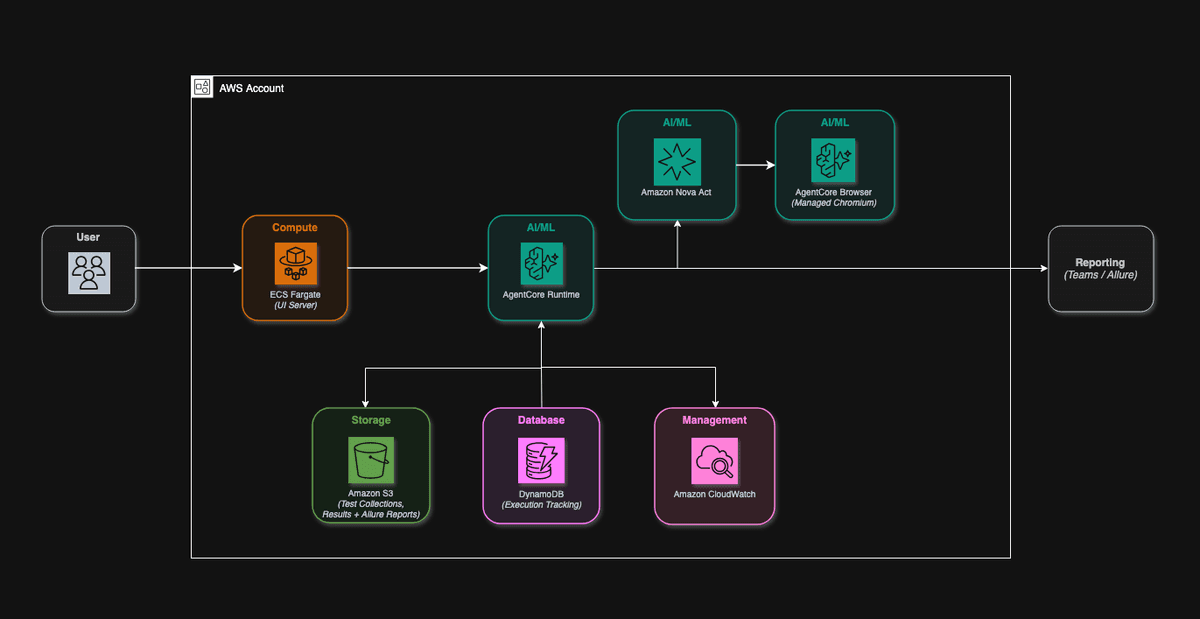
First Orion, a branded communications company serving hundreds of millions of phone calls across major US and international carriers, has cut quality assurance cycle times by up to 25 percent after replacing traditional test automation with Amazon Nova Act, AWS's AI-powered browser agent.
The Little Rock-based firm—which provides branded calling and messaging solutions for T-Mobile, Verizon, AT&T, Vodafone, and Deutsche Telekom—faced a common scaling problem: engineering teams were shipping features faster than QA could test them. The company's shift from a monolithic web portal to decentralized, product-specific applications multiplied the testing surface just as expansion into the SMB market increased the range of devices and browsers to validate.
Why it matters
Selector-based test frameworks like Selenium and Playwright require engineers to write and maintain explicit code that breaks whenever UI elements change. That creates a dependency bottleneck: QA automation engineers can't write tests until features are deployed to test environments, and those tests require constant maintenance as CSS classes and DOM structures evolve. First Orion's experience shows how reasoning agents can collapse that cycle by understanding interfaces the way humans do—through labels, layout, and context rather than fragile element IDs.
The bottleneck
First Orion's QA team includes analysts who define test cases and automation engineers who translate those cases into executable scripts. Three problems compounded as the application portfolio grew. Regression tests carried heavy dependencies that made them difficult for developers to run on demand. New features created a test-case gap because automation engineers needed deployed code to identify selectors. And the scripts themselves were brittle—element IDs and classes changed faster than engineers could update them, forcing releases to slip.
Adding headcount helped at the margins but didn't address the root cause: the frameworks required describing how to navigate a UI in code rather than what to test in plain language.
Natural language replaces selectors
Amazon Nova Act, which First Orion adopted as a pre-release partner in March 2025, accepts instructions like "Log into the portal, navigate to billing, and verify the invoice total." The model reasons about the current UI state, identifies elements autonomously, and executes multi-step sequences without requiring explicit selectors. When a button's CSS class changes between sprints, a Nova Act instruction to "click the Submit button" continues to work because the agent interprets what it sees on screen.
First Orion built an end-to-end system around the Nova Act SDK. QA analysts author test cases in plain English through a React frontend. Test collections stored in Amazon S3 feed a Python runner on Amazon ECS with Fargate that orchestrates execution through the SDK. AWS Bedrock AgentCore Browser provisions managed browser instances and handles session recording. Results flow into an Allure dashboard with Microsoft Teams integration, and session recordings link directly into reports for debugging.
The turnaround from test case definition to automated run dropped from days to minutes for supported scenarios. QA analysts can now author tests directly without waiting for automation engineers to translate requirements into code.
Results
First Orion estimates it has freed 25 to 30 percent of engineering time previously consumed by QA support, redirecting that capacity to feature development. Test coverage increased by upwards of 15 percent in some application modules because automated runs execute against every build without waiting for manual QA availability, catching regressions earlier in the development cycle.
One early challenge was navigation consistency—the agent initially reached target states by different paths given identical preconditions. Tuning parameters exposed through the SDK improved behavioral predictability. Another learning: AI agents don't inherit institutional knowledge. Unspoken preconditions and business rules must be explicitly provided in prompts.
What's next
First Orion plans to use the Kiro IDE and Model Context Protocol servers to automatically generate test cases from code changes and requirements documents. The company also intends to analyze how Nova Act navigates their sites to identify UX friction points, feeding insights to web design and marketing teams.
"This isn't just a tool. It's a competitive edge," said Mark Himelfarb, First Orion's CTO. "Tasks that took hours now take minutes, so we keep standards high while we scale."
These details were first reported in a joint post by AWS and First Orion on the AWS Machine Learning Blog.
This is an original analysis by the Omega editorial team. Source reporting: Automation Watch.
Want systems like this working for your business?
Book a Call
