Ex-Meta Scientists Launch Visual AI for Factory Robots
Perceptron's Isaac 0.5 model helps machines perceive and navigate industrial environments without task-specific programming.
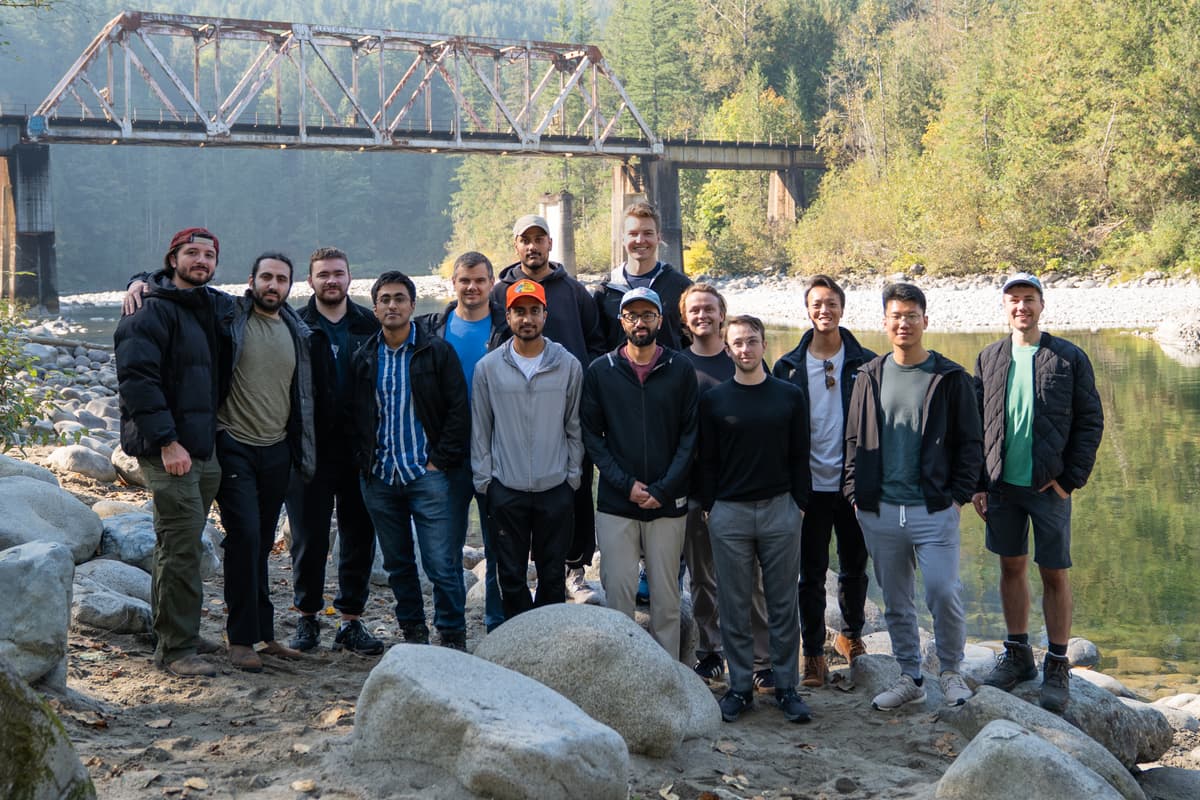
Two former Meta research scientists have launched a startup aimed at bringing advanced visual AI capabilities to industrial robotics, addressing a gap between general-purpose foundation models and narrow, task-specific automation tools.
Perceptron, founded in November 2024 by Armen Aghajanyan and Akshat Shrivastava, this week released Isaac 0.5, a vision model designed to help robots perceive, reason, and act in complex physical environments like warehouses and factory floors. The company is releasing the model as open-weight, making its parameters and training materials publicly accessible.
Breaking the generalist-specialist tradeoff
The core innovation addresses what the founders describe as a "false choice" in physical AI: either deploy resource-intensive general models requiring multiple cloud GPUs per instance, or use narrow models that handle perception or control separately but never both.
Isaac 0.5 takes a different approach by offering flexibility across varying environments and situations. Shrivastava illustrated the challenge with a deceptively simple example: sorting packages. A robot must read labels, perform spatial analysis, determine which box to pick, and plan the sequence for multiple items — tasks that currently require separate specialized systems.
Training on a million hours of video
The model learned its operational capabilities by processing massive video datasets. Perceptron fed Isaac 0.5 one million hours of general video to teach pattern recognition across settings and scenarios. The training also incorporated "ego video" — footage captured from first-person perspectives using GoPros or wearable cameras showing humans completing physical tasks — plus UMI video demonstrating repetitive human movements.
While Perceptron hasn't disclosed specific data sources, Shrivastava confirmed the company built "petabyte-scale data sets that span across modalities, whether it's images, text, video, etc. all the way through robotic trajectories."
Why it matters
Industrial automation has long relied on rigid, pre-programmed systems that struggle when conditions deviate from expectations. A truly flexible vision system that can generalize across tasks could dramatically reduce the engineering overhead required to deploy robots in new settings. For logistics companies managing increasingly complex fulfillment operations, or manufacturers seeking to automate varied production lines, software that adapts rather than requires reprogramming represents a meaningful operational advantage.
Market positioning and funding
The startup recently secured $21 million in funding led by Bessemer Venture Partners. Perceptron is targeting multiple sectors including manufacturing, logistics and warehousing, security, mobility, and media and entertainment.
Both founders previously worked at Meta's Fundamental AI Research (FAIR) division before launching Perceptron. According to Aghajanyan, "Nothing like this really exists out there."
These details were first reported by TechCrunch.
This is an original analysis by the Omega editorial team. Source reporting: AI Watch.
Want systems like this working for your business?
Book a Call
