China Deploys 2 Million Factory Robots as Workforce Ages
The country now manufactures over half the world's industrial robots while training workers to operate alongside automation.
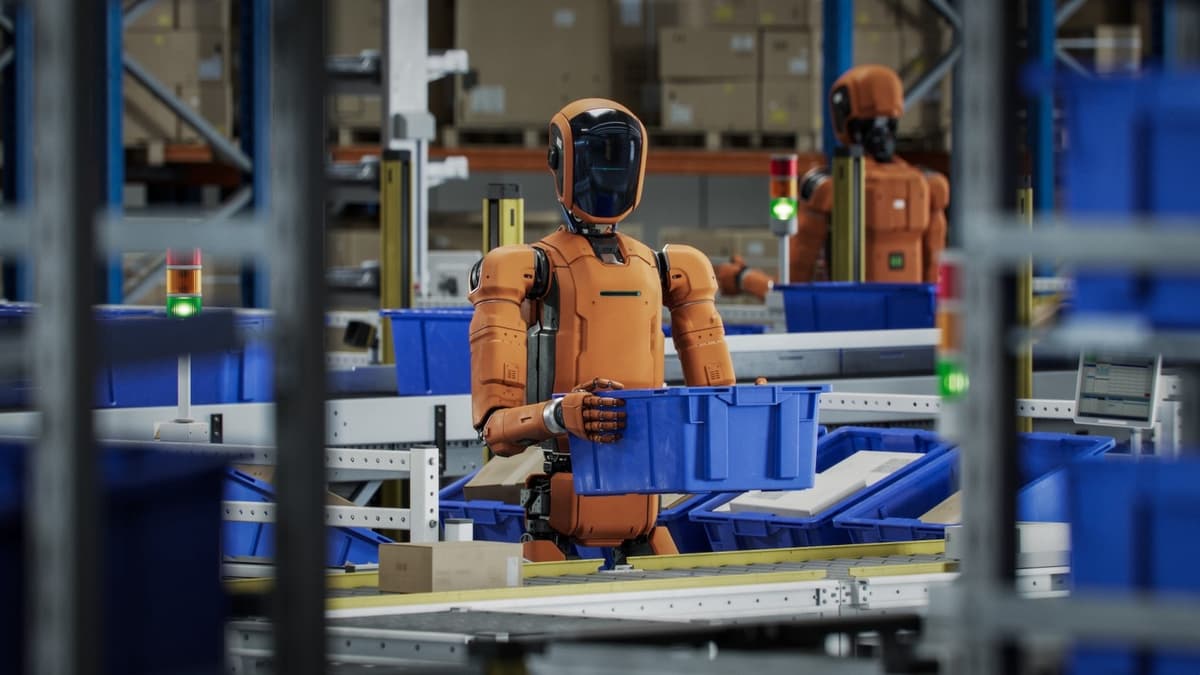
China leads global factory automation push
China has installed more than two million robots across its manufacturing facilities, the largest deployment of any nation, while simultaneously producing over half of the world's industrial robots. The expansion reflects a national strategy to maintain manufacturing dominance as the country confronts significant demographic pressures.
President Xi Jinping has committed approximately $20 billion toward making China a leader in automation and innovation, according to BBC News, which first reported these details. That investment is flowing into both production capacity and workforce development, with institutions like the Hangzhou Technician Institute now teaching students coding, robotics, and specialized skills such as robotic medical instrument development.
Why it matters
China's automation surge isn't just about efficiency—it's a response to looming labor shortages. Official projections indicate people over 60 could represent more than one-third of the population by 2035, while the country may lose nearly 60 million people over the next decade. How China balances productivity gains against job displacement for its 120 million manufacturing workers will offer lessons for other nations facing similar demographic transitions.
Robots handle repetitive and hazardous work
Manufacturers are deploying robots for welding, lifting, scanning, painting, and assembly tasks across sectors including electric vehicles and wind turbine production. At Chengdu-based CRP Technology, robotic arms are being customized to handle more than 90% of repetitive tasks in automotive, electronics, and renewable energy manufacturing.
The automation delivers tangible benefits: robots can perform dangerous work that would otherwise strain human workers, increase production speed, and potentially lower costs for products like EVs—making cleaner transportation more accessible while reducing emissions.
Yet concerns about job displacement are mounting. "If you are not needed by the world of AI and robotics, then you'll definitely be among those eliminated," Chen Tianyu, a 28-year-old AI and robotics instructor, told BBC News.
Training and hybrid approaches emerge
China is pursuing a dual strategy: expanding automation while preparing workers to operate alongside it. Vocational schools are broadening technical curricula, with some students receiving job offers before graduation. Companies are implementing hybrid models rather than wholesale worker replacement.
At electric vehicle manufacturer Leapmotor, robots assist with assembly while human workers conduct final quality and safety inspections. This approach preserves human oversight while capturing automation's efficiency gains.
China's manufacturing infrastructure provides a structural advantage. Dr. Susanne Bieller, general secretary of the International Federation of Robotics, told BBC News that in Shenzhen, "there's an entire ecosystem. It takes you less than one hour to source the components you need to make a robot."
The rapid pace of change demands constant adaptation. "Technology is changing so fast," Chen said. "But we can't just stand still and sleep here. We have to move forward to see what we are capable of doing."
These details were first reported by BBC News.
This is an original analysis by the Omega editorial team. Source reporting: Automation Watch.
Want systems like this working for your business?
Book a Call
