China Cuts 12,000 University Degrees in Push for AI Skills
More than 30% of undergraduate programs restructured as Beijing prioritizes tech education over arts and humanities.
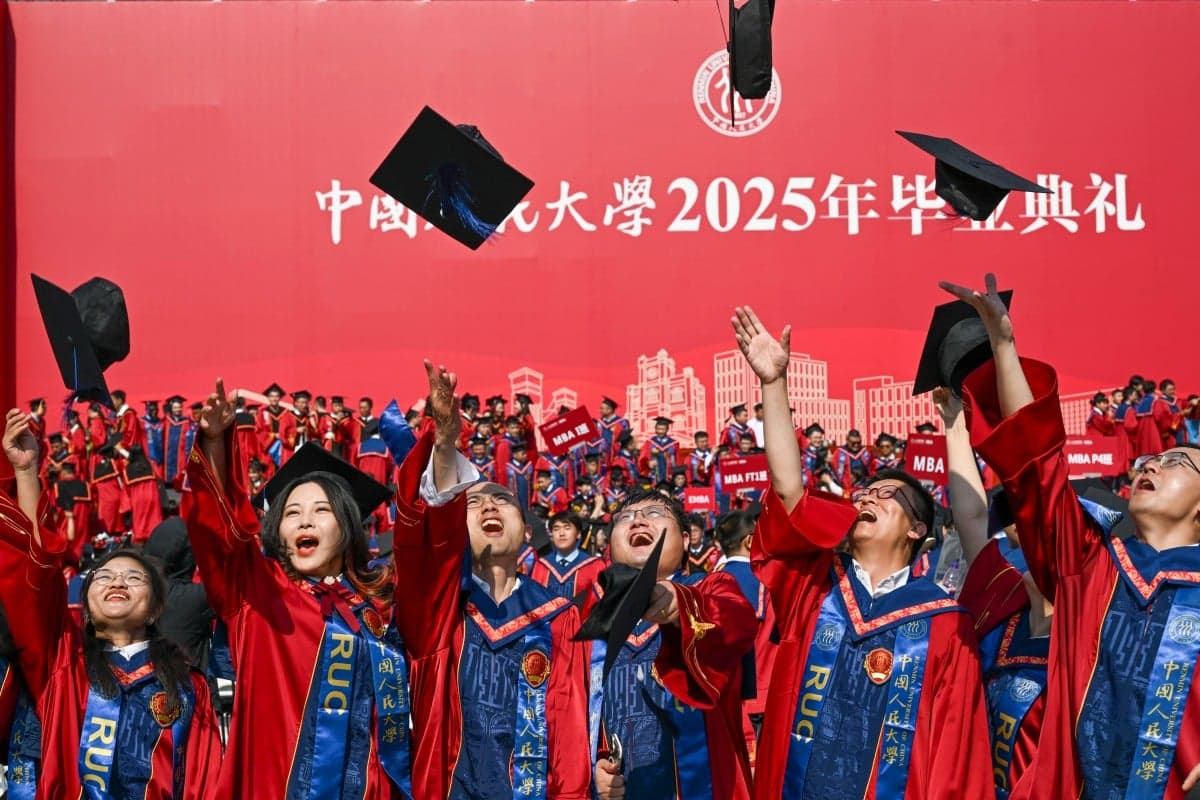
China Restructures Higher Education at Unprecedented Scale
China's universities have eliminated 12,200 undergraduate degree programs between 2021 and 2025 while introducing 10,200 new ones, according to Ministry of Education data reported by Xinhua. The restructuring affects more than 30% of all degree programs nationwide, representing one of the most dramatic overhauls of higher education in recent memory.
The cuts concentrate heavily in arts, humanities, foreign languages, and management disciplines. These fields face designation as outdated or oversaturated in a labor market where youth unemployment exceeds 16% and artificial intelligence rapidly transforms job requirements.
New Programs Align with National Tech Priorities
The replacement programs reflect Beijing's economic development strategy. Nine universities have launched majors in embodied intelligence, a field focused on integrating next-generation AI systems into physical applications and the broader economy. This curriculum shift directly supports China's stated goal of achieving global leadership in high-tech "future industries."
The timing connects to both strategic ambition and immediate crisis. Record numbers of university graduates now enter a job market where traditional degrees provide diminishing employment advantages. Universities face mounting pressure to demonstrate that their programs prepare students for actual career opportunities rather than contributing to the graduate unemployment problem.
Why it matters
This restructuring reveals how China's government uses educational policy as an economic planning tool, directly steering human capital development toward national priorities. The scale—affecting nearly one-third of all programs—demonstrates both the urgency Beijing assigns to its technology ambitions and the severity of its youth employment crisis. For multinational companies operating in China, this shift signals a coming wave of graduates trained specifically for AI implementation roles, potentially accelerating the technology's deployment across Chinese industries while creating a growing skills gap in traditional business functions.
Implications for the Workforce
The elimination of thousands of arts and humanities programs while expanding technical curricula fundamentally reshapes what skills Chinese graduates will bring to the workforce. Companies recruiting in China should anticipate a talent pool increasingly concentrated in technology disciplines, with corresponding scarcity in areas like foreign language expertise and traditional management training.
The Ministry of Education's data, as reported by Xinhua, shows this transformation happening at remarkable speed—a four-year window to restructure nearly a third of all undergraduate offerings. This pace suggests universities received clear directives rather than making gradual, market-driven adjustments.
The details were first reported by the South China Morning Post, citing Ministry of Education data published by Xinhua.
This is an original analysis by the Omega editorial team. Source reporting: AI Watch.
Want systems like this working for your business?
Book a Call
