Palantir CEO: Don't Follow Europe's AI Regulation Playbook
Alex Karp warns against heavy-handed rules while urging the Trump administration to keep open-weight models legal.
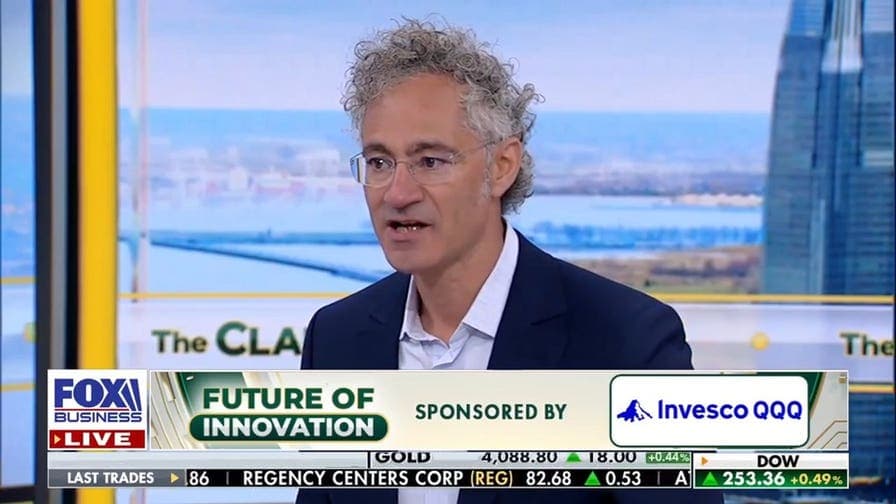
Palantir CEO Alex Karp is pushing back against calls for strict artificial intelligence regulation in the United States, pointing to Europe as an example of what not to do while the Trump administration considers its approach to emerging AI technology.
In an interview with Fox Business, Karp argued that European regulatory frameworks have stifled innovation and created businesses that survive only because protective rules shield them from real competition. "We have a template for what doesn't work. It's called Europe," he said, noting that Palantir's business is thriving in America while European markets present significant challenges.
The open-weight model debate
Karp's comments arrive as Palantir formally urges the Trump administration not to ban open-weight AI models—systems whose underlying parameters are publicly accessible. Treasury Secretary Scott Bessent has raised concerns that Chinese developers could exploit open models built with U.S. laboratory technology, but Karp maintains these architectures deliver superior results for many enterprise customers.
According to Karp, open-weight models sometimes outperform proprietary frontier systems for Palantir's client base. He emphasized that customer choice should drive adoption decisions, not blanket prohibitions based on national security fears alone.
Customer value over token economics
A recurring theme in Karp's remarks was customer frustration with current AI pricing models. He introduced the term "token maxed" to describe clients who feel they're paying for computational tokens without receiving proportional business value. This disconnect, he argued, poses a bigger threat to AI adoption than foreign competition.
"What slows down AI adoption in this country is people are saying, 'But I can't use these products because I'm not getting value… or I'm transferring the value of my business to someone else,'" Karp explained. Enterprises want assurance that AI investments will generate returns and that their proprietary data won't become someone else's competitive advantage.
Finding the regulatory middle ground
Karp rejected both extremes in the regulation debate. Heavy-handed European-style rules clearly fail, he said, but complete deregulation isn't viable either. The challenge is crafting policy that addresses genuine risks—particularly in the context of intensifying competition with China—without crushing the innovation that gives U.S. companies their edge.
"There's only one country in the world that could get it right or really get it wrong, and that's us," Karp said. He stressed that the complexity of AI governance demands regulators who understand the technology deeply and keep competitive outcomes front and center.
Why it matters
The debate over open-weight AI models will shape which companies can build competitive products and how quickly enterprises adopt AI at scale. If the U.S. follows Europe's path of preemptive restriction, American firms risk ceding leadership to less-regulated competitors. But if policymakers ignore legitimate security concerns around technology transfer to adversaries, they could enable strategic vulnerabilities. Karp's position—that customer value and competitive advantage should guide policy—reflects the tension between innovation velocity and national security that will define AI governance for years.
Palantir recently relocated its headquarters from Denver to Miami, joining other corporations drawn to Florida's tax environment. The details were first reported by Fox Business.
This is an original analysis by the Omega editorial team. Source reporting: AI Watch.
Want systems like this working for your business?
Book a Call
