Caterpillar Scales Autonomous Mining AI to Construction Sites
The equipment maker is deploying voice-activated repair tools and AI agents across its business after proving the technology in hazardous mining operations.
From Mining Haul Trucks to Construction Jobsites
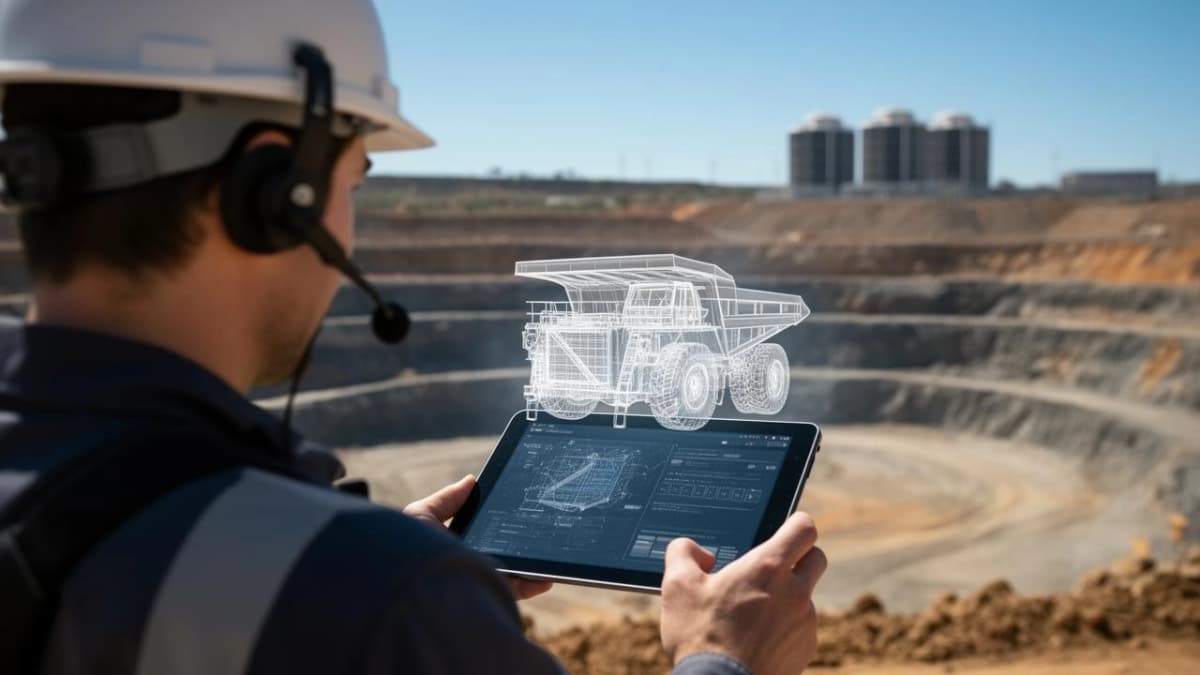
Caterpillar is bringing artificial intelligence capabilities developed for autonomous mining operations into construction and quarry environments, marking a strategic shift for the industrial equipment manufacturer. The company spent years perfecting self-driving haul trucks and automated drilling systems in mines where labor shortages and safety risks created urgent business cases for automation.
Chief Technology Officer Jaime Mineart told attendees at the Ai4 conference in Las Vegas that the company is now applying those lessons to "much more dynamic environments" including construction sites and quarries, according to Automation Watch.
Voice Assistants and Code Modernization
One concrete application is the Cat AI Assistant, which allows field technicians to use voice commands while standing beside equipment to access repair procedures, troubleshoot problems, and identify parts. The tool is already in use by customers and operators, drawing on data from approximately 1.6 million connected assets and more than 16 petabytes of structured information.
Beyond the field, Caterpillar is deploying AI for site scanning, digital twins that analyze manufacturing operations, and internal software development. AI agents are helping the company update legacy code, generate and test new programs, and identify defects earlier in the development cycle.
The Integration Challenge
Mineart emphasized that technical capability alone doesn't guarantee adoption. "The hard part about autonomy and about physical AI is incorporating that technology into the customer jobsite and into the workflows," she said.
Caterpillar addresses this by involving veteran operators in training its AI systems, capturing decades of institutional knowledge. As machines gain autonomy, some operators are transitioning from controlling individual vehicles to supervising multiple units from remote command centers.
The company is committing $100 million over five years to train its 118,000 employees in AI, autonomy, and robotics.
Why it matters
Caterpillar's approach illustrates a fundamental difference between deploying AI in software versus physical operations. Industrial companies can't simply bolt AI onto existing processes—they must redesign workflows and retrain workforces at scale. The company's heavy investment in worker education and its strategy of starting in controlled mining environments before expanding to less predictable construction sites offers a blueprint for manufacturers attempting similar transformations.
Revenue Impact Already Visible
The AI infrastructure boom is already affecting Caterpillar's bottom line. The company reported record quarterly sales of $20.5 billion in the second quarter, driven partly by strong demand for power-generation equipment used in data centers. The power-generation division saw sales jump 72% to $3.10 billion.
CEO Joe Creed noted that demand for cloud computing and generative AI infrastructure remains robust, with no signs of deceleration.
These details were first reported by Automation Watch.
This is an original analysis by the Omega editorial team. Source reporting: Automation Watch.
Want systems like this working for your business?
Book a Call