Cara Uses Amazon Bedrock to Automate Insurance Brokerage Workflows
The AI startup saves agents 10 hours per week by applying domain-specific LLMs to back-office tasks in the $8 trillion insurance sector.
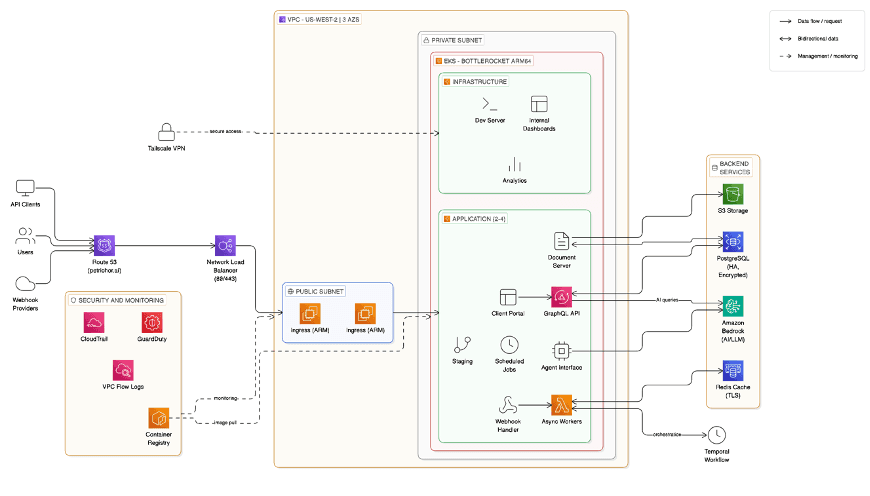
Insurance brokerages face a persistent challenge: agents spend hours on repetitive back-office tasks while the industry struggles with a talent shortage. Cara, an AI startup founded by veterans of the insurance technology space, has built a domain-specific solution on AWS infrastructure that automates these workflows while meeting the sector's strict security and compliance requirements.
According to details first reported by AWS, Cara's platform saves insurance professionals approximately 10 hours per week through automated application processing, policy analysis, and data synchronization across systems.
Why it matters
Generic AI tools fail in insurance because they lack understanding of carrier-specific requirements, regulatory constraints, and the sensitive data handling needed for personally identifiable information and underwriting details. Domain-specific AI that integrates directly with existing agency management systems can deliver measurable productivity gains without forcing brokerages to replace their technology stacks.
Technical architecture on AWS
Cara runs on Amazon Elastic Kubernetes Service for container orchestration across multiple availability zones. The platform uses isolated Kubernetes namespaces for each tenant, providing the data separation required by enterprise insurance organizations.
For AI capabilities, Cara relies on Amazon Bedrock's managed API to access foundation models without operating GPU infrastructure. The company applies these models to four core use cases: comparing carrier quotes and identifying coverage gaps, auto-filling ACORD forms and supplemental applications, generating client-ready proposals and renewal documents, and surfacing agency-specific guidelines and historical placement data during decision workflows.
Each brokerage receives an account-specific deployment with dedicated secure workspaces. The architecture includes encryption at rest and in transit, integration with AWS Identity and Access Management, and multi-AZ deployment with automated failover.
Deployment speed and scale
Cara's parameterized EKS templates enable enterprise brokerages to onboard within hours rather than weeks. Custom workflows can go live within days of initial deployment. In production, the platform supports thousands of concurrent users per brokerage, with Kubernetes Horizontal Pod Autoscaler adjusting capacity during peak renewal and servicing periods.
The company integrates with leading agency management systems and CRM tools, syncing accounts, policies, and documents to eliminate duplicate data entry. This design allows AI-driven workflows to operate within brokerages' existing technology environments.
Founder background and traction
Cara's founding team—Vic Yeh, Nikhil Kansal, and Jon Patel—previously built and sold a digital insurance brokerage to The McGowan Companies. During that experience, they developed an internal AI copilot using large language models that reduced turnaround times and improved data accuracy. That internal tool became the foundation for Cara's standalone product.
The platform is now used by hundreds of insurance agencies and brokerages. Yeh stated the company's goal is to help insurance professionals "return to the core of our industry: the relationships" by automating administrative burden.
These details were reported in a case study published on the AWS Machine Learning Blog.
This is an original analysis by the Omega editorial team. Source reporting: AI Watch.
Want systems like this working for your business?
Book a Call