GitHub Code Quality Exits Preview with AI-Driven Maintainability Checks
The new service combines static analysis with Copilot Autofix to flag reliability issues and suggest changes before merge, priced at $10 per active committer monthly.
GitHub launches Code Quality for Enterprise Cloud and Team plans
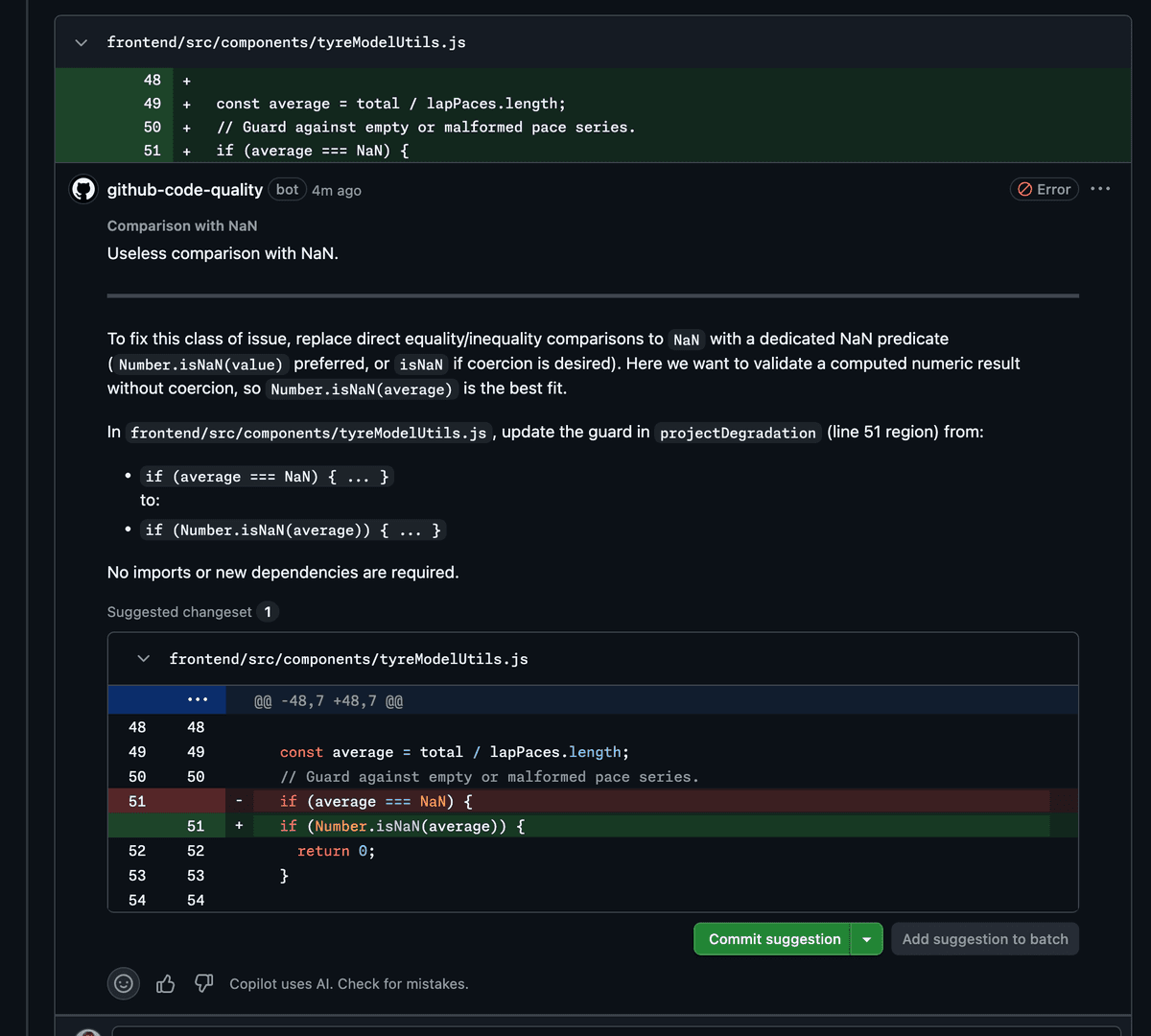
GitHub has moved its Code Quality service to general availability after a public preview that began in October 2025. The offering targets maintainability and reliability concerns in codebases by pairing CodeQL static analysis with AI-generated fix suggestions through Copilot Autofix.
According to GitHub's announcement, more than 10,000 enterprises tested the product during preview. The general availability release introduces organization-wide enablement, dashboards displaying maintainability and reliability scores, test coverage metrics, and rulesets that can enforce quality gates.
The service operates at two points in the development workflow. During pull request review, CodeQL surfaces quality findings in context and shows whether a change affects test coverage. On the default branch, it identifies existing technical debt across repositories. Teams can configure rulesets to block merges that fail to meet coverage or other thresholds, with an evaluate mode designed to support gradual adoption.
Why it matters
AI coding assistants are accelerating code production, but they shift rather than eliminate the burden of evaluating design quality and long-term maintainability. Code Quality adds a control layer for organizations using AI to increase output, addressing maintainability and reliability alongside the security checks CodeQL already provides. GitHub reports that 67.3 percent of findings raised by the tool in its own engineering organization are resolved before merge—though the company presents this as an early indicator rather than a guaranteed outcome.
Pricing and platform availability
Code Quality is a separate paid product, not included in GitHub Advanced Security. The base price is $10 per active committer per month, with an active committer counted once per organization when they push to an enabled repository within 90 days. AI-assisted detection and Copilot Autofix carry usage-based charges, while deterministic CodeQL scans consume GitHub Actions compute on either GitHub-hosted or self-hosted runners.
The service is available on GitHub Enterprise Cloud and GitHub Team, but not on GitHub Enterprise Server at launch. Organizations that used Code Quality during preview should review their configurations, as existing setups will continue to run and incur charges under current agreements.
Competitive landscape
GitHub is not alone in applying AI to code review. GitLab offers Duo Code Review, which examines merge requests using repository, pipeline, security, and compliance context to generate inline feedback. In March 2026, GitLab announced flat pricing of $0.25 per agentic review, making cost independent of change size. The feature is available across GitLab.com, Dedicated, and supported self-managed installations.
Atlassian takes a different approach with Rovo Dev, which reviews pull requests in Bitbucket and GitHub while checking quality, security, and performance against Jira acceptance criteria and project context. Atlassian reports that its internal use of Rovo Dev Code Reviewer reduced pull request cycle time by 30.8 percent, though this result comes from the company's own engineering environment.
A Reddit discussion following the announcement focused on access restrictions and cost structure, with users questioning whether organization-wide visibility and automated fixes justify another per-user platform charge based on committers rather than reviewers.
These details were first reported by InfoQ.
This is an original analysis by the Omega editorial team. Source reporting: AI Watch.
Want systems like this working for your business?
Book a Call