BNSF Automation Failure Nearly Sent Train Into Track Worker
Teamsters demand independent safety review after railroad's dispatch system routed hazmat train toward occupied track in Washington state.
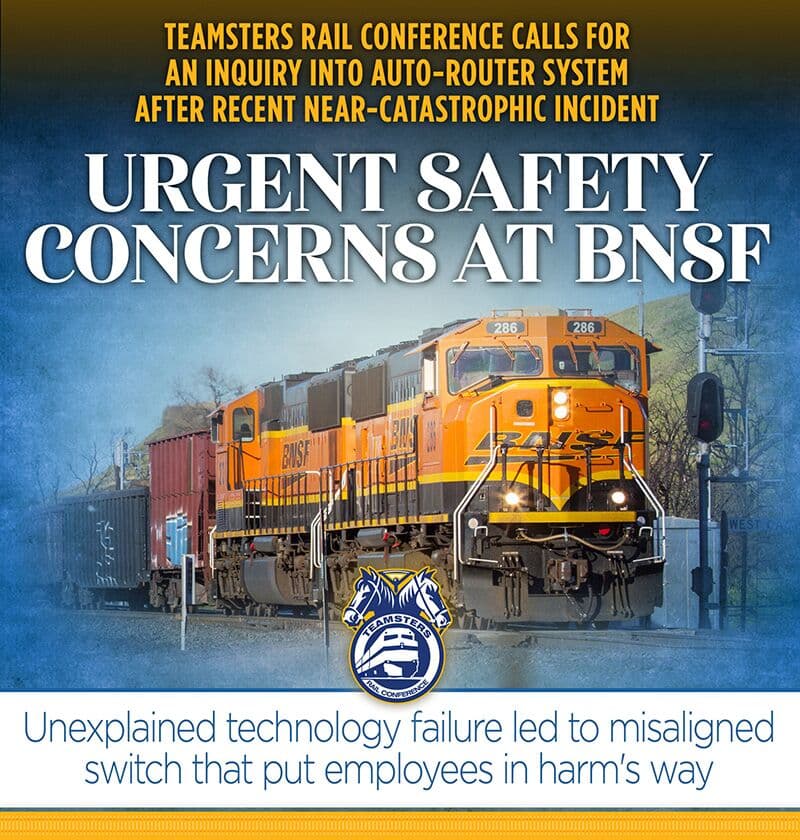
Automation malfunction averted disaster on BNSF tracks
A BNSF Railway automated dispatch system failed in June, routing a train carrying hazardous materials directly toward track where a maintenance inspector was working under active authority. Only a human dispatcher's intervention prevented what union leaders describe as a near-catastrophic collision in Connell, Washington.
The incident has prompted the Teamsters Rail Conference to demand an independent technical review before BNSF returns its Movement Planner Auto-Router system to full operation. According to details first reported by the Brotherhood of Locomotive Engineers and Trainmen, the railroad has confirmed the failure occurred but cannot reproduce the conditions that caused it.
What happened on June 16
BNSF's Auto-Router and Train Management Dispatch System (TMDS) improperly aligned a hazmat train into a siding where a Brotherhood of Maintenance of Way Employes Division track inspector held track-and-time authority — the formal protection that guarantees workers exclusive use of a section of track. The automated systems should have prevented this routing conflict entirely.
A train dispatcher noticed the error and corrected it manually. The automation did not self-correct or alert anyone to the problem.
Union demands third-party investigation
In an August 12 letter to BNSF's Vice President of Labor Relations, BLET National President Mark Wallace and BMWED President Tony Cardwell called for the railroad to hire an independent engineer or technical firm with no financial stake in the system to conduct a complete review, determine root cause, and recommend corrective actions.
During a July 30 meeting, BNSF managers indicated they planned to return Auto-Router to service despite the Rail Conference's objections about system reliability and the lack of definitive corrective measures.
"The Teamsters Rail Conference is not opposed to the use of technology in railroad operations," Wallace and Cardwell wrote. "We are opposed to placing employees in harm's way when the reliability of that technology has been called into serious question and the cause of its failure has not been adequately established."
Why it matters
This incident exposes a critical gap in railroad automation safety protocols: when software fails in ways engineers cannot replicate, railroads face difficult decisions about whether to trust systems that control life-or-death routing decisions. The inability to reproduce the failure means BNSF cannot definitively prove it won't happen again — a significant risk when automated systems override the human judgment that prevented disaster in this case. As freight railroads accelerate automation adoption to reduce labor costs, the Connell incident demonstrates that fail-safe mechanisms and independent oversight may be essential safeguards, not optional enhancements.
What's next
BMWED has advised members to exercise heightened caution when working under track authority. Both unions say they will continue monitoring Auto-Router and TMDS usage while pressing safety concerns with BNSF and other railroads.
The details of the incident and union response were first reported by the Brotherhood of Locomotive Engineers and Trainmen.
This is an original analysis by the Omega editorial team. Source reporting: Automation Watch.
Want systems like this working for your business?
Book a Call