BILL Holdings Taps JPMorgan Wallet for AI Automation Push
The fintech's white-label wallet integration aims to accelerate reconciliation and lay groundwork for AI products amid slowing core growth.
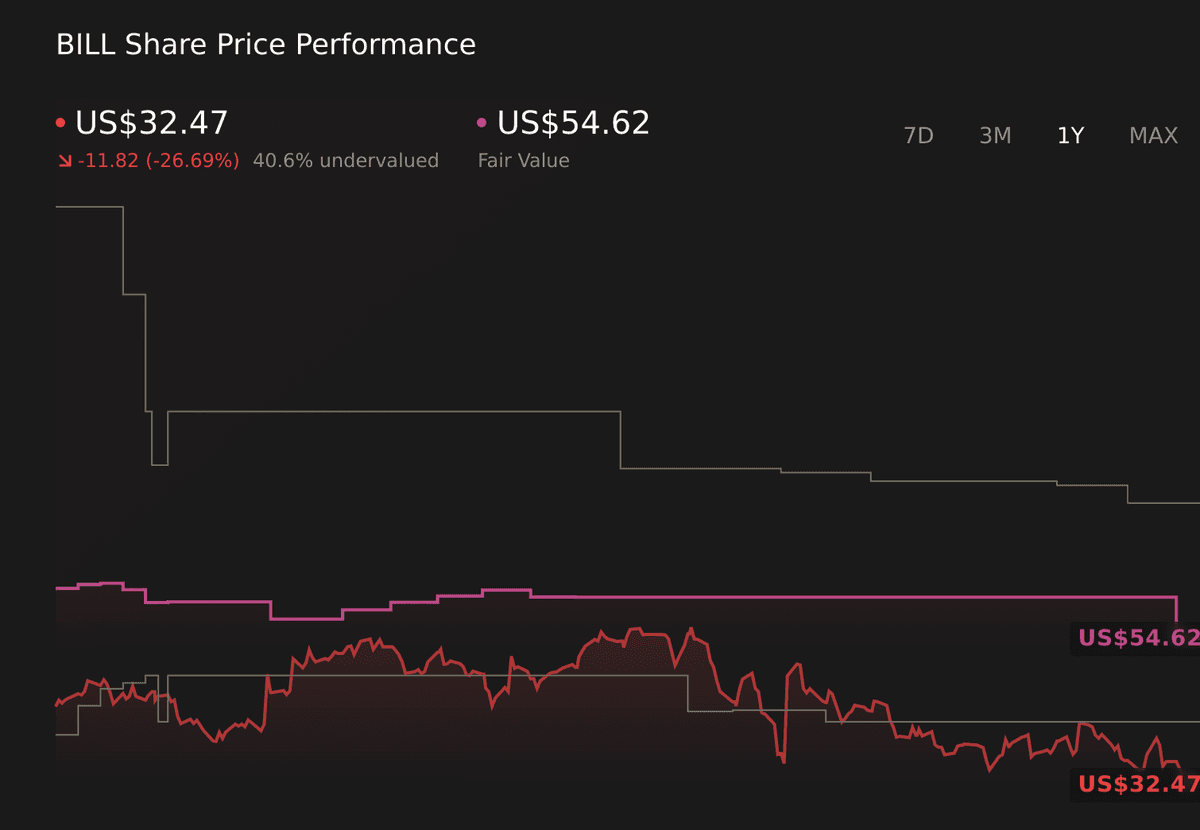
BILL builds payments infrastructure for AI layer
BILL Holdings has integrated JPMorgan Payments' white-label digital wallet to manage subledger client accounts and accelerate reconciliation for its corporate card offering. The wallet serves as foundational infrastructure for AI-driven automation products the company plans to roll out, according to details first reported by Simply Wall St.
The partnership arrives as BILL navigates a challenging operating environment marked by softer billings and slower sales momentum. The company is betting that technology integrations and improved operational efficiency can offset near-term headwinds in its core small and medium-sized business finance platform.
Why it matters
For BILL, the wallet integration represents a strategic shift toward extracting more value from each transaction through embedded payments and automation rather than relying solely on transaction volume growth. This approach becomes critical when SMB spending remains cautious and product-market fit for newer offerings takes time to establish. The infrastructure move signals how fintech companies are positioning AI capabilities not as standalone features but as layers built atop modernized payment rails.
Automation roadmap takes shape
The JPMorgan wallet deployment complements BILL's recent expansion of Supplier Payments Plus, another initiative focused on automation, reconciliation, and payment workflow improvements. Together, these moves reveal a company doubling down on back-office automation as cloud-based workflows become standard for small businesses.
BILL's investment thesis hinges on the premise that SMB finance platforms can compound value as AI automates more routine tasks. However, the company faces execution risk: analysts project BILL needs to achieve 17 percent annual revenue growth to reach $2.6 billion by 2029, while growing earnings from $163,000 today to $316.6 million—a substantial leap that assumes successful AI adoption and margin expansion.
Growth targets meet reality
Optimistic analyst forecasts had anticipated revenue approaching $2.6 billion and earnings around $343 million by 2029, banking on AI-driven margin gains. Those projections now face scrutiny given slowing core growth and the execution challenges highlighted by the need for foundational infrastructure work like the wallet integration.
The company's near-term catalyst depends on successfully ramping AI-powered automation features. Yet the wallet announcement underscores that BILL is still building the technical foundation required to deliver those capabilities at scale. Whether the company can refine product-market fit and pricing while maintaining momentum remains an open question for investors weighing the stock's long-term potential.
These details were first reported by Simply Wall St in their analysis of BILL Holdings' strategic direction.
This is an original analysis by the Omega editorial team. Source reporting: Automation Watch.
Want systems like this working for your business?
Book a Call