Analog Devices: Physical Intelligence Reshapes Factory Automation
ADI argues distributed sensing and edge compute will replace rigid industrial control hierarchies as AI and humanoid robotics drive semiconductor demand.
Distributed intelligence replaces centralized control
Analog Devices is making a direct case to industrial operators: the next generation of factory automation will not run on today's rigid, rules-based systems. Fiona Treacy, Managing Director of the Sustainable Automation Business Unit at ADI, outlined this argument in a presentation published July 8, 2026, on the company's Signals+ platform, connecting AI adoption and humanoid robotics development to practical implications for the semiconductor and industrial automation ecosystem.
The central concept is what ADI calls physical intelligence—systems that sense, reason, and act in dynamic environments through continuous real-time control loops, rather than executing pre-set instructions. This shift redefines what flexibility means on a production floor.
Industrial automation has historically operated through rigid hierarchies: a central controller issues instructions, machines execute them, and the loop closes slowly if at all. Treacy argues that AI is dismantling that architecture by pushing intelligence outward, toward distributed, time-aligned sensing and actuation at the machine level. The practical result is a factory floor where individual systems become more agile and responsive without waiting for central command.
Why it matters
This architectural shift has direct procurement implications. The intelligence embedded in a sensor or actuator module is increasingly as important as the mechanical specification. As manufacturers face pressure to run shorter, more varied production runs, factory architecture must accommodate faster reconfiguration. ADI positions the move to distributed embedded intelligence as a prerequisite for that kind of flexibility.
Humanoid robots as a development accelerator
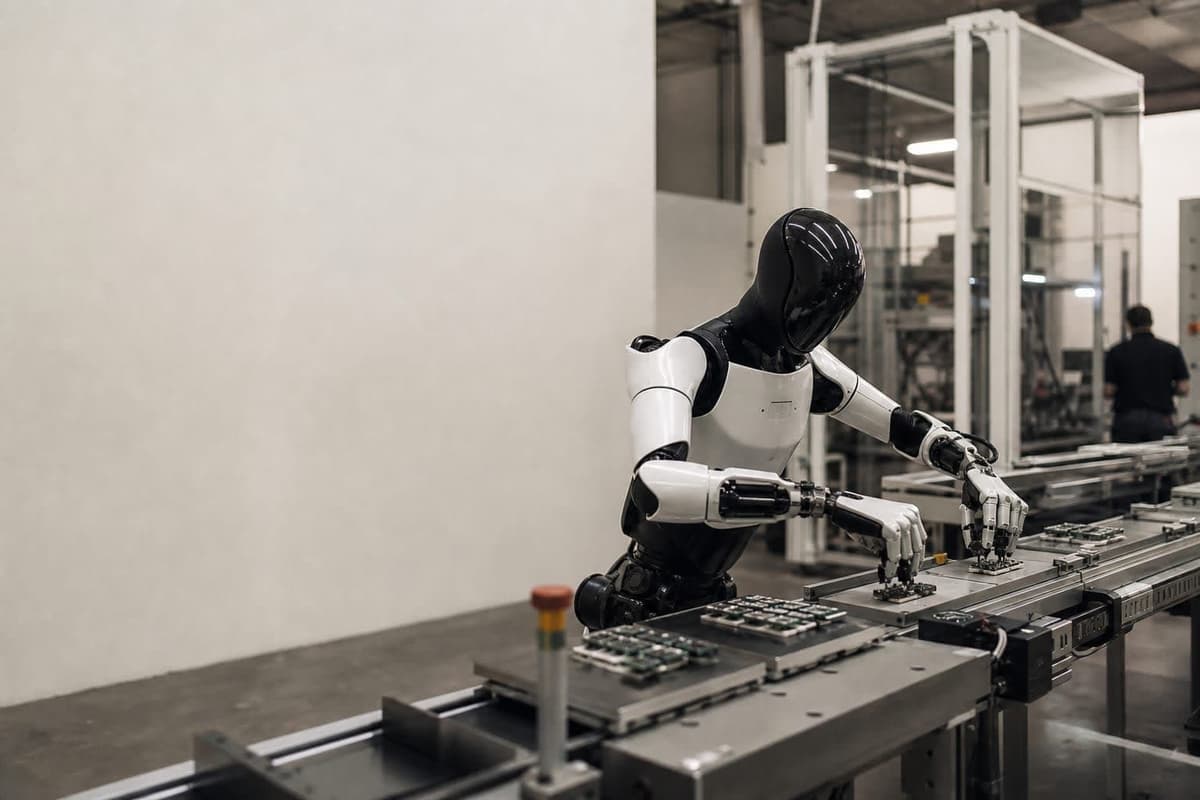
Treacy uses humanoid robots as a high-pressure lens on these challenges—not because humanoids are ready for widespread deployment, but because they compress automation's hardest problems into a single platform. A humanoid must integrate dense networks of sensors, actuators, and compute, all coordinated in real time, with hands sensitive enough for dexterous manipulation.
ADI's candid assessment is that current humanoids remain narrow: most operate on hard-coded logic and handle only simple, well-defined tasks. The breakthrough is not the machine's outward capability but the underlying architecture required to make it work at all. That architecture—distributed edge compute paired with high-resolution sensing—is the same foundation industrial automation needs to advance.
This matters to procurement and engineering teams because the technology investment in humanoid development is not confined to humanoids. The sensors, actuation systems, and edge processors being refined for bipedal robots are the same components that will define the next generation of collaborative robots and flexible production cells.
Infrastructure investment cascades
ADI's broader argument centers on the investment cascade that each robot deployment triggers. Treacy describes the real opportunity as extending well beyond the robot unit: every deployment drives capital spending on upgrading factory systems, digitizing operations, and adding intelligence across the full production environment.
For capital planning and supply-chain teams, that framing reframes what a robotics deployment actually costs and what it unlocks. A single humanoid or advanced collaborative robot line item becomes an entry point for a broader infrastructure refresh, with semiconductor content growing at each layer of the stack. ADI places semiconductors at the center of that dynamic, which aligns with the company's own product strategy across sensing, power, and connectivity for industrial applications.
The presentation was developed in conjunction with video content from the Global Semiconductor Alliance and was first reported by MarketScale.
This is an original analysis by the Omega editorial team. Source reporting: Automation Watch.
Want systems like this working for your business?
Book a Call