Air Force Tests AI for Predictive Maintenance, Still Seeking Scale
Service officials say most artificial intelligence sustainment efforts remain experimental as they work to identify applications that deliver meaningful operational value.
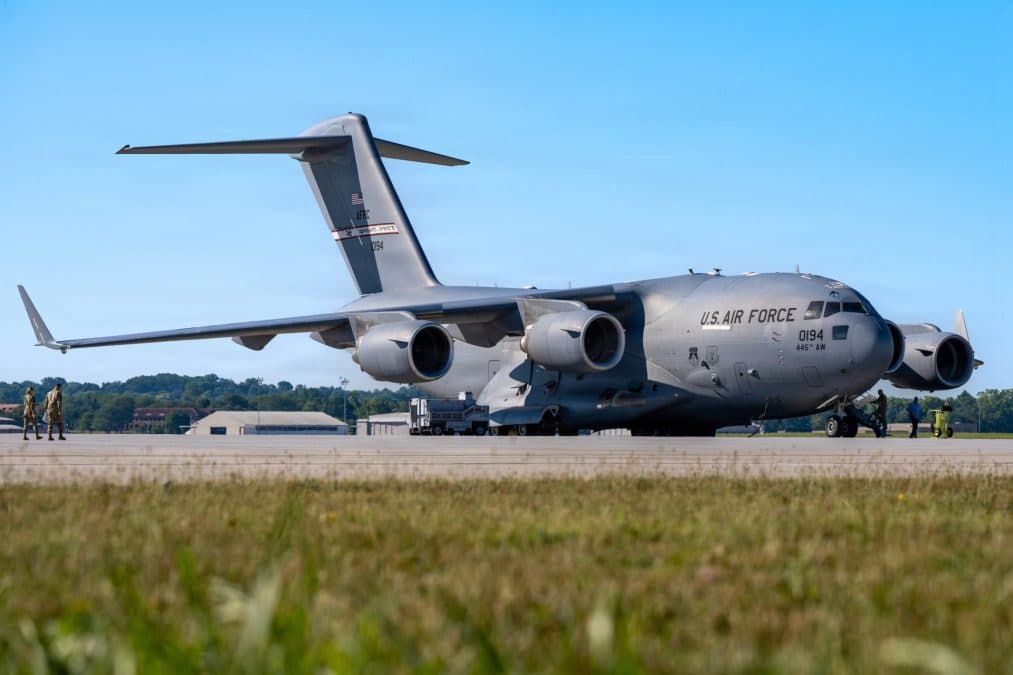
The U.S. Air Force is exploring artificial intelligence to improve aircraft maintenance and sustainment, but service leaders acknowledge most efforts remain in early experimental phases as they work to determine which applications deliver genuine operational benefits.
Speaking at the Air Force's Life Cycle Industry Days in Dayton, Ohio, last month, portfolio acquisition executives said AI holds promise for predictive maintenance, supply chain visibility, and decision support — yet the service is still evaluating which tools actually work at scale.
"I would say we definitely have our foot in the pool, but we need to jump in a little deeper," Brig. Gen. William Ottati, portfolio acquisition executive for mobility, told reporters during a media roundtable.
Why it matters
Maintenance and sustainment consume enormous resources across the Department of Defense, particularly as aging aircraft fly decades beyond their intended service lives. Labor shortages and fragile supply chains compound the problem. If AI can reliably predict failures before they ground aircraft, the technology could significantly improve fleet availability and reduce costs — but only if the Air Force can move proven capabilities from pilot programs to enterprise-wide deployment.
Legacy aircraft as testing grounds
Several portfolios are experimenting with predictive maintenance tools that use sensor data, performance records, and machine learning to forecast component failures. The approach allows maintainers to replace parts before they break, reducing unplanned downtime.
The propulsion portfolio already uses reliability-centered maintenance software based on advanced algorithms to sustain older engines, including those for the T-38 Talon trainer and C-130 Hercules transport, according to John Sneden, portfolio acquisition executive for propulsion. The service plans to extend the capability to F100 engines.
For the F-16 Fighting Falcon, the Air Force is testing predictability tools designed to identify which parts are most likely to ground the jet, Matt Sukraw, deputy system program manager for the F-16 program, said during a separate briefing.
The B-52 Stratofortress — which the service intends to fly through the 2050s — represents a particularly promising use case given decades of accumulated maintenance data. Col. Timothy Spaulding, portfolio acquisition executive for bombers, said AI-enabled maintenance capabilities will be integrated into the B-52 portfolio within the next year, though he cautioned that converting legacy data into reliable insights is "super easy to say and very difficult to do in practice."
Supply chain visibility and decision support
Beyond predicting equipment failures, some portfolios are evaluating AI tools that can aggregate siloed logistics datasets to identify supply chain bottlenecks and single points of failure, according to Rodney Stevens, portfolio acquisition executive for training.
The KC-46 Pegasus tanker program has been using AI to accelerate airworthiness evaluation processes, allowing officials to analyze documents faster and flag abnormalities for engineers, Col. David Hall, senior materiel leader for the KC-46 division, told reporters. The team is also exploring whether AI can help personnel more easily troubleshoot aircraft issues by combining maintenance data and manuals.
Officials emphasized that the goal is not replacing personnel but providing maintainers and logisticians with better information to prevent problems before they occur.
Data quality concerns
As the Air Force evaluates AI solutions, officials said they are working closely with industry to understand what capabilities are possible and what data is required. A key concern is ensuring AI tools are trained on reliable information.
Ottati said the mobility portfolio has been asking vendors about their data sources and how they account for poor-quality information. "If you're using bad data, you're going to get bad answers," he said.
The Air Force's Rapid Sustainment Office is responsible for identifying and scaling enterprise-wide solutions, though individual portfolios continue exploring AI mechanisms tailored to their specific challenges.
These details were first reported by Defense Scoop.
This is an original analysis by the Omega editorial team. Source reporting: AI Watch.
Want systems like this working for your business?
Book a Call