Air Force flies F-16 with AI pilot in VENOM program milestone
Modified fighter jets at Eglin AFB are testing autonomous flight technology that lets pilots switch control with a single toggle.
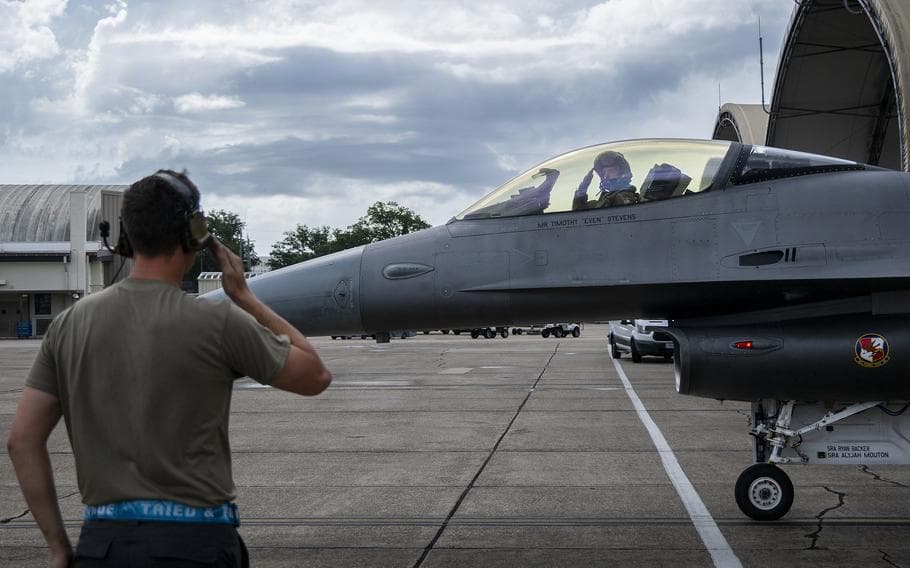
The U.S. Air Force has completed the first flight of an F-16 fighter jet controlled by artificial intelligence under its VENOM program, marking progress toward fielding AI-assisted combat aircraft that can operate alongside human pilots.
The modified F-16 flew from Eglin Air Force Base in Florida with AI handling flight controls while a test pilot remained in the cockpit as safety backup. The human pilot managed takeoff and could resume control at any moment, according to a joint announcement from the Air Force and the Defense Advanced Research Projects Agency.
How the technology works
Six F-16s at Eglin have been equipped with hardware, software and instrumentation packages that enable autonomous flight without altering the aircraft's core software. This approach accelerates development timelines by avoiding the complexity of rewriting fundamental flight systems.
The technology kit allows pilots to switch between traditional manual control and AI control using a single toggle switch, DARPA stated. The jets completed initial flights in June to validate safe operation with the new systems installed.
VENOM builds on earlier AI dogfight tests
The Viper Experimentation and Next-generation Operations Model program, known as VENOM, represents a collaboration between the Air Force and DARPA that began when the first modified fighters arrived at Eglin in 2024. The initiative builds on work with the experimental X-62 VISTA aircraft, an F-16D that successfully engaged a human-piloted F-16 in the first AI-versus-human dogfight in April 2024.
"Getting the aircraft into the air is always a monumental milestone for a complex test program," said Tim Stevens, a test pilot with the 40th Flight Test Squadron at Eglin who works on VENOM.
Why it matters
The VENOM fleet will serve as the testing platform for DARPA's Artificial Intelligence Reinforcements program, which aims to demonstrate multiple AI agents operating simultaneously in live flight. The ultimate objective is enabling human pilots to command teams of autonomous, uncrewed aircraft in combat scenarios—a concept that could fundamentally reshape air warfare by extending the reach and capability of individual pilots while reducing risk to human crews.
What comes next
The successful first flight opens the door to more complex testing scenarios involving multiple AI-controlled aircraft. Stevens noted that VENOM is positioned to "redefine the boundaries of autonomous flight" as the program advances.
These details were first reported by Stars and Stripes.
This is an original analysis by the Omega editorial team. Source reporting: AI Watch.
Want systems like this working for your business?
Book a Call
