Automation
AI Voice Agents Handle 3.5M Freight Calls, Save 33,600 Hours
Transportation companies integrate conversational AI with TMS platforms to automate check calls and status updates while routing complex decisions to humans.
Key takeaways
- Descartes voice agents made 3.49 million calls on 1.2 million loads in one year, saving approximately 33,600 labor hours
- Voice AI integrated with TMS platforms automates check calls, status updates, and appointment scheduling while updating systems automatically
- When offered a choice, callers select AI assistance almost 70% of the time because it delivers faster answers than waiting for humans
- Technology providers focus automation on high-volume transactions while routing judgment-dependent and relationship-building interactions to human workers
- Some brokerages miss 30-40% of incoming calls during peak times, creating opportunities for voice agents to ensure consistent carrier communication
AI voice agents automate high-volume freight communications
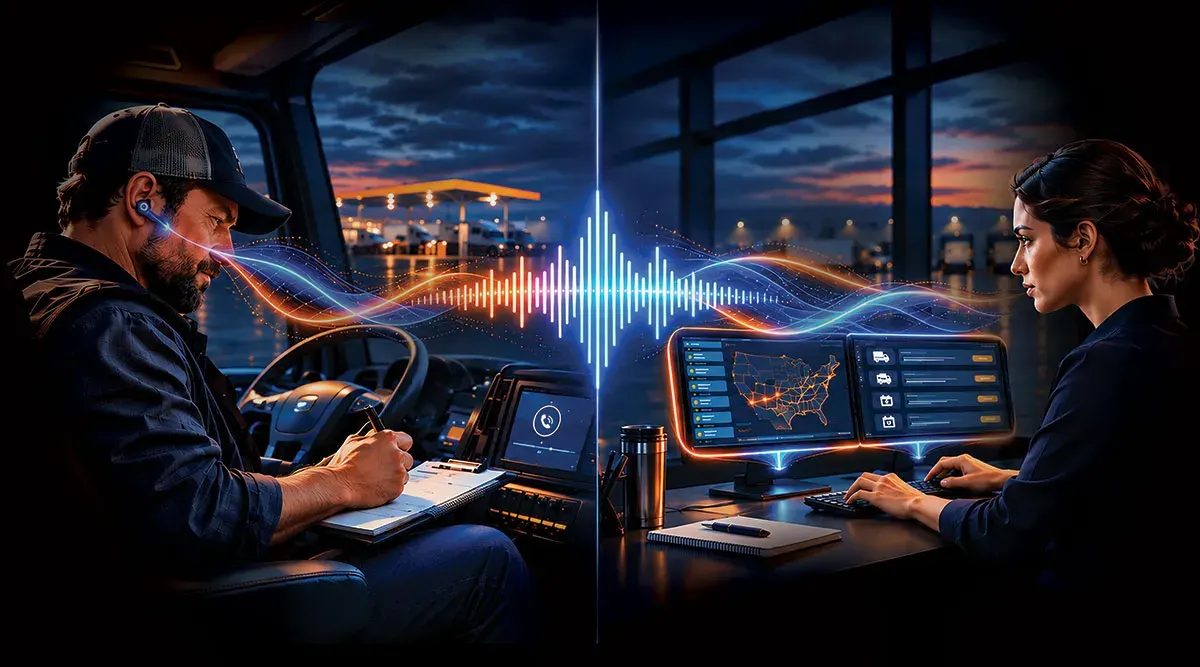
Artificial intelligence voice agents are now handling millions of routine freight communications annually, integrated directly with transportation management systems to automate workflows that previously consumed significant operational time.
Descartes MacroPoint OpsForce agents made 3.49 million calls on more than 1.2 million tracked loads between October 2025 and October 2026, saving approximately 33,600 labor hours, according to Andrew Wimer, associate general manager of transportation management solutions for Descartes. The agents automate freight visibility maintenance, including helping carriers and drivers initiate tracking.
Developers are embedding voice agents into TMS platforms to handle driver check calls, load status updates, appointment scheduling, freight booking inquiries, carrier sales, customer service, and after-hours dispatch support. The technology works by pulling load and carrier information before placing calls, then logging outcomes and updating systems automatically after conversations conclude.
Why it matters
The integration of voice AI with operational systems transforms automated conversations into automated outcomes, not just shifted workload. This allows logistics personnel to focus on relationship-building and complex problem-solving rather than repetitive transactions. With some brokerages missing 30% to 40% of incoming calls during peak posting times, voice agents ensure consistent carrier communication while freeing human workers for higher-value activities.
Choosing what to automate
Technology providers emphasize that automation works best for predictable, high-volume transactions that produce structured data. "Voice agents are well suited to the routine, rote calls that consume operational time today," said Mario Moore, McLeod Software's chief AI officer.
Bo DellaMaria, co-founder of Hyperscale Systems, which developed the "Vic" voice agent used by flatbed carrier P&S Transportation, described the ideal use case: "The best fit right now is repetitive, transactional work: check calls, status updates, maintenance and vendor follow-ups. It's high volume, low leverage, and delays operations when someone doesn't get to it."
Vooma CEO Jesse Buckingham noted that his company's voice agent automatically verifies callers against Highway and other compliance systems, answers load questions, and negotiates rates based on broker-defined strategies. When given the choice between AI and waiting for a human, callers opt for AI almost 70% of the time because it delivers faster answers, according to Harish Abbott, CEO of Augment.
Preserving human judgment
Companies implementing voice agents draw clear boundaries around what should remain human work. "Answering a phone call to reject a carrier because they don't meet your compliance requirements is not building a relationship," Buckingham said. A broker's time is better spent deepening partnerships with fleet managers.
David Peckman, chief commercial officer for CloneOps.ai, which has embedded voice automation into PCS Software's Cortex AI platform, emphasized that the goal is "putting humans in the position of critical decision-maker, handling escalations, freeing personnel up to do more critical thinking."
Voice agents hand off conversations to humans when interactions require judgment or relationship management. Moore summarized the philosophy: "The goal of implementing automated voice agents is to automate the transaction, not the relationship."
These details were first reported by Transport Topics in Automation Watch.