AI Startup Aaru Predicts Behavior by Training on Actions, Not Words
The company's agents simulate populations using purchase data and outcomes, not traditional surveys—and it tells clients not to trust the results until they test them.

AI Startup Aaru Predicts Behavior by Training on Actions, Not Words
A two-year-old AI startup is betting that what people do matters more than what they say they'll do. Aaru builds AI agents that simulate entire populations—complete with demographics, purchasing history, and food delivery patterns—to predict behavior from election results to consumer choices. The company's approach: train on outcomes, not intentions.
In one demonstration, Aaru simulated nearly 2 million voters in New York City's mayoral primary and came within 2,000 votes of the actual result. The company's 21-year-old founder Ned Koh recently told Fortune's Brainstorm Tech conference that he actively encourages skepticism from potential clients.
The sales pitch: prove us wrong
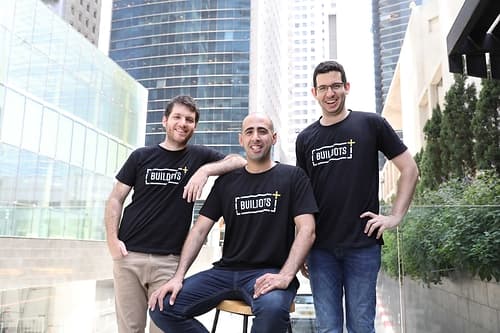
Koh cofounded Aaru in March 2024 with Cameron Fink and John Kessler, who were 18 and 15 at the time. The company's sales methodology is deliberately contrarian. "Our entire sales methodology is to go to a business and say, 'Do not trust us. Do not trust our model,'" Koh said. "In fact, I hope you're skeptical, because it means you'll be a better customer in the long run."
The proof model works like this: prospects provide an old survey with known results, and Aaru reruns it blind using AI agents instead of human respondents. In one case involving Ernst & Young's global wealth study, human respondents told surveyors that 82% would keep their parents' wealth manager after inheritance. Real-world retention runs 20% to 30%. Aaru's simulated respondents predicted roughly 40%—closer to reality than the humans.
Why it matters
The intention-behavior gap has long plagued market research, political polling, and strategic planning. If AI agents trained on actual behavior patterns can narrow that gap, enterprises gain a faster, cheaper alternative to traditional surveys for testing products, messaging, and market positioning. But the approach also raises questions about whether human decision-making is predictable enough to model—and whether AI trained on behavioral data simply imports different biases than traditional methods.
Training on behavior, not self-reports
Aaru's core thesis targets what behavioral scientists call the "intention-behavior gap"—the disconnect between what people plan to do and what they actually do. Koh argues that people systematically misrepresent themselves in surveys, whether about alcohol consumption or use of GLP-1 medications. "They're not even telling their family they're on these medicines," he said. "They're not going to tell your study."
The company organizes thousands of AI agents into statistically representative populations, assigning each agent characteristics like age, income, zip code, and gender. Rather than training on survey responses, Aaru trains on outcomes: election results, purchase data, and other observable behaviors.
Clients including EY, Accenture, Interpublic Group, McDonald's, and Bayer have adopted the methodology. Aaru recently worked with Spindrift on product innovation that led the sparkling water company to launch a still tea drink—a new category for the brand.
Billion-dollar valuation, behavioral limits
In December, Aaru raised a Series A led by Redpoint Ventures at a $1 billion headline valuation on annual recurring revenue still under $10 million, according to TechCrunch. The round used a multi-tier structure with a blended valuation below the headline figure. Total funding to date is roughly $88 million.
The company acknowledges limitations. Aaru attempted to simulate behaviors of figures like President Donald Trump and Federal Reserve Chair Jerome Powell but found it couldn't accurately predict outcomes despite decades of public statements. "There's just so much variance," Koh said. "It doesn't matter how much data you have on somebody."
Critics point to research showing AI agents can produce "flattened" representations of marginalized groups, reflecting how outsiders see them rather than how they see themselves. A Cornell University-led study published last year found this pattern across four large language models. Koh argues that training on behavior rather than survey data reduces this bias, though he did not disclose technical details about how Aaru's architecture addresses the issue.
These details were first reported by Fortune.
This is an original analysis by the Omega editorial team. Source reporting: AI Watch.
Want systems like this working for your business?
Book a Call