AI sales coach beats human manager in blind test at factory tech startup
Black Lake Technologies found seven of ten senior salespeople preferred machine-generated coaching, but founder says true transformation still awaits.
AI outperforms human sales leadership in direct comparison
When Yuxiang Zhou put his company's AI sales coach head-to-head against Black Lake Technologies' most experienced human sales leader, the result surprised even the startup's founder: seven out of ten senior salespeople preferred the machine's guidance.
The Shanghai-based company, which supplies AI agents to factories across Asia, equipped its sales team with recording pins that captured conversations and location data. An AI agent trained as a coach analyzed these interactions and provided feedback—a stark contrast to the traditional approach where a day's worth of client meetings gets condensed into what Zhou called "a very subjective one paragraph" for leadership review.
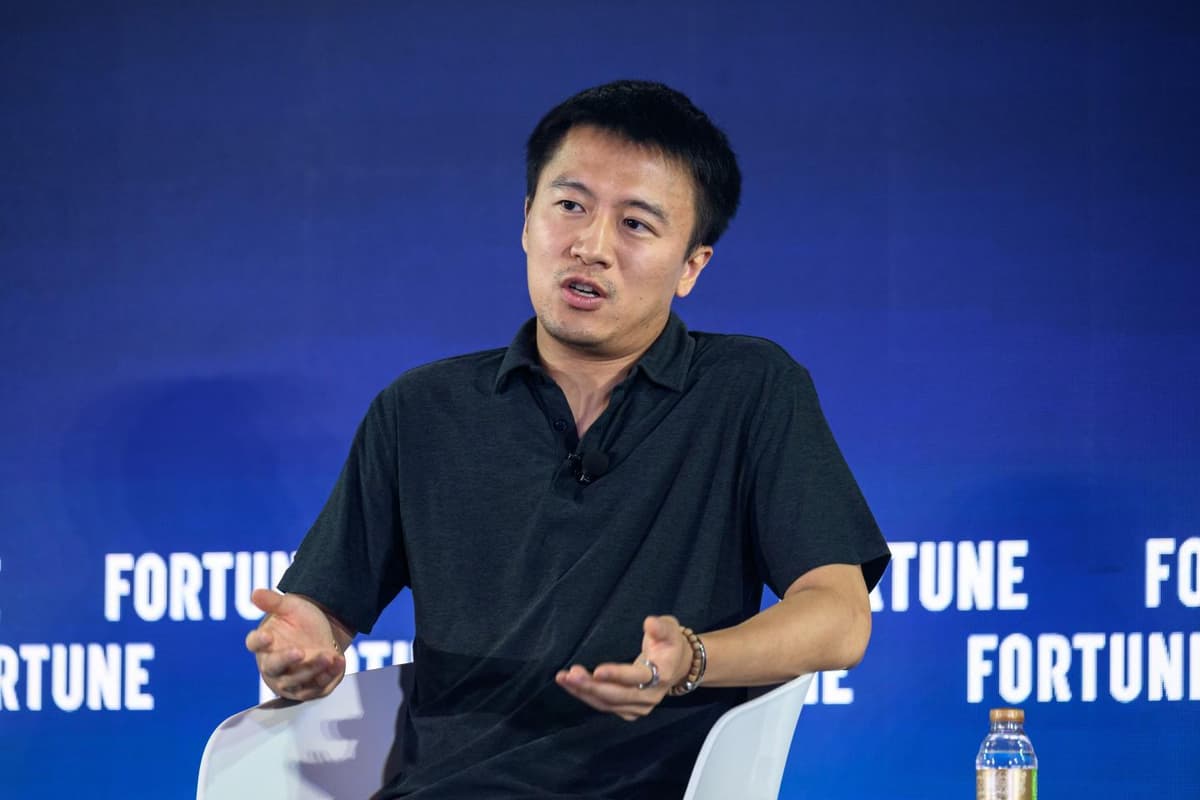
"A lot of people use AI as a way to co-pilot the leadership, but I'm trying to explore the way of me co-piloting the AI," Zhou said at the Fortune Leaders Forum in Macau on September 8. "A lot of my decisions are now made by agents, large language models, and my executives."
Why it matters
This experiment reveals a fundamental tension in AI adoption: the technology can already outperform humans at specific analytical tasks, yet organizations remain the primary bottleneck to deployment. The shift from AI as assistant to AI as decision-maker represents a structural change in how companies operate, not just an efficiency gain—and most enterprises haven't begun that transformation.
Human limitations remain despite AI capabilities
Zhou acknowledged that AI agents are "emotionless," and sales teams still require motivation that only humans can provide. The limitation isn't technical capability but organizational readiness and human factors like trust and motivation.
Becca Carroll, chief strategy officer at design agency IDEO, argued that speed alone won't create competitive advantage in an AI-enabled world. "Once you dream of something, your competitors could roll it out to market the next day, or two weeks later," she said at the same panel discussion.
Carroll updated IDEO's concept of the "T-shaped person"—someone with deep expertise in one discipline—with a new archetype: the "comb-shaped" person who possesses depth across multiple disciplines and can move fluidly between them.
James Arnett, managing director for Southeast Asia, Greater China, and South Korea at Wipro, framed the leadership shift as moving "from directing to orchestrating." Wipro has moved beyond asking how AI saves money to redesigning offerings from the ground up.
Waiting for AI's defining moment
Despite his experiments, Zhou believes AI hasn't reached its transformative inflection point. "I'm still looking for the Google moment for AI," he said. "I don't think it has happened yet."
He's testing whether that moment might come through industry restructuring rather than simple human replacement. Black Lake is piloting a platform that uses AI to manufacture celebrity merchandise with minimum orders of 100 pieces instead of 10,000—potentially democratizing custom manufacturing.
"I think the real Google moment should happen only when you restructure the industry rather than replace human beings," Zhou said.
All three panelists agreed the constraint isn't technology but people—whether employees, customers, or executives. Carroll emphasized that organizations must "move at the speed of trust," designing trust journeys rather than simply deploying new tools.
These details were first reported by Fortune.
This is an original analysis by the Omega editorial team. Source reporting: AI Watch.
Want systems like this working for your business?
Book a Call