AI
AI Agents Function Like Day-One Employees, Glean CEO Warns
Arvind Jain says current systems lack the contextual knowledge needed to match experienced workers, despite corporate pressure to deploy them.
Key takeaways
- AI agents currently perform like inexperienced new employees, lacking the contextual knowledge of skilled workers, according to Glean CEO Arvind Jain.
- No company has built AI systems capable of replacing experienced workers, with tacit knowledge remaining a critical gap.
- Corporate pressure to adopt AI quickly may be contributing to recent technology outages at banks and airlines.
- Jain predicts 90% of future work will use commodity AI models, but the remaining 10% will consume most AI spending.
- The technology gap between current AI capabilities and true workforce automation remains substantial despite industry hype.
Current AI systems lack workplace context
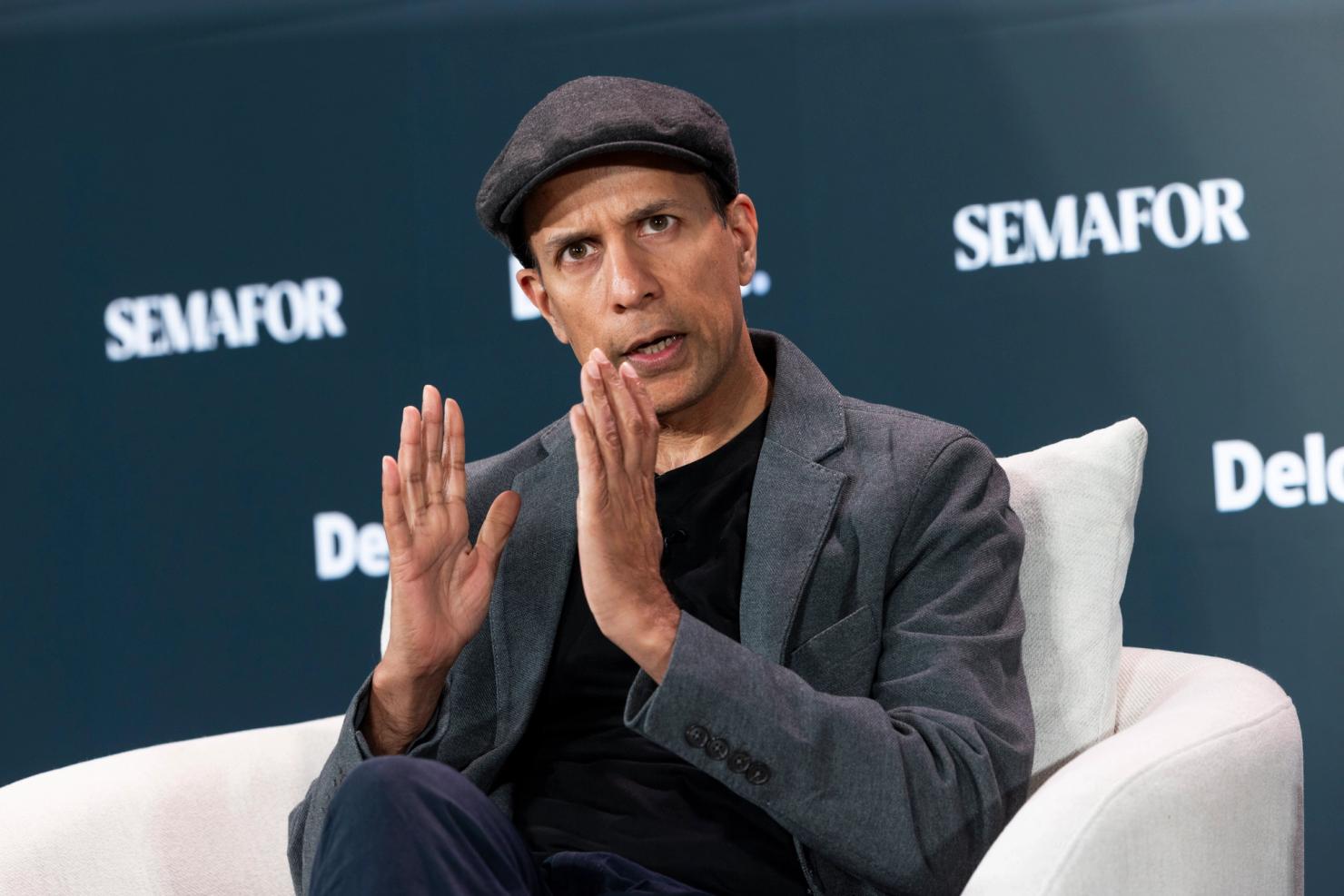
Artificial intelligence agents deployed in enterprise settings today perform more like inexperienced new hires than seasoned professionals, according to Glean CEO Arvind Jain. Speaking Monday at Semafor's Silicon Valley & The World event, Jain argued that even when AI systems have access to relevant data, they lack the contextual understanding that separates effective employees from those still learning the ropes.
"When you deploy AI agents, and you actually point them to the right data and knowledge that they need to do their work, they still come and act more like Day 1 employees," Jain told The Verge editor-in-chief Nilay Patel. "That's the gap that needs to close before we can come and talk about fancy things like job elimination."
Why it matters
Jain's assessment challenges the narrative that AI will rapidly displace knowledge workers. His comments suggest the technology gap between current capabilities and true workforce automation remains substantial, even as companies face mounting pressure to integrate AI tools—pressure that may be contributing to infrastructure failures when systems are deployed without adequate preparation.
The tacit knowledge problem
Jain, who co-founded Glean in 2019, emphasized that no company has come close to building AI systems capable of replacing experienced workers. The missing ingredient is what he called "tacit knowledge"—the accumulated experience, institutional understanding, and contextual awareness that develops over time in an organization.
Glean's platform aims to address this limitation by incorporating company-specific knowledge and context into internal AI systems. The goal is to bridge the gap between raw data access and the nuanced understanding that experienced employees bring to their work.
Rushed adoption creates risks
Despite AI's current limitations, Jain noted that companies face "enormous pressure" to adopt the technology. This urgency may be contributing to recent high-profile technical failures, including outages reported by banks and airlines this week.
"Sometimes businesses didn't get time to actually set the right foundation" before rolling out AI tools, Jain said, suggesting that hasty implementation without proper infrastructure can lead to system disruptions.
The 90/10 split ahead
Looking forward, Jain predicted a bifurcated AI landscape where approximately 90% of work tasks could be handled by open-source and non-frontier AI models. However, the remaining 10% of complex tasks will likely require advanced systems and "will actually still consume the majority of your AI spend."
This projection suggests that while commodity AI capabilities will become widespread and affordable, organizations will continue investing heavily in cutting-edge models for their most challenging problems.
These details were first reported by Semafor.