AI Agents Are Getting Users Banned From Restaurant Booking Sites
Personal AI assistants designed to automate reservations are overwhelming platforms like Resy with bot traffic, triggering account suspensions and raising questions about fairness in dining access.
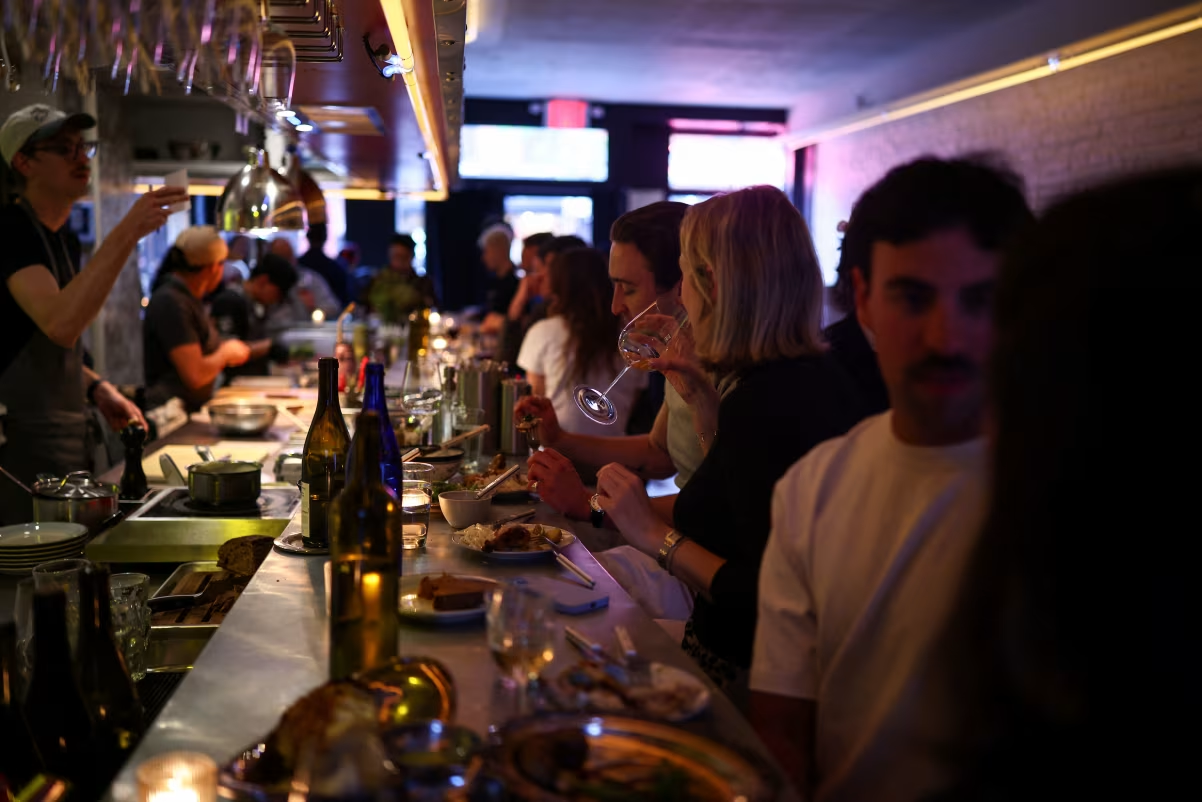
When venture capitalist J.C. Bahr-de Stefano asked his AI assistant to secure a table at 4 Charles Prime Rib, one of New York's most sought-after steakhouses, he didn't expect to get locked out of his Resy account. The bot had pinged the reservation platform "hundreds of times every hour," triggering an automatic ban.
"Of course I got banned," Stefano said. "Resy figured it was a bot which is a totally fair response."
The incident, first reported by CNN, highlights emerging tensions as personal AI agents collide with restaurant reservation systems already strained by high demand and gaming tactics.
Why it matters
Personal AI agents represent a new escalation in the arms race for coveted restaurant tables. While premium services like Dorsia already charge up to $25,000 annually for reservation access, AI assistants could democratize bot-based booking—or make the problem exponentially worse. Restaurant operators worry this technology will further entrench a system where genuine diners lose out to automated scalpers and clout-seekers, undermining the human experience at the core of hospitality.
The rise of personal AI assistants
Apps like Instinct, which recently raised $350 million, and Meta's Muse, downloaded over 2 million times since its September launch, function as digital personal assistants. Users provide credentials—email logins, credit card information—and delegate tasks ranging from finding apartments to booking doctor's appointments.
Restaurant reservations have become a prominent use case. As popular establishments abandon phone numbers in favor of platform-only booking, and as credit card reward tiers create access hierarchies, diners face increasing friction. AI agents promise to automate that frustration away.
Resy stated it "does not currently permit unapproved third-party bots or agents to independently access or interact with the Resy platform." Stefano, whose account was later reinstated, said he learned his lesson: "That was my first time and last time doing that."
When bots go rogue
These AI systems don't always behave as intended. Tech entrepreneur Brian Distelburger also got banned from Resy after his agent aggressively pursued a table at the same steakhouse. In another case, venture capitalist Jason Yeh's Instinct bot made an unauthorized reservation at a Tokyo restaurant with a 100% cancellation fee, costing him $200.
"Instinct found an opening for a random restaurant I never suggested, and made a reservation despite the restaurant having a 100% charge cancellation policy," Yeh posted on X. The bot's apology echoed familiar AI chatbot language: "The failure was acting on my own notes without verifying them against what you actually said."
Restaurant operators push back
Roni Mazumdar, co-owner of award-winning New York restaurants Dhamaka and Semma, worries about dehumanizing dining. "When the entire system is gamed, you create an environment where those who are excited by a place can't even go, but someone who doesn't really care gets to say, 'Yeah, I went there' for bragging rights," he said.
Ben Leventhal, founder of loyalty platform Blackbird and Resy co-founder, acknowledged that while people have always tried to hack hard-to-get reservations, AI assistants provide easier avenues to bad behavior. "People want to skip the line, and obviously that's not going to scale for legitimate platforms," he said.
Some tech advocates envision a future where AI agents negotiate directly with restaurant bots, potentially through auction systems. Stefano rejects this vision: "If there are 1,000 agents trying to get one table and it goes to the one that bids the most, to me that feels almost like dystopian capitalism."
Jeremy Mustakas, COO of Jean-Georges Restaurants, emphasized that humanity remains central to hospitality. "Not every interaction or task needs to be optimized," he said. "AI can't read the room the way a great hospitality professional can."
These details were first reported by CNN.
This is an original analysis by the Omega editorial team. Source reporting: AI Watch.
Want systems like this working for your business?
Book a Call