ABB Robotics Partners with Roche on Clinical Lab Automation
The collaboration targets sample handling and logistics in pathology and central diagnostics labs facing workforce shortages.
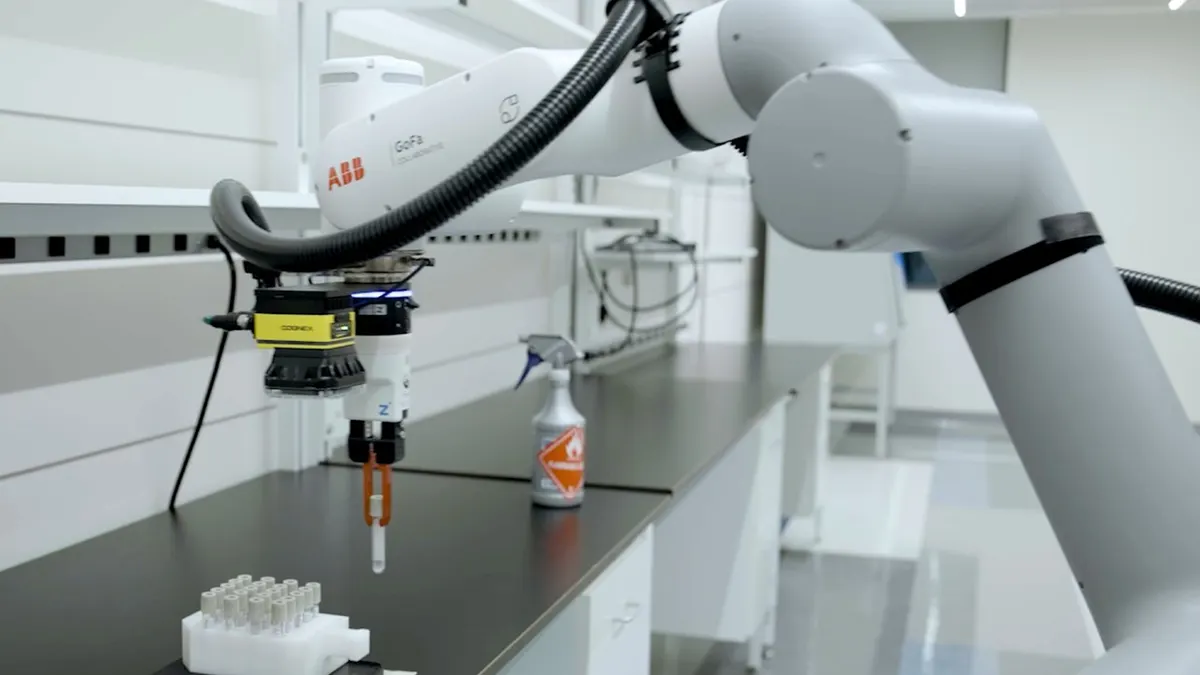
ABB Robotics has entered a global collaboration with Roche Diagnostics to develop and commercialize robotic automation systems for clinical laboratories, according to Design World Online. The partnership aims to address mounting operational pressures in healthcare diagnostics through connected lab systems that support flexible workflows.
Why it matters
Clinical laboratories face a convergence of challenges: workforce shortages as fewer professionals enter the field, aging populations requiring more testing, and the shift toward personalized medicine demanding faster turnaround times. With approximately 70% of treatment decisions based on diagnostic test results, automation becomes critical infrastructure rather than optional efficiency gain. This collaboration between a major robotics manufacturer and a leading diagnostics company signals that lab automation is moving from niche applications to standardized solutions.
Targeting Two Key Laboratory Segments
The initial applications will focus on distinct areas within Roche's operations. In pathology laboratories, ABB Robotics will develop solutions for slide handling and organization to enable digital and connected workflows. This addresses one of the most labor-intensive aspects of tissue analysis.
For central diagnostics labs—Roche's largest testing segment—the partnership will deploy autonomous mobile manipulators to transport samples and materials between instruments. These mobile systems aim to improve connectivity and consistency while reducing the manual logistics burden on laboratory staff.
Division of Responsibilities
ABB Robotics will leverage its automation expertise, manufacturing capabilities, and robotics portfolio to develop the lab automation solutions. The company's software platforms will support system integration and control.
Roche will contribute diagnostics domain expertise and application knowledge to ensure the solutions address real-world clinical laboratory requirements. This combination of robotics engineering and diagnostics experience is designed to produce systems that fit existing laboratory workflows rather than forcing labs to adapt to generic automation.
Physical AI for Adaptive Systems
The collaboration aligns with ABB Robotics' broader strategy of applying physical AI to laboratory environments. This approach enables robots to use real-world data to adapt to changing conditions, supporting more flexible automation that can handle variability in sample types, volumes, and processing requirements.
The goal extends beyond simple task automation to supporting laboratory decision-making and improving overall efficiency. By handling repetitive logistics and sample preparation tasks, these systems are intended to free laboratory staff for higher-priority analytical and interpretive work.
Addressing Workflow Bottlenecks
The partnership represents part of ABB Robotics' strategy to work with partners across the laboratory ecosystem to identify and resolve workflow bottlenecks. Rather than offering standalone robotic products, the company is positioning itself as a collaborator in developing integrated solutions tailored to specific laboratory segments.
Details of the collaboration were first reported by Design World Online.
This is an original analysis by the Omega editorial team. Source reporting: Automation Watch.
Want systems like this working for your business?
Book a Call