ABB Robotics Launches AI Vision Platform Amid Data Governance Push
New distributed visual inspection system arrives as manufacturers confront the structural data problems blocking AI deployment at scale.
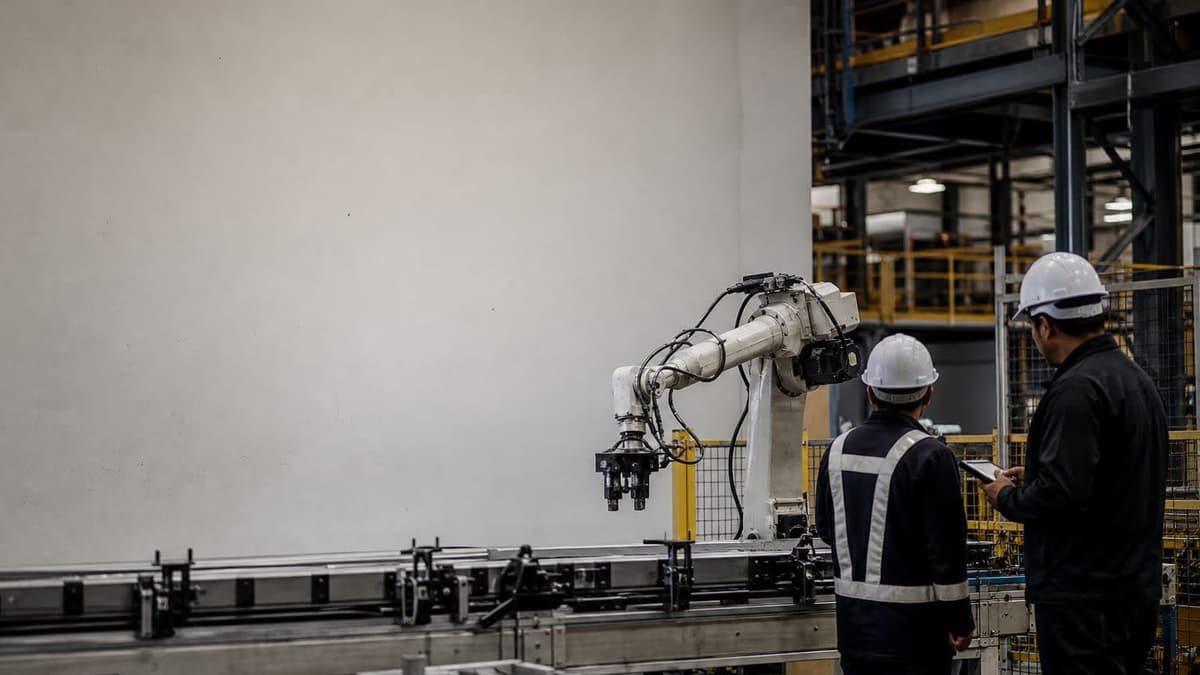
ABB extends AI vision across the factory floor
ABB Robotics has released a platform that distributes AI-powered visual inspection capabilities more broadly across robotic systems, moving beyond fixed inspection stations or specific robot models. The system allows quality assurance teams to expand inspection coverage without proportional increases in headcount, according to Automation World, which first reported the launch.
The timing coincides with a broader industry shift. Physical AI—artificial intelligence embedded directly in manufacturing equipment and robotics—is now reaching mid-market manufacturers who previously lacked the capital or engineering resources to deploy such systems. What was recently limited to large-scale operations with dedicated automation teams has become commercially viable for a much wider base of buyers in 2026.
The data governance bottleneck
While manufacturers accelerate AI adoption, a structural problem threatens to undermine these investments: inadequate industrial data governance. Automation World reports that manufacturers moving quickly toward AI analytics platforms and operational dashboards are making a critical sequencing error by treating data governance as an afterthought rather than a prerequisite.
Without consistent, well-structured data from machines, sensors, and historians, even sophisticated AI systems produce unreliable outputs. The issue surfaces during capital equipment purchases and system integrator engagements, where decisions about data architecture and tagging standards are made. Industry observers now recommend treating governance as a foundational requirement at that stage rather than attempting costly retrofits later.
InfluxData, which markets time-series database technology for industrial telemetry, has promoted modernizing historian infrastructure as a related dependency. The company's position reflects growing recognition that extracting value from existing data systems must precede wholesale platform replacements.
Why Industry 4.0 deployment remains slow
Nearly a decade into Industry 4.0 frameworks and vendor roadmaps, the gap between proof-of-concept and plant-wide deployment persists for most manufacturers. Automation World's most-read recent coverage directly addresses why scaling has not met industry expectations and what must change.
The publication frames the current moment as a transition from experimentation to execution. Manufacturers are no longer debating whether to automate or digitize, but rather how to make investments scale across shifts, production lines, and facilities. A podcast sponsored by Rockwell Automation echoes this shift in focus.
Security becomes operational requirement
The convergence of AI, networked robotics, and cloud-connected historians is expanding the attack surface for manufacturing operations. Automation World's recent coverage highlights increasing regulatory pressure and cybersecurity requirements for operations technology teams. Sponsored content from Mitsubishi Electric and others points to security as a rising operational dependency rather than an IT afterthought.
For procurement teams, this means including OT cybersecurity requirements in automation deployment specifications from the outset. Retrofitting security controls onto live production systems carries significantly higher costs and operational disruption.
Why it matters
The simultaneous arrival of accessible AI vision systems and urgent warnings about data governance reveals a maturity inflection point for manufacturing automation. Mid-market manufacturers now have technological access that was recently limited to enterprise operations, but success depends on foundational data infrastructure that many organizations have not yet built. The companies that address data governance before deploying AI will avoid expensive rework cycles and unreliable system performance.
These developments were reported by Automation World.
This is an original analysis by the Omega editorial team. Source reporting: Automation Watch.
Want systems like this working for your business?
Book a Call