35% of Hiring Managers Plan to Hire Fewer 2026 Graduates
A new survey reveals companies are choosing AI investments over entry-level talent, with computer science roles particularly affected.
Companies are pulling back on entry-level hiring as artificial intelligence becomes a substitute for fresh college talent, according to new survey data that highlights a challenging job market for 2026 graduates.
A May 2026 survey of 1,000 hiring managers at companies with more than 100 employees found that 35% don't plan to hire as many new college graduates this year. The trend is most pronounced in technology roles, where 65% of technology managers said they would rather invest in AI than hire a 2026 college graduate, according to ResumeTemplates.com, which conducted the research.
Why it matters
This shift represents more than typical economic cycles affecting graduate employment. Companies are explicitly choosing technology infrastructure over human capital for roles traditionally filled by entry-level workers. The trend particularly impacts computer science graduates, who face the dual challenge of AI displacement and competition from experienced workers laid off in recent tech industry reductions.
Concerns about graduate readiness
Hiring managers cited specific concerns about recent graduates that are driving the pivot toward AI solutions. "What our survey found was they were having a hard time with work ethic, professionalism and motivation from new grads. And so I think that's why they're starting to look to AI," said Julia Toothacre, chief career strategist at ResumeTemplates.com.
The computer science field faces particular pressure. "Computer science is right now a really tough one, because that is more exposed to AI," said Evan Heiser, director of Career and Experiential Education at Western Michigan University.
Experience becomes critical differentiator
Heiser emphasized that graduates now compete not only with AI but also with laid-off workers who bring full-time experience. This dynamic makes internships and practical experience more valuable than ever for students entering the workforce.
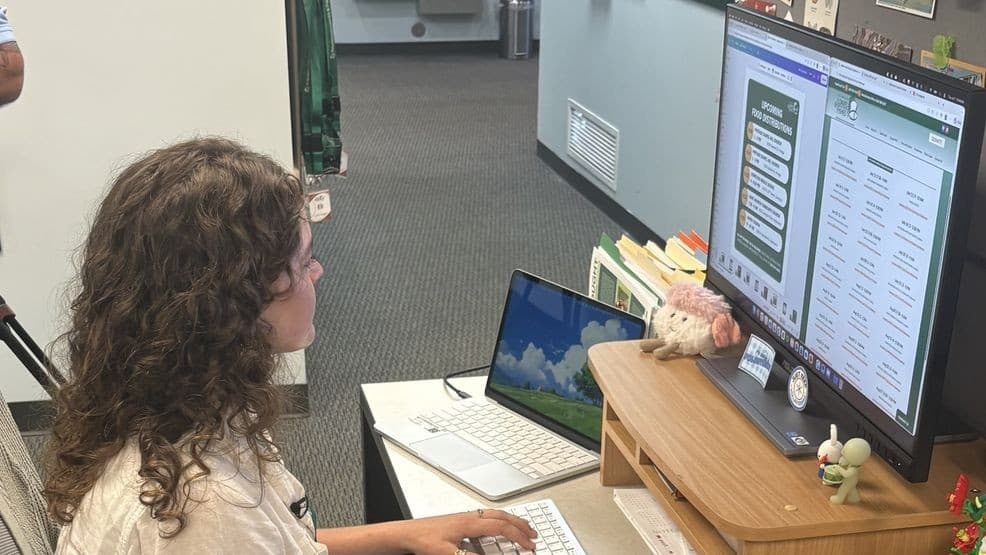
Several 2026 Western Michigan University graduates demonstrated different strategies for navigating the constrained market. Grace Mulock, a business school graduate, converted an internship at a Kalamazoo food pantry into a full-time communications role. Dylan Carper, working in finance, believes demonstrating AI proficiency helped him stand out: "If you're able to use AI efficiently to make you better at your job, you're gonna stand out a lot more compared to others who don't really use AI."
Graphic designer Hannah Johnston credited expressing interest in an unpaid internship—even though she never actually completed it—with helping her secure an interview and subsequent job offer at a Kalamazoo marketing company within two weeks.
Building connections in an AI-influenced market
Heiser noted that while networking has always mattered, the current environment makes personal connections even more essential for graduates seeking to differentiate themselves in a market where companies view AI as a viable alternative to entry-level hiring.
These findings were first reported by WWMT, based on the ResumeTemplates.com survey and interviews with Western Michigan University career services and recent graduates.
This is an original analysis by the Omega editorial team. Source reporting: AI Watch.
Want systems like this working for your business?
Book a Call
