Why Human Supervisors Struggle With Automated Systems
A human factors expert explains the psychological and design challenges when workers shift from doing tasks to monitoring machines.
As automation spreads from factory floors to operating rooms, a critical transition is unfolding: workers are moving from hands-on task execution to supervising machines. That shift brings unexpected psychological and technical challenges that organizations consistently underestimate, according to Ron McLeod, a retired human factors specialist based in Glasgow, Scotland.
McLeod spent his career studying how human cognition interacts with automated systems in high-stakes environments like oil refinery control rooms. His book, Transitioning to Autonomy: The Psychology of Human Supervisory Control, published in February 2026, examines why this transition so often goes wrong—and what can be done about it.
Why it matters
As AI and automation expand into healthcare, transportation, and manufacturing, the assumption that humans can simply "watch the machine" ignores fundamental realities about attention, boredom, and decision authority. When supervisory systems fail—whether in nuclear plants, aircraft cockpits, or autonomous vehicles—the consequences can be catastrophic. Understanding these failure modes is essential for organizations deploying automated systems.
The cognitive challenge of watching machines work
McLeod's interest in supervisory control became personal in 2022 when he bought a car with self-driving capabilities. The dealership provided no training on the automation features, leaving him to puzzle through critical questions: Does the car know about the sharp curve ahead? Will it slow down on ice?
The core problem is that reliable automation creates a paradox. "The brain isn't engaged in the task," McLeod explained in an interview with Knowable Magazine, which first reported these details. "And it's difficult to pay attention, to acquire information, to understand what's happening, if you're not mentally engaged in the task."
This challenge appears across industries. An anesthesiologist told McLeod he was originally trained to manually monitor patients and apply anesthetics, but now "just sits there and monitors numbers." Radiologists may lack confidence to overrule AI diagnostic tools. Control room operators in oil and gas facilities supervise systems they once operated directly.
When AI enables 'cognitive surrender'
Artificial intelligence adds another layer of complexity. Recent research by Steven Shaw and Gideon Nave at the Wharton School found that when AI systems provided wrong answers, people accepted them more than half the time—a phenomenon the researchers termed "cognitive surrender."
McLeod notes that AI can automate four levels of work: acquiring information, making sense of it, making decisions, and taking actions. Each level changes what supervisors need to monitor and when they should intervene.
Design failures with deadly consequences
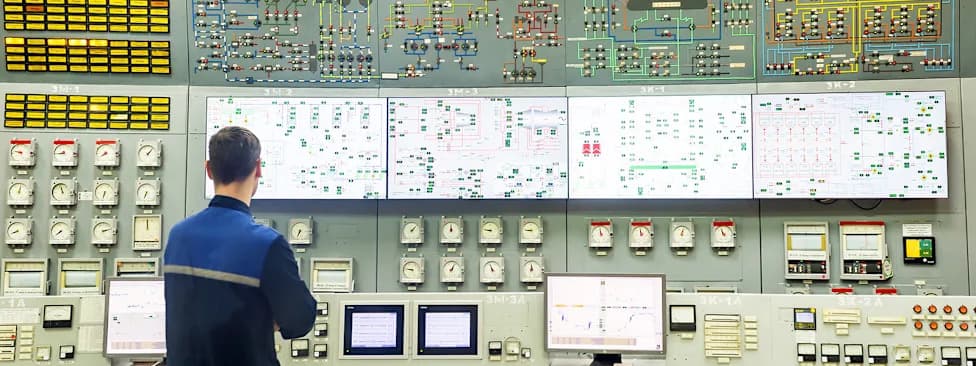
Historical disasters illustrate what happens when systems aren't designed for human supervisors. The 1979 Three Mile Island nuclear meltdown resulted partly from a control room that showed a stuck-open pressure valve as closed and provided no indicator for reactor core water levels. Operators made logical decisions based on incomplete information—and nearly caused catastrophe.
In 2009, an Air France Airbus crashed into the Atlantic Ocean, killing all 228 people aboard. Contributing factors included cockpit design that withheld critical information from pilots and inadequate training for emergency protocols.
Even in lower-stakes environments, authority conflicts emerge. At Wimbledon in 2025, the automated Hawk-Eye line-calling system failed to flag a ball that was clearly out. The umpire lacked authority to overrule the system, forcing a replay despite obvious human observation. A similar error occurred the next day.
What organizations should do differently
McLeod argues the solution isn't particularly complex—it requires recognizing that supervisory roles demand different interface design, training, and authority structures than manual operation.
For automated vehicles, he recommends manufacturers provide online training covering basic scenarios and clearly display who is in control and what the system is "thinking." The National Transportation Safety Board recently recommended automakers install systems to monitor driver alertness after fatal 2024 collisions involving Ford Mustangs in partial automation mode.
For any automated system, designers must understand the supervisor's actual task and provide appropriate information. Training should explain what signs to watch for and what could go wrong. Incentive structures shouldn't penalize supervisors for appropriate interventions—McLeod noted cases where oil and gas workers were blamed for correctly shutting down production.
"It isn't rocket science," McLeod said. "It's just about recognizing the complexity of this new role."
These insights were originally reported by Knowable Magazine, an independent publication from Annual Reviews.
This is an original analysis by the Omega editorial team. Source reporting: Automation Watch.
Want systems like this working for your business?
Book a Call