When AI-Generated Content Cites AI-Generated Content
A developer's automated blog earned a citation from an AI-assisted news site, raising questions about credibility loops and internet quality.
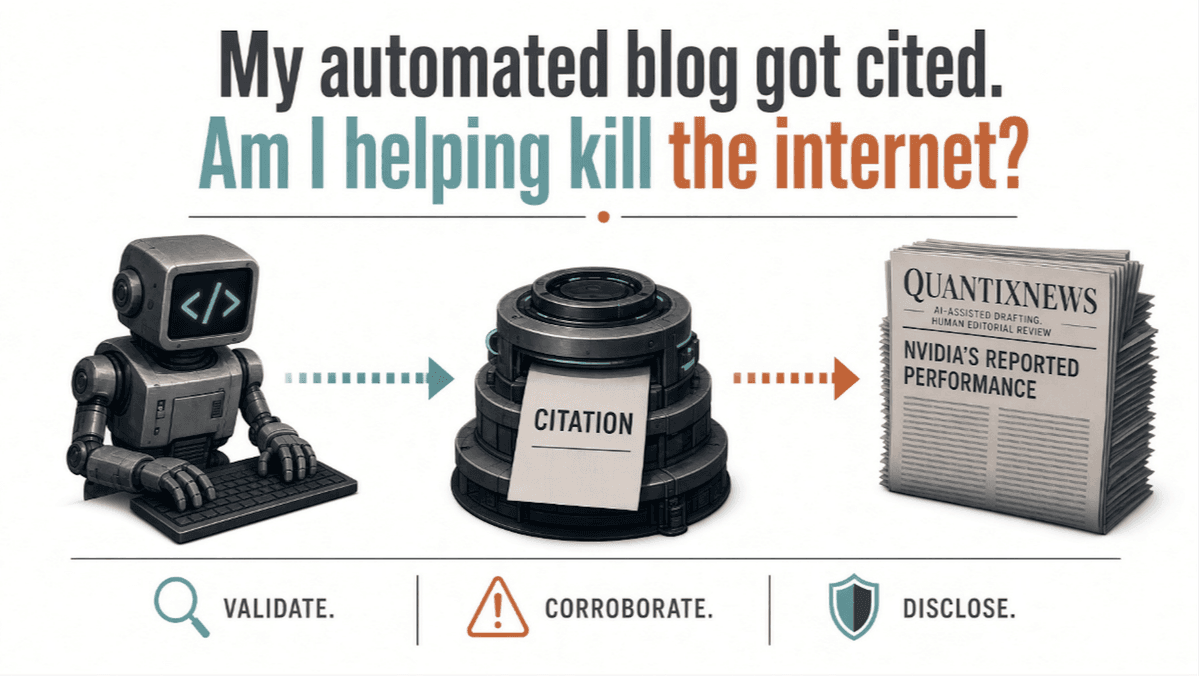
A technology developer running an automated blog recently faced an unexpected dilemma: his AI-generated content was cited by a news publication that also uses AI-assisted drafting. The citation was legitimate, but what it signified was far less clear.
The incident highlights a growing challenge in online publishing — distinguishing between genuine editorial recognition and automated systems simply referencing each other's output.
Why it matters
As AI-generated content proliferates, citation networks risk becoming circular rather than corroborative. When automated systems cite other automated systems, readers may mistake repeated claims for independent verification. This matters for anyone evaluating source credibility, from business leaders conducting research to developers building AI systems that train on web data.
The citation in question
QuantixNews, a publication that discloses its use of AI-assisted drafting with human editorial review, cited KenAshe.ai in an article about Nvidia's performance at a 2026 informatics competition. The cited content came from the developer's automated Digest, which selects stories, writes articles, runs automated review, and publishes without human approval.
The developer, who discloses his automation process and maintains accountability for output, found himself in an ambiguous position. The citation was real, but it didn't represent independent validation of his expertise or evaluation of his system. It simply meant another publishing process found his summary useful.
Scale and evidence
While this single example can't prove the internet is becoming predominantly automated, broader data suggests AI-generated content is growing substantially. According to an August 2026 Pew Research Center analysis, approximately 10% of English-language webpages sampled in July showed significant signs of AI authorship. Among pages published after ChatGPT's release, that share exceeded one-third.
These detector-based estimates include text likely written or substantially edited by AI, though Pew acknowledges detectors can misclassify individual documents.
The training data concern
Beyond immediate publishing loops, there's a longer-term risk: AI-generated articles becoming training data for future models. A 2024 Nature paper demonstrated how recursively training on model-generated data can degrade subsequent models through "model collapse," including loss of less-common patterns in original data.
However, other research found that retaining original real data alongside synthetic data avoided collapse in tested settings, suggesting deterioration isn't inevitable when synthetic data is properly managed.
The responsibility question
The developer acknowledges the core issue: disclosure that content is automated doesn't make it useful. The real test is whether articles help readers, whether claims hold up, and whether corrections happen when needed. Another website citing automated content doesn't settle those questions.
Three articles discussing one experiment aren't three independent experiments. A claim doesn't become better supported merely by appearing on more domains. The risk is a web that looks well-corroborated until someone follows the links.
The developer concludes that while the citation represents a small win — evidence his system's output traveled beyond his own site — it doesn't validate the system itself. The responsibility to evaluate quality remains his, regardless of external citations.
These details were first reported in an essay published on HackerNoon.
This is an original analysis by the Omega editorial team. Source reporting: Automation Watch.
Want systems like this working for your business?
Book a Call