Policy
Utah Pilots AI-Driven Diagnosis and Prescription Without Doctors
State-supervised experiment tests whether artificial intelligence can safely handle routine medical tasks like acne treatment while physicians review every decision.
Key takeaways
- Utah is testing whether AI can safely diagnose and prescribe medication through pilot programs with seven companies, including an acne treatment app.
- During initial phases, two physicians must review and approve every AI-generated prescription before patients receive treatment.
- The state aims to address physician shortages and reduce wait times for routine care, particularly in underserved rural areas.
- Independent evaluators will assess whether AI performs as well as human providers before allowing greater autonomy in later pilot stages.
- The Utah Medical Association opposes removing physicians from prescribing decisions, arguing AI should handle administrative tasks instead.
Utah Launches First-of-Its-Kind AI Healthcare Experiment
Utah has become the first state to formally test whether artificial intelligence can diagnose patients and prescribe medication without direct physician involvement. The Utah Office of AI Policy is overseeing pilot programs with seven companies exploring different healthcare applications of AI technology.
One participant, Nolla Health, operates an app called Nolla Derm that allows adults over 18 to receive acne diagnoses and prescriptions entirely through AI. Users pay a subscription fee, upload five photos of their skin, and receive treatment recommendations from the trained AI system. The technology can prescribe only from a pre-approved list of five to eight generic topical medications commonly used for acne treatment.
Why It Matters
This experiment addresses a critical healthcare access problem: physician shortages, particularly in rural communities, often force patients to wait months for dermatology appointments for routine conditions. If successful, AI could handle straightforward clinical tasks while freeing doctors to focus on complex cases requiring human judgment. The results may also inform regulatory changes, as Utah law currently permits only humans to practice medicine.
Built-In Safety Guardrails
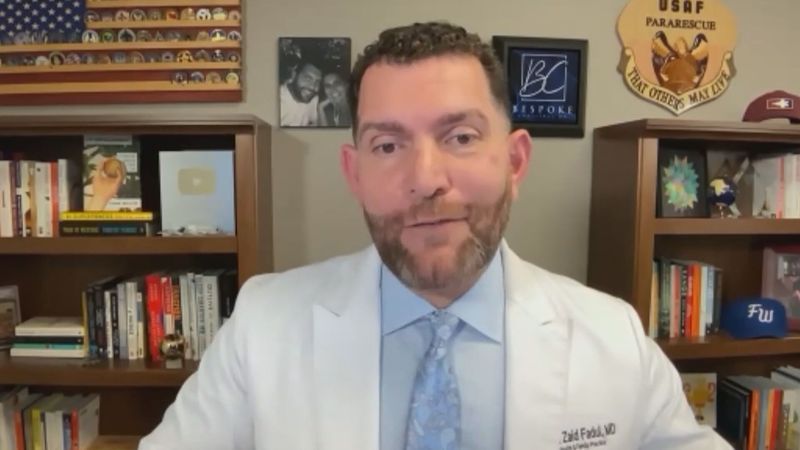
The pilot operates under strict oversight. During the initial phase, Dr. Zaid Fadul, Nolla Health's chief medical adviser, and a second physician must review and approve every AI-generated prescription before it reaches patients. Only if the technology demonstrates safe performance can it advance to later stages with greater autonomy.
The programs can run for a maximum of three years across three stages. Independent evaluators selected by the state—though funded by participating companies—will assess whether the technology meets safety standards before permitting advancement to subsequent phases.
Zach Boyd, director of the Utah Office of AI Policy, said the state lacks sufficient healthcare professionals to meet growing demand. He emphasized that AI must perform at least as well as human providers to progress through the pilot stages, and acknowledged the technology will make mistakes just as humans do.
"We are all suffering with the way the health care system is right now," Boyd said, noting he doesn't anticipate AI replacing doctors given the high demand for care.
Medical Community Raises Concerns
Not all healthcare professionals support placing AI between doctors and patients. Michelle McOmber, president of the Utah Medical Association representing most state physicians, questioned the approach.
"We don't think it's appropriate to take the physician out of the loop of health care in prescribing a medication," McOmber said. She argued that treating patients involves evaluating mental health, listening to concerns, and considering factors AI may not adequately address.
McOmber suggested AI could better serve healthcare by handling administrative tasks and paperwork, allowing doctors more face-to-face time with patients rather than replacing clinical decision-making.
Fadul countered that the goal is expanding access rather than physician replacement. "I want to increase access to those physicians," he said, arguing patients shouldn't wait three months for common treatments like benzoyl peroxide.
All pilot programs remain subject to existing patient safety and privacy laws. These details were first reported by KUTV.