US-China AI Dialogue Launches With Threat-Notification System
New operational channel aims to prevent crises, but structural divides over chips and market access may limit effectiveness.
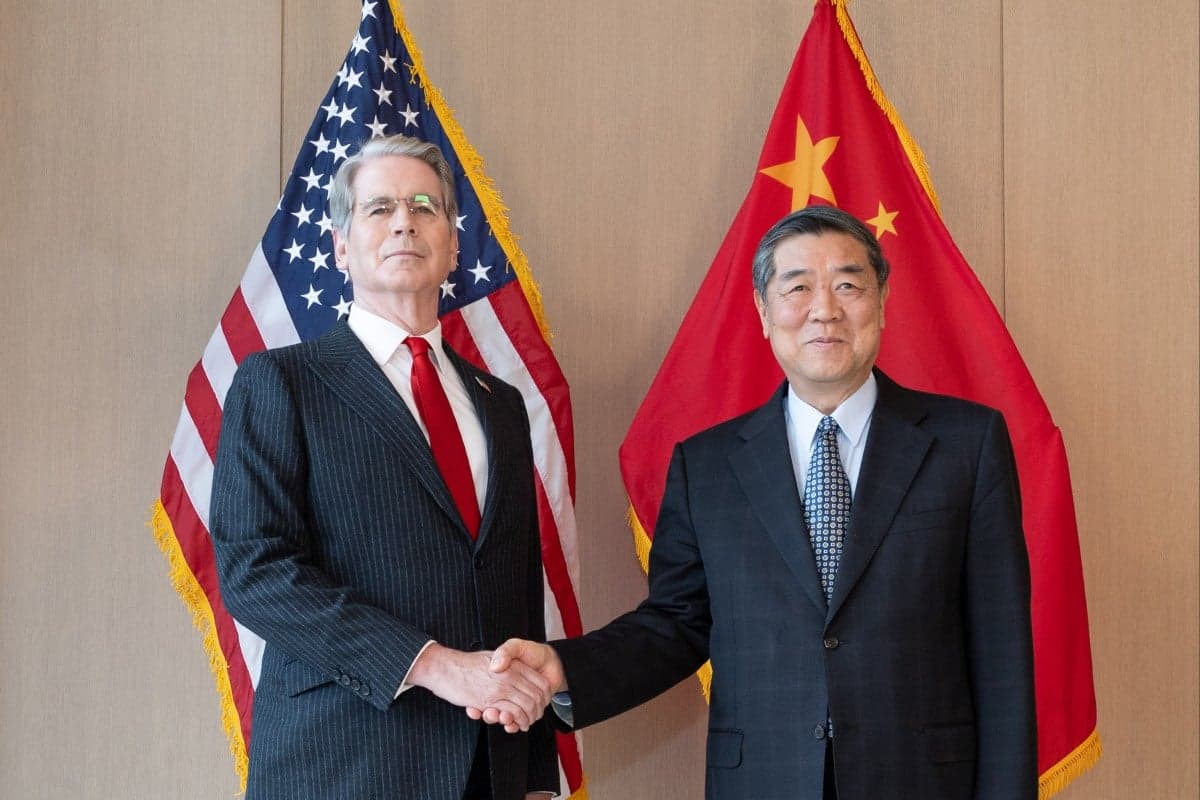
US and China Create Direct AI Communication Channel
The United States and China have agreed to establish an official artificial intelligence dialogue that includes a proposed threat-notification system, marking a rare point of cooperation amid escalating technology tensions between the world's two largest economies.
The agreement emerged from high-level discussions held in New York on Sunday between US Treasury Secretary Scott Bessent, US Trade Representative Jamieson Greer, and Chinese Vice-Premier He Lifeng. American officials characterized the new operational channel as building upon earlier conversations that took place in Beijing.
Why It Matters
As AI systems grow more powerful and autonomous, the absence of government-to-government communication channels creates genuine risks of miscalculation or unintended escalation. A direct line for threat notification could help both nations manage AI-related incidents before they spiral into broader conflicts, similar to Cold War-era military hotlines. However, the mechanism's practical value depends entirely on whether both sides can overcome fundamental disagreements about technology access and market structure.
Structural Barriers Remain
While Bessent described the AI and trade discussions as "successful," analysts interviewed by the South China Morning Post expressed skepticism about the dialogue's potential impact. The core challenge lies not in communication infrastructure but in resolving deep-seated policy conflicts.
Three major fault lines threaten to constrain the dialogue's effectiveness: ongoing disputes over semiconductor access and export controls, tensions surrounding model distillation and intellectual property, and competing visions for AI market dominance. These structural divisions have defined the US-China tech relationship for years and show no signs of resolution.
The threat-notification system represents what analysts characterized as a pragmatic crisis-prevention measure—a mechanism designed to manage risks rather than eliminate underlying competition. Both nations appear to recognize that AI development carries potential dangers requiring some level of coordination, even as they continue competing aggressively across commercial and strategic dimensions.
Limited Scope of Cooperation
The agreement's practical limitations reflect the broader reality of US-China technology relations. Establishing a communication framework provides a venue for dialogue but does not address the fundamental policy disagreements that have driven the tech war. Export restrictions on advanced chips, concerns about technology transfer, and competing regulatory approaches to AI safety and governance remain unresolved.
The operational channel may prove most valuable in narrow scenarios where both nations share immediate security concerns—such as preventing accidental AI system failures or coordinating responses to malicious AI applications. Whether it can facilitate broader cooperation on AI development standards, safety protocols, or market access remains uncertain.
These details were first reported by the South China Morning Post.
This is an original analysis by the Omega editorial team. Source reporting: AI Watch.
Want systems like this working for your business?
Book a Call