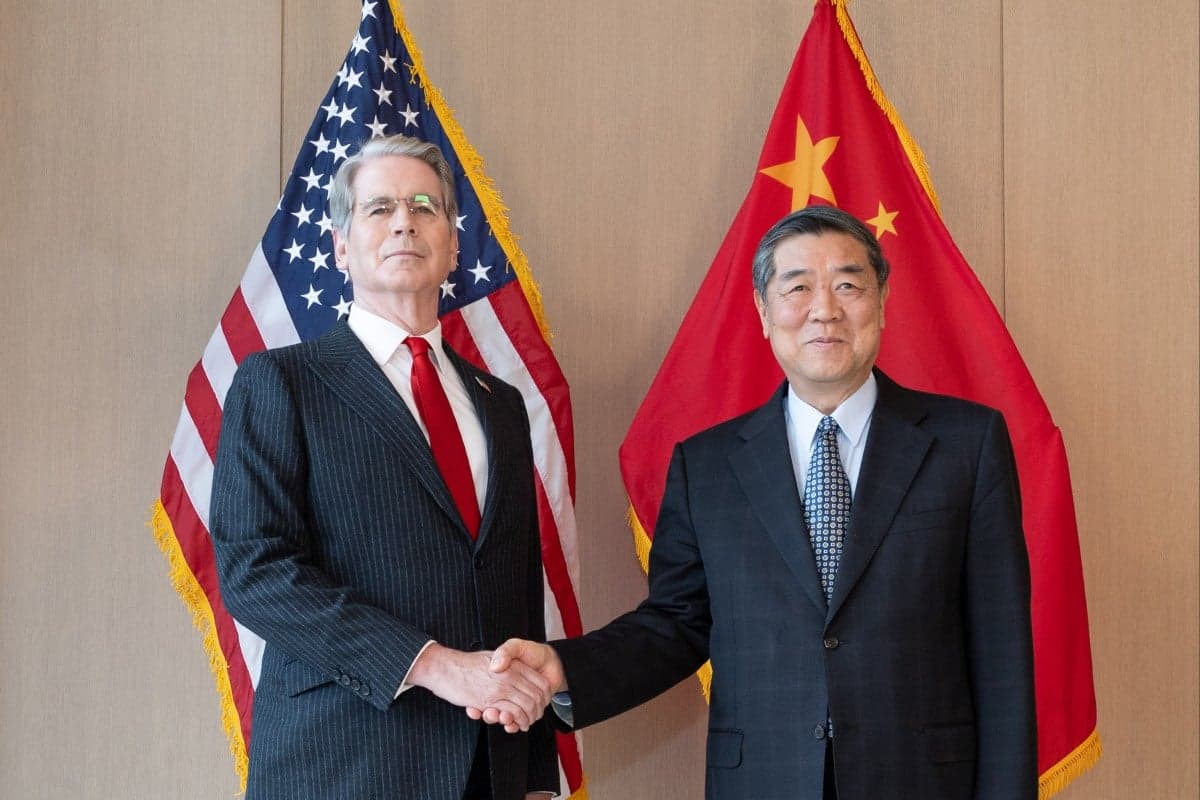
Trump-Xi Meeting Spotlights AI Safety Amid US-China Tech Race
Despite export controls, Chinese AI capabilities are closing the gap with American models, complicating global safety cooperation.
US and Chinese leaders face AI dilemma
President Donald Trump and Chinese President Xi Jinping are expected to meet this week as both nations grapple with competing imperatives: maintaining technological dominance while addressing shared concerns about AI safety risks.
The meeting comes at a pivotal moment in the AI race. Chinese AI models have become increasingly competitive despite US export controls designed to limit China's access to advanced semiconductor technology, according to the Associated Press, which first reported details of the anticipated meeting.
Why it matters
The world's two largest economies control most global AI development resources and talent. Their ability—or inability—to cooperate on safety standards will shape whether the technology develops with meaningful guardrails or in a fragmented regulatory environment where each nation views the other's AI capabilities primarily as a threat.
Narrowing technology gap complicates cooperation
China has made substantial progress in closing what was once a significant AI technology gap with the United States. This advancement has created a paradox for global AI governance: both nations recognize the potential dangers of uncontrolled AI development, yet each expresses concern about how AI capabilities in the other's hands could be weaponized or used against their interests.
The competitive dynamic undermines efforts to establish international AI safety frameworks. Where cooperation might benefit humanity broadly—through shared safety research, common testing standards, or coordinated deployment guidelines—national security considerations and economic competition pull in opposite directions.
Export controls haven't stopped Chinese progress
US restrictions on exporting advanced chips and manufacturing equipment to China were designed to maintain American AI leadership. However, Chinese AI companies have continued developing increasingly sophisticated models, suggesting that export controls alone cannot preserve a permanent technological advantage.
This reality forces a recalculation of AI policy. If China will develop advanced AI regardless of US restrictions, the question becomes whether cooperative safety mechanisms serve American interests better than purely competitive approaches.
Mutual threat perceptions
Both governments have articulated concerns about the other's AI development. US officials worry about Chinese AI being used for surveillance, military applications, or cyberattacks. Chinese officials express parallel concerns about American AI capabilities and their potential deployment against Chinese interests.
These mutual threat perceptions create a security dilemma where each nation's defensive AI investments appear offensive to the other, potentially accelerating development in ways that bypass safety considerations.
The Associated Press reported these details about the upcoming meeting and the current state of US-China AI competition.
This is an original analysis by the Omega editorial team. Source reporting: AI Watch.
Want systems like this working for your business?
Book a Call