US-China AI Competition Faces Economic Reality Check
Export controls and rare earth dependencies create mutual vulnerabilities that may undermine Washington's tech containment strategy.
The United States is attempting to maintain its AI leadership through export controls on advanced chips and the Pax Silica initiative, which has recruited 23 nations and the European Union to exclude China from critical AI supply chains. But this containment strategy faces structural challenges that could undermine its effectiveness, according to analysis from the Horizon Insights Centre.
While the US and its allies currently lead in key AI development areas—particularly chips, chip-design software, and manufacturing equipment—China is not standing still. Chinese companies are optimizing AI model architectures, improving training efficiency, and extracting more performance from existing hardware. They're also exploiting loopholes in export restrictions, prompting the US government to issue new controls, such as June's crackdown on Chinese companies purchasing advanced chips through overseas subsidiaries.
The supply chain dilemma
The global nature of semiconductor manufacturing complicates Washington's approach. Advanced chips require US design expertise, Dutch and Japanese equipment, and Taiwanese manufacturing capacity. This distributed supply chain means export controls impose significant costs on US allies, potentially triggering what researchers call "policy fatigue."
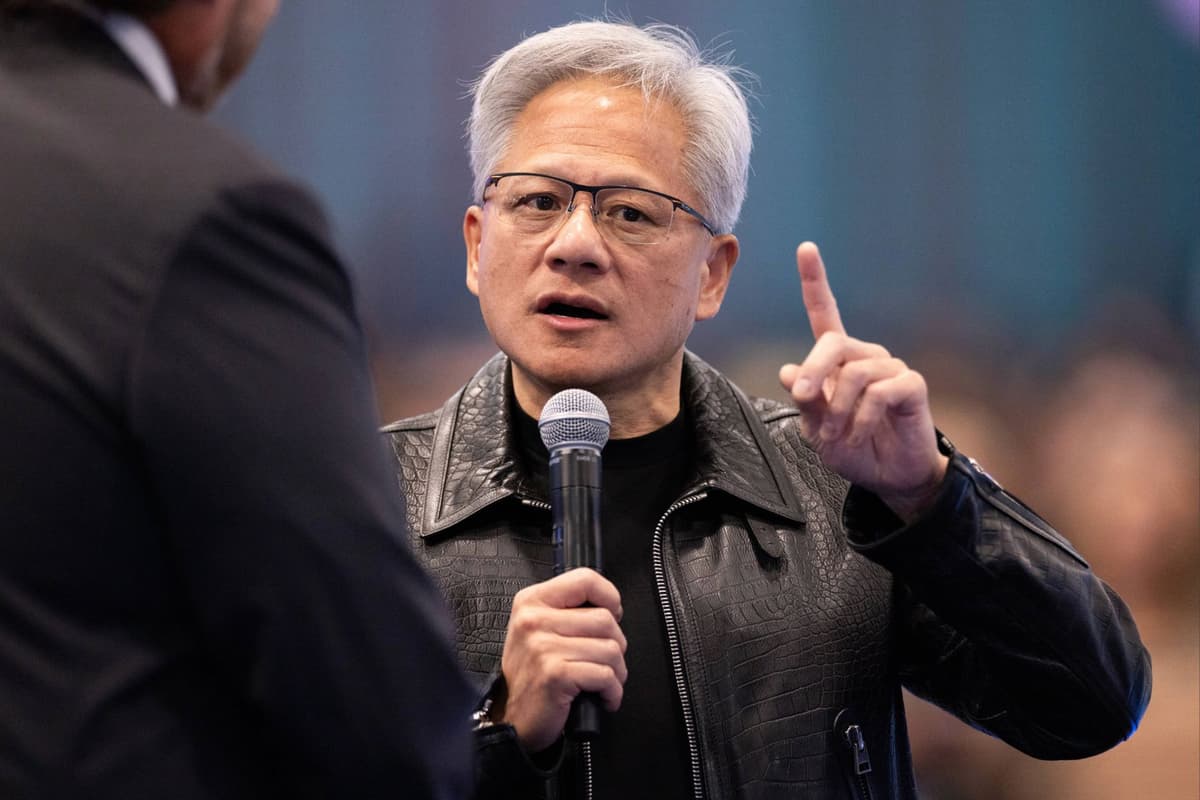
ASML CEO Christophe Fouquet has publicly questioned whether restricting sales of advanced chipmaking equipment to China will succeed or simply accelerate Chinese efforts to develop domestic alternatives. Nvidia CEO Jensen Huang has been more direct, calling export controls a "failure" that has cost US companies billions, given China's importance as a market.
The US startup ecosystem has also pushed back. Nearly 200 American startups sent letters to the Trump administration this year arguing that banning access to advanced Chinese AI models—which are predominantly open-source—would harm US innovation and consolidate power among a few AI giants.
China's leverage
Beijing holds significant countermeasures, particularly in rare earth elements essential for chipmaking. China controls 91 percent of global rare earth separation and refining production. Last year, China banned heavy rare earth exports to the US during renewed trade tensions, forcing Washington to negotiate a truce that suspended the ban for one year.
The US has struggled to reduce this dependency. Chinese clay deposits are more economical than Western alternatives, and China has mastered processing techniques that Western countries abandoned due to pollution concerns. China employs tens of thousands of experienced rare earth engineers, while the West has only a handful of such experts.
This dependency extends beyond AI to defense systems. Rare earths are critical components in F-35 fighter jets and anti-ballistic missile defense systems—hardware the US cannot afford to lack given ongoing global tensions.
Why it matters
The AI competition between the US and China is revealing the limits of unilateral technology containment in a deeply interconnected global economy. Export controls may slow Chinese AI development in the short term, but they also risk fragmenting supply chains, alienating allies, and inviting retaliation that could harm US industry and national security. The economic interdependence between the two powers—what some have called "Chimerica"—persists despite political efforts at decoupling, suggesting that long-term AI leadership may depend more on innovation capacity and market dynamics than on restrictions alone.
These details were first reported by Al Jazeera, based on analysis by Yang Xiaotong, a researcher at the Horizon Insights Centre.
This is an original analysis by the Omega editorial team. Source reporting: AI Watch.
Want systems like this working for your business?
Book a Call