UChicago Law Bans Laptops, Phones for 1Ls in AI Policy Shift
The university's new strategy statement mandates pen-and-paper learning for first-year law students while teaching responsible AI use in upper-level courses.
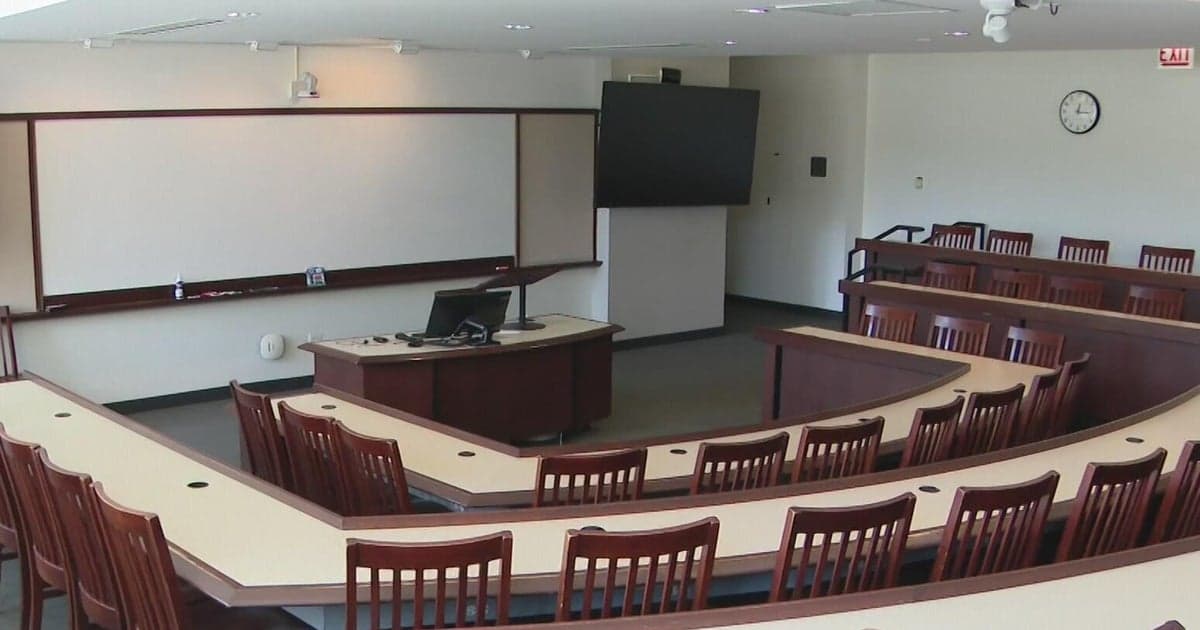
The University of Chicago Law School has implemented a technology ban for first-year students as part of a broader institutional strategy addressing artificial intelligence in legal education.
Under the new policy, incoming law students will attend classes without laptops, phones, or any digital devices. "Students will be there with a notebook and a pen and taking notes," said Adam Chilton, dean of UChicago Law, in remarks first reported by CBS News Chicago.
Why it matters
The policy represents a significant departure from standard legal education practices and signals how elite institutions are grappling with AI's rapid encroachment on professional training. Law schools face a unique challenge: preparing students for a profession increasingly shaped by AI tools while ensuring they develop foundational analytical skills that technology cannot replicate.
Dual approach to AI competency
Chilton framed the policy as balancing two competing imperatives. The technology restriction aims to prevent students from developing dependencies that could undermine critical thinking. "We want to ensure that our students are learning to think for themselves in a rigorous, critical way without relying on shortcuts through AI that might get them a quick answer but actually slow down the learning process," he explained.
The school simultaneously plans to teach upper-level students how to deploy AI effectively in legal practice. "At the same time we want to produce graduates that can go into the world knowing how to use new technology in the most efficient way possible," Chilton said.
Broader educational landscape
While the restrictions currently apply only to UChicago's law school, they arrive amid wider institutional efforts to establish AI guardrails across educational levels.
Chicago Public Schools has blocked certain AI products from its network and requires students to cite any AI use in their work, with violations constituting code of conduct breaches. The district maintains an acceptable use policy and educator guidebook for approved applications.
The Chicago Teachers' Union has taken a more restrictive stance. In a recent resolution, the union demanded bans on student-facing AI in elementary classrooms and AI chatbots simulating human relationships for students under 16. The resolution also seeks to protect student data under FERPA and ensure educators cannot be compelled to use AI tools.
The University of Illinois at Chicago requires students to acknowledge the institution's code of conduct before accessing AI tools.
State-level guidance
The Illinois State Board of Education released new AI guidance concurrent with UChicago's announcement. The state framework emphasizes thoughtful integration of artificial intelligence while "maintaining the central role of educators and prioritizing student development."
Chilton acknowledged the policy raises fundamental questions about technology's role across all educational levels. "It takes an honest conversation about how we can ensure students at every level are capable of thinking without machines but also think with machines," he said.
Details of the policy were first reported by CBS News Chicago.
This is an original analysis by the Omega editorial team. Source reporting: AI Watch.
Want systems like this working for your business?
Book a Call
