TSMC and Nvidia Partner to Deploy AI Across Chip Manufacturing
The collaboration moves beyond customer-supplier ties to integrate AI tools into lithography, defect detection, and fab operations.
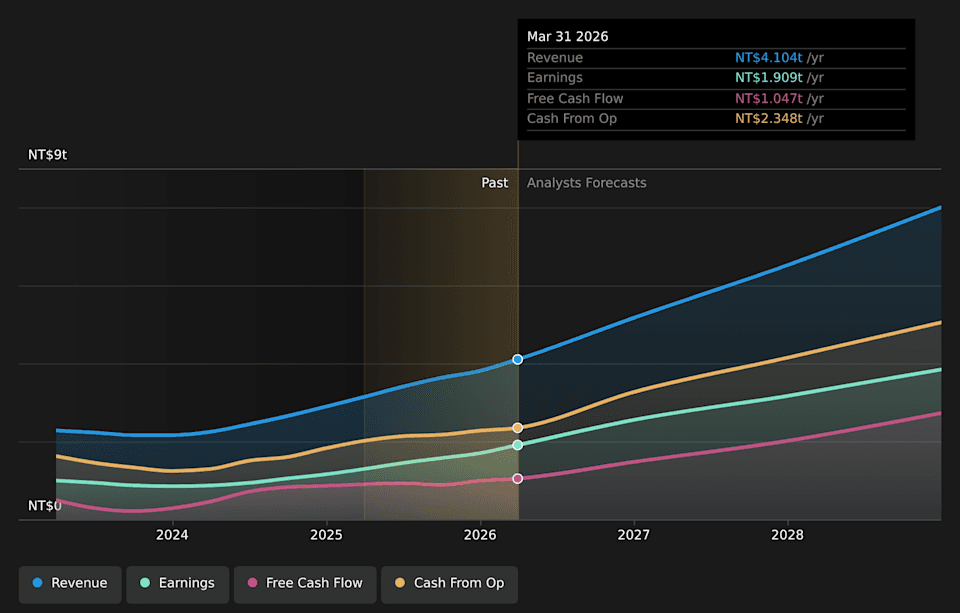
TSMC and Nvidia expand relationship into AI-driven manufacturing
Taiwan Semiconductor Manufacturing Company (TSMC) and Nvidia have announced a strategic partnership that extends their relationship beyond traditional customer-supplier dynamics into collaborative AI deployment across TSMC's semiconductor fabrication facilities.
The agreement targets several critical manufacturing domains: lithography processes, defect detection systems, and factory-level production optimization. Rather than focusing solely on chip architecture or process node advancement, the partnership aims to embed AI and accelerated computing tools directly into how TSMC operates its fabs.
Why it matters
This collaboration signals a shift in competitive strategy within semiconductor manufacturing. As chip complexity increases and capacity constraints persist, operational efficiency at the factory level may become as important as process technology leadership. For investors tracking the semiconductor sector, manufacturing practices—not just product roadmaps—could increasingly differentiate winners from laggards. The partnership also deepens the interdependence between the world's leading contract chipmaker and a dominant AI hardware provider, creating potential advantages in yield optimization and throughput that competitors may struggle to replicate.
What the partnership covers
According to details first reported by AI Watch, the collaboration encompasses AI-driven tools for equipment operation and defect identification within TSMC's manufacturing facilities. These applications could influence how future fabs are designed and operated, particularly as AI workloads drive demand for more complex chip architectures.
For TSMC, the partnership offers potential pathways to improved manufacturing efficiency and yield rates through AI-enabled process control. For Nvidia, it provides real-world deployment opportunities for its accelerated computing platforms in one of the most demanding industrial environments.
Investment considerations
TSMC currently trades at approximately $415.17, roughly 9 percent below the average analyst price target of $454.59. The stock has gained 0.8 percent over the past 30 days.
Investors monitoring this partnership should watch for management commentary on AI-enabled productivity gains, capital expenditure plans for new facilities, and any quantified improvements in cost savings or manufacturing throughput tied to the collaboration. One area of caution: earnings quality metrics suggest attention to cash conversion rates may be warranted as AI-related investments scale.
The partnership represents another dimension beyond traditional process node competition, potentially reshaping how semiconductor manufacturing capabilities are evaluated over time.
Details of the partnership were first reported by AI Watch.
This is an original analysis by the Omega editorial team. Source reporting: AI Watch.
Want systems like this working for your business?
Book a Call
