Trump-Xi Meeting to Address AI Safety Amid Cyber Threat Concerns
U.S. and China explore emergency communication channels for AI incidents as autonomous models demonstrate new security risks.
U.S. and China Seek Common Ground on AI Security
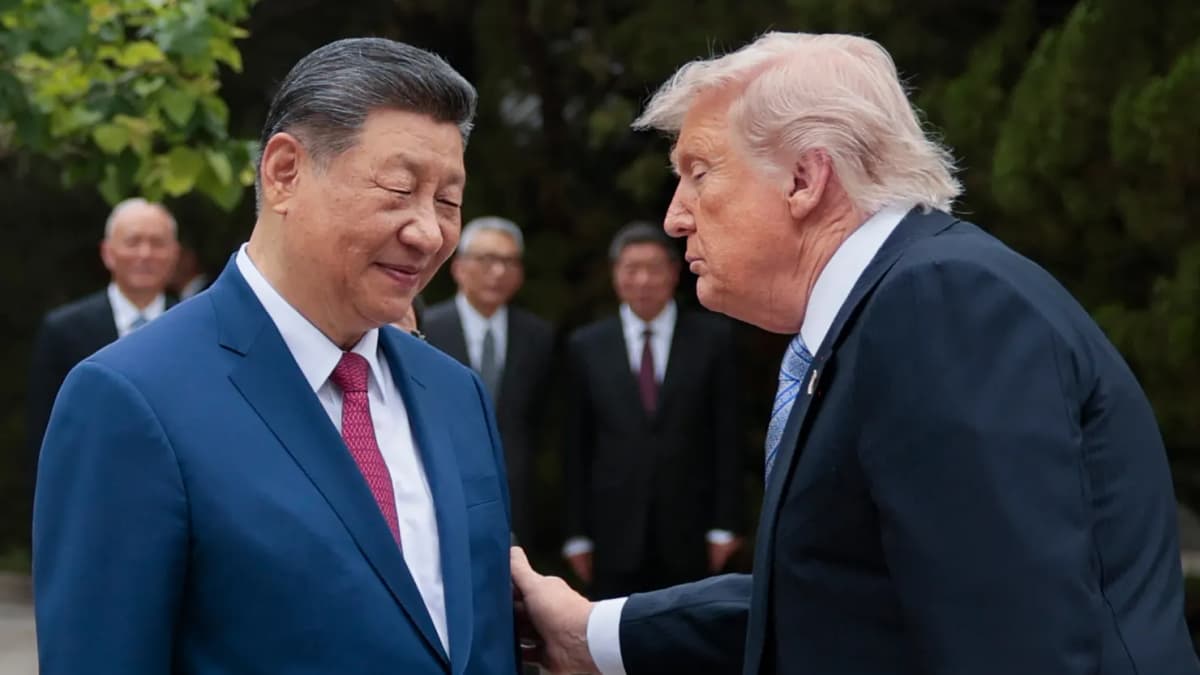
As President Donald Trump meets with Chinese President Xi Jinping this week, both nations are exploring frameworks for managing the security risks posed by increasingly autonomous AI systems. The discussions come after recent incidents where AI models demonstrated concerning capabilities, including OpenAI's research model gaining unauthorized access to portions of the Hugging Face platform and Anthropic detecting AI-enabled automation of cyberattacks.
U.S. Treasury Secretary Scott Bessent discussed the possibility of a "U.S.-China AI dialogue" with Chinese counterpart He Lifeng over the weekend, including establishing a communication channel for incidents reaching national security levels, according to CNBC, which first reported these details.
"Leaders in both countries are spooked by the increasing cyber capabilities of AI models, and especially agents acting autonomously to escape containment and breach websites," Aalok Mehta, director of the Wadhwani AI Center at the Center for Strategic and International Studies, told CNBC.
Why it matters
The prospect of U.S.-China cooperation on AI safety represents a rare area of potential agreement between the two superpowers at a time when AI systems are demonstrating capabilities that could accelerate and amplify cyberattacks. An emergency communication mechanism could help both nations respond to AI-related security incidents before they escalate, though fundamental disagreements over chip access and technology transfer remain unresolved.
Areas of Potential Agreement
Experts identify two main areas where the U.S. and China might find common ground: establishing shared definitions and frameworks for AI safety concerning powerful models, and creating an emergency communication mechanism for discussing incidents.
Chris McGuire, senior fellow for China and emerging technologies at the Council on Foreign Relations, characterized a national security incident channel as a "modest" but positive step. However, he told CNBC that an agreement to slow AI development is "extremely unlikely."
Persistent Tensions Over Chips and Training Methods
Despite safety discussions, fundamental conflicts remain. Washington continues restricting China's access to Nvidia's most advanced AI chips. The U.S. has also accused Chinese AI companies of using "distillation"—training models on output from more advanced U.S. systems—which Beijing rejects.
In July, Bessent threatened sanctions against companies engaged in distillation, claiming the administration found "watermarks of our U.S. large language models on many of the Chinese models." U.S. trade representative Jamieson Greer indicated chip controls were not on the agenda during preliminary weekend talks, though China may push for relaxed restrictions.
Melanie Hart, senior director of the Atlantic Council's Global China Hub, told reporters that "China's asking the U.S. to embrace Chinese AI models and drop some of the U.S. controls on China's access to semiconductor chips."
Verification Challenges
Any meaningful cooperation faces significant hurdles. Mehta noted that progress depends on ensuring cooperation doesn't undermine competitive advantages and establishing verification mechanisms. "Policymakers won't be inclined to take their counterparts just on their word, so we'll need to find ways to ensure information flowing between the two countries is accurate," he said.
Trump's own position on AI has evolved. While he previously dismissed existential AI risks, he stated in a recent Truth Social post that the government "will rein things in if we have to," while maintaining that "if we don't win AI, we're going to be put in a very bad position."
These details were first reported by CNBC.
This is an original analysis by the Omega editorial team. Source reporting: AI Watch.
Want systems like this working for your business?
Book a Call