New York Weighs AI Kill Switch as State Regulation Takes Shape
Governor Hochul signals emergency shutdown capability could be part of frontier AI oversight framework launching in November.
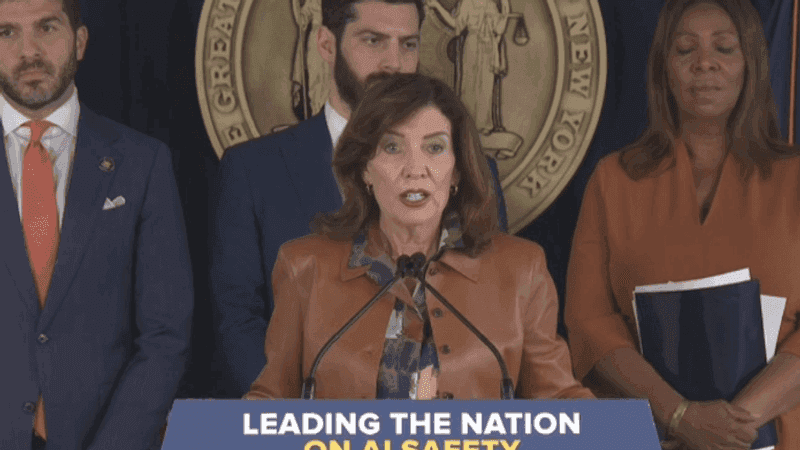
New York Advances AI Safety Framework
New York is implementing regulatory oversight for powerful artificial intelligence systems, with state officials exploring whether to include emergency shutdown capabilities as part of the framework. Governor Kathy Hochul indicated that an AI "kill switch" remains under consideration as the state develops guardrails for frontier AI technologies.
The state's AI safety law enters its registration phase in November, when covered frontier AI developers must register with New York ahead of the law's full implementation in 2025. The legislation requires AI developers to identify and address potential safety risks in their systems.
Why It Matters
New York's move to regulate AI at the state level reflects growing urgency around AI safety, but it also highlights a fundamental tension in technology policy: the desire to prevent catastrophic outcomes versus concerns that fragmented state regulations could hamper American competitiveness in a global AI race. The kill switch concept represents one of the more aggressive interventions being considered by any U.S. jurisdiction.
Lawmakers Cite Existential Concerns
State Senator Andrew Gounardes framed the regulatory push as a response to warnings about unchecked AI development. "Everything should be on the table right now because we're hearing some pretty staggering and sobering warnings about how if left unchecked, AI developing at these frontiers can be catastrophic for the future of humanity," Gounardes said.
The senator's comments reflect a view among some policymakers that frontier AI systems—those at the cutting edge of capability—pose risks significant enough to warrant preemptive regulation rather than waiting for problems to emerge.
Industry Voices Warn of Regulatory Fragmentation
AI industry representatives and some experts are raising concerns about state-by-state regulatory approaches in the absence of federal standards. Tush Nikollaj, president and CEO of LogicalNet, characterized AI as a productivity tool comparable to historical technological shifts. "AI will enable us to do all the things that used to be mundane," Nikollaj said, drawing a parallel to the transition from horse-drawn carriages to automobiles.
Nikollaj's primary concern centers on regulatory inconsistency. "What concerns me the most is having a fragmented regulation across different states—I think it could put the U.S. behind in terms of investments," he said.
The tension between state action and federal inaction is becoming a defining feature of U.S. AI policy. New York is proceeding with its framework rather than waiting for Congress to establish national standards, attempting to balance AI's risks against its economic and practical benefits.
These details were first reported by 13WHAM.
This is an original analysis by the Omega editorial team. Source reporting: AI Watch.
Want systems like this working for your business?
Book a Call