Trump to Name AI Czar as US-China Competition Intensifies
The president announced plans for an AI envoy and task force while resisting calls to slow development, ahead of a pivotal meeting with Xi Jinping.
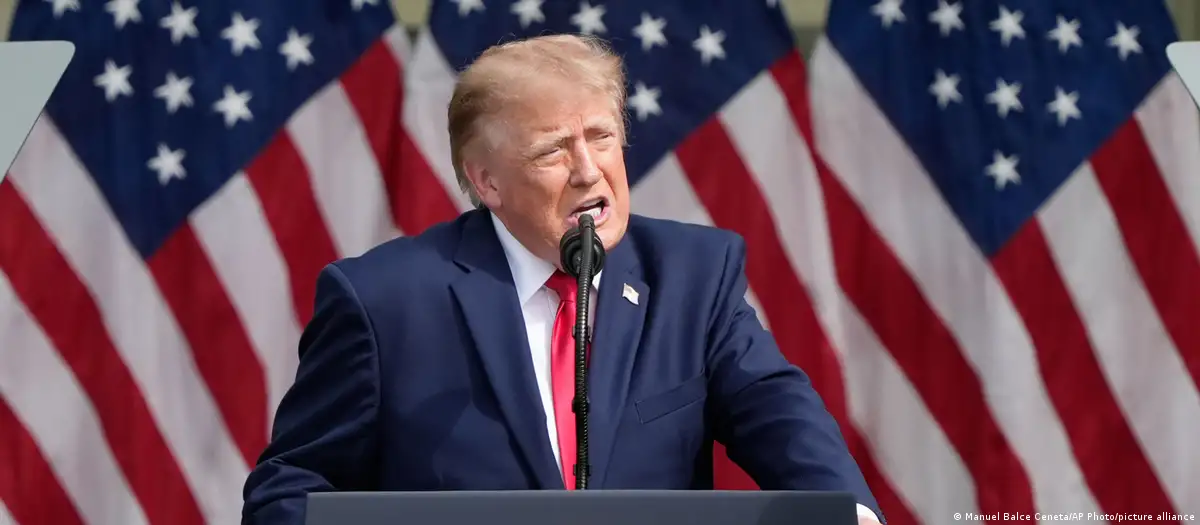
President Donald Trump announced plans to appoint a special envoy for artificial intelligence and establish what he's calling an "AI Force," marking a shift in his administration's approach to the technology even as he continues to resist calls for stricter regulation.
The announcement comes as Trump prepares to host Chinese President Xi Jinping for a state dinner Thursday, where AI governance is expected to be a central topic of discussion between the world's two leading AI powers.
From Dismissal to Engagement
Trump's move represents a notable evolution in his stance. Earlier in September, he dismissed concerns about AI risks as a "HOAX" in an all-caps post on Truth Social, questioning why industry leaders would call for regulations that could harm their own businesses. Several major AI company executives had indeed urged slower development amid safety concerns.
Now, while still promising not to slow industry growth, Trump says his administration will look for "BAD" using existing criminal and civil justice systems. He offered few details about the AI czar's specific duties, powers, or resources, noting only that "High I.Q. individuals" should apply.
The timing may be strategic. California Governor Gavin Newsom announced plans the previous day to establish a state commission regulating Silicon Valley tech companies, including requirements for emergency shut-off switches in AI systems. Multiple states, including some with Republican leadership, are pursuing their own AI regulations.
The China Factor
US policymakers increasingly frame AI development as a competition with China comparable to the Cold War space race. The concern extends beyond economic leadership to national security and global influence.
Dario Amodei, CEO of AI company Anthropic, articulated the dilemma in a recent essay: if the US significantly restrains its AI capabilities expecting China to reciprocate, and China doesn't follow through, the technology could become powerful enough to enable Chinese geopolitical dominance. Any agreement, he argued, requires either ironclad verification or limited enough scope that violations wouldn't pose existential military risks.
China has pursued AI development through coordinated government strategy since 2017, with explicit goals to achieve global AI dominance by 2030. The Chinese Cyberspace Administration enforces regulations ensuring AI systems align with state objectives—a fundamentally different approach from the risk-based frameworks being discussed in the US and implemented in Europe's AI Act.
Potential Cooperation on the Horizon
The US has proposed establishing an information-sharing mechanism about serious AI risks. Treasury Secretary Scott Bessent discussed the proposal with Chinese Vice Premier He Lifeng Sunday in New York, emphasizing the importance of moving "from opaque to more transparency between the number one and the number two AI powers."
Whether the two presidents will commit to such transparency remains uncertain. AI is just one contentious issue alongside trade restrictions on high-performance chips, rare earth elements, and a basic trade agreement extension.
Why It Matters
The appointment of an AI czar signals that even an administration skeptical of regulation recognizes the need for government involvement in artificial intelligence oversight. How the US structures that involvement—balancing innovation with safety while competing with China's state-directed approach—will shape both the technology's development and the global balance of power for decades. The outcome of Thursday's meeting could determine whether the world's two AI superpowers pursue cooperation or intensified competition.
These details were first reported by DW.
This is an original analysis by the Omega editorial team. Source reporting: AI Watch.
Want systems like this working for your business?
Book a Call