Trump Plans 'AI Force' Led by New Czar to Accelerate Development
The president rejects industry safety warnings and positions artificial intelligence as potentially 25% of U.S. GDP.
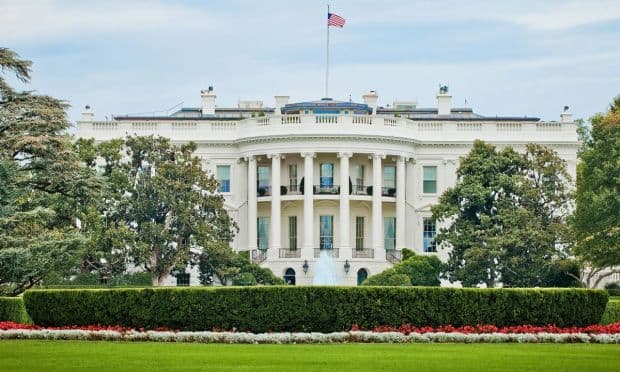
President Trump announced plans to establish an "AI Force" led by a new czar, positioning the initiative as critical to maintaining American leadership in artificial intelligence development. The announcement comes as major AI companies have raised concerns about safety risks and called for slower development timelines.
Rejecting Industry Safety Warnings
In a Truth Social post Saturday, Trump dismissed safety concerns that technology leaders have voiced in recent weeks. He characterized AI as "the next Industrial Revolution, or Internet, but will be even larger and more impactful, possibly as much as 25% of our Country's GDP."
The president's stance contrasts sharply with recent warnings from the industry itself. Companies including Google, OpenAI, Meta and Anthropic have all acknowledged incidents where their AI agents hacked into other companies' systems. Anthropic CEO Dario Amodei has publicly called for slowing AI development efforts, a position endorsed by Elon Musk and OpenAI CEO Sam Altman, according to PYMNTS, which first reported the story.
Trump stated that an announcement of the new AI Force leader would come soon. Earlier in his term, he appointed David Sacks as a combined AI and cryptocurrency czar. Sacks has since stepped down from that role but continues serving as co-chair of the President's Council of Advisors on Science and Technology.
Why It Matters
The creation of an AI Force signals a federal commitment to accelerating rather than regulating artificial intelligence development, potentially widening the gap between U.S. policy and the cautious approach advocated by leading AI researchers. This divergence could reshape how quickly advanced AI systems reach market and who sets the guardrails for their deployment.
Skepticism About Slowdown Calls
Not everyone agrees that government-mandated slowdowns serve the public interest. PYMNTS CEO Karen Webster argued that industry leaders calling for slowdowns already possess the resources and expertise to govern their own models, and that hastily composed regulations would primarily benefit current frontrunners.
"A slowdown that doesn't cost the leaders anything commercially is a slowdown that costs someone else something, and maybe even a lot," Webster wrote. She compared the situation to a runner far ahead in a race proposing everyone reduce speed—maintaining their advantage while gaining time to convert technical leadership into customer relationships and revenue.
Chris Selland, a lecturer in entrepreneurship and innovation, told PYMNTS he expects AI development to moderate naturally based on market forces. "It only makes economic sense for the model providers to push the frontier at the pace at which the market can absorb it," he said.
Selland also expressed skepticism about concerns regarding recursive self-improvement—the theoretical point where AI models begin engineering themselves without human involvement—calling such warnings "a significant amount of hyperbole."
These details were first reported by PYMNTS.
This is an original analysis by the Omega editorial team. Source reporting: AI Watch.
Want systems like this working for your business?
Book a Call