Trump expands data center pledge amid voter backlash on costs
Governors and utilities join voluntary commitment as electricity demand from AI infrastructure sparks bipartisan opposition.
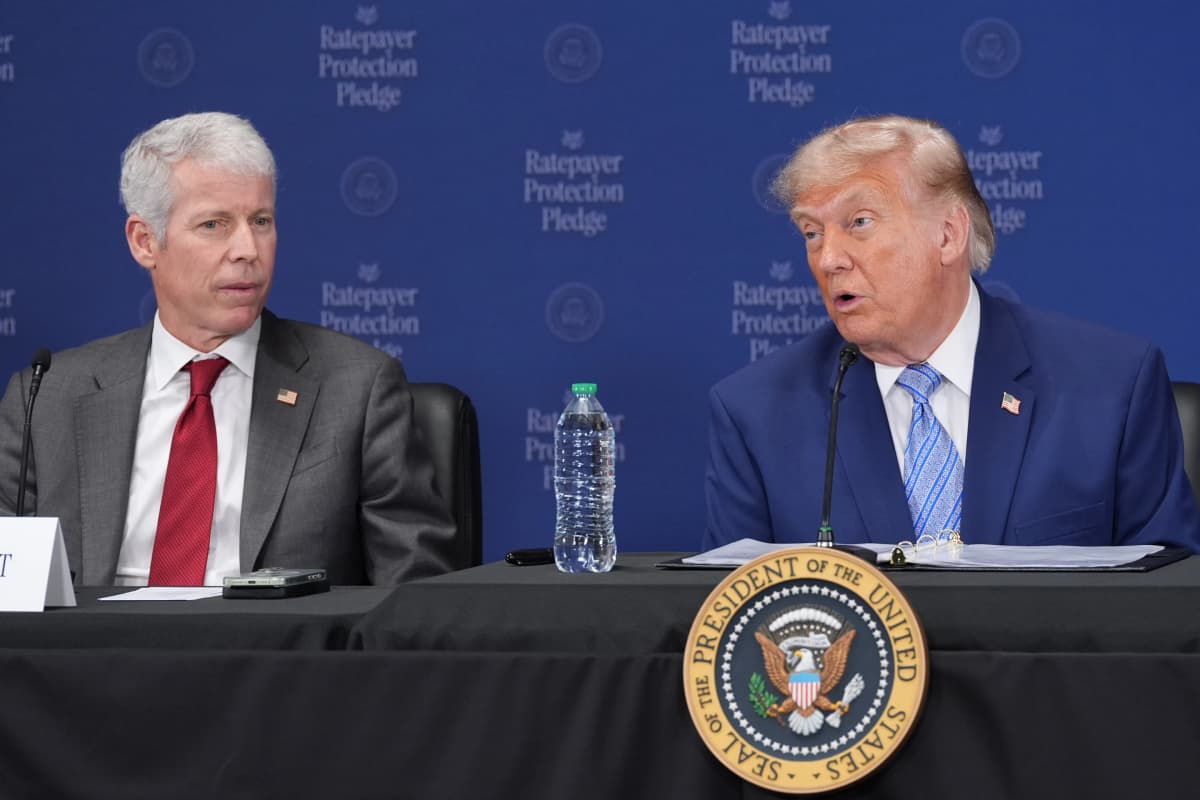
President Donald Trump expanded his administration's voluntary data center pledge on Thursday, adding governors and electricity companies to a commitment originally made with tech firms in March. The move comes as artificial intelligence infrastructure development has become a contentious political issue ahead of the midterm elections.
Why it matters
The rapid expansion of AI data centers is creating a collision between technological ambition and consumer economics. With consulting firm ICF projecting monthly utility bills could rise 15% to 40% by 2030 due to increased electricity demand, voters across party lines are questioning whether their communities should bear the costs of infrastructure that primarily benefits tech billionaires. The political stakes are high enough that governors from both parties are taking action, even as the White House warns that slowing data center construction could cede America's AI advantage to China.
The pledge and its participants
According to the White House, 23 governors and at least 187 companies have now signed the "Ratepayer Protection Pledge," including major utilities like NextEra Energy, Duke Energy, and Pacific Gas & Electric. Data center developers Equinix, Digital Realty, and Prologis are also signatories, alongside tech giants Google, Microsoft, Meta, Oracle, xAI, OpenAI, and Amazon.
The nonbinding commitment aims to ensure consumers won't shoulder costs from the data center build-out. Speaking at the Environmental Protection Agency, Trump promised electricity prices would actually decrease, claiming data centers generating their own power would create a surplus for the grid. However, it remains unclear whether self-generated electricity will offset rising overall demand.
Bipartisan resistance emerges
Opposition to data centers has transcended traditional political divides. New York Governor Kathy Hochul, a Democrat, signed an order banning construction of large server warehouses for one year. Florida Governor Ron DeSantis, a Republican, enacted legislation preventing utilities from passing data center energy costs to residential and small-business customers.
In Texas, a Republican stronghold, frustration with Governor Greg Abbott over data center issues has become a campaign weapon. Democratic gubernatorial nominee Gina Hinojosa criticized the situation as "the Wild West of data centers," noting that "the richest men in the world" own the facilities while communities "foot the bill."
Dozens of state legislatures and utility commissions have moved to require data centers to cover their own electricity costs, including expenses for new power plants and transmission upgrades.
Implementation challenges
Despite the pledge, implementation faces obstacles. The White House has criticized PJM Interconnection, which oversees electric power across 13 states from Virginia to Illinois, for failing to ensure adequate electricity supplies at reasonable prices. White House spokeswoman Taylor Rogers said PJM has not implemented a bipartisan statement of principles and urged the grid operator to reform before "it is too late."
Matthew Freedman, a staff attorney for the Utility Reform Network, pointed out contradictions in corporate behavior: "The same tech companies signing the Ratepayer Protection Pledge are simultaneously opposing efforts at the state level to force them to deliver on their promises," particularly in California.
The House Energy and Commerce Committee has approved bipartisan legislation that would formalize the pledge's principles by requiring data centers to bear costs of grid upgrades.
These details were first reported by the Associated Press.
This is an original analysis by the Omega editorial team. Source reporting: AI Watch.
Want systems like this working for your business?
Book a Call
