Nvidia Claims Near-Zero Water Use in New AI Data Center Systems
Closed-loop cooling technology could address mounting public backlash, but electricity trade-offs remain.
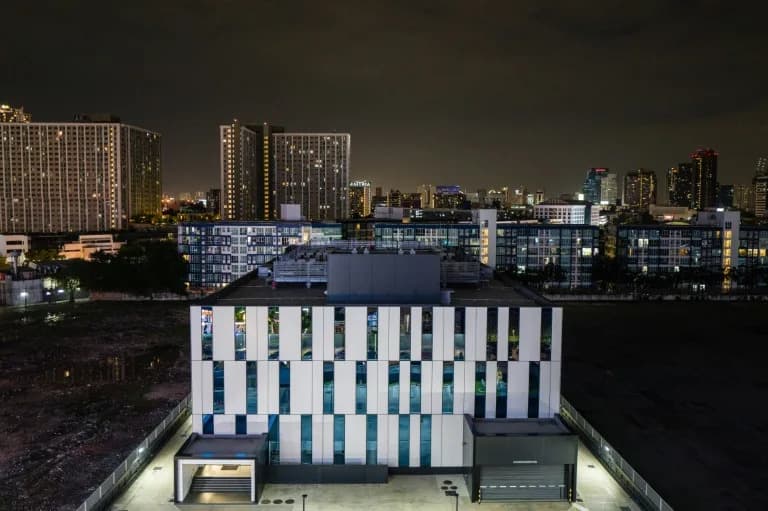
Nvidia's water-saving cooling approach
Nvidia announced in June that its DSX system for designing and managing AI data centers can eliminate water consumption almost entirely at some facilities. The chip giant's approach centers on a closed-loop cooling system that circulates liquid directly through servers, positioning the coolant as close as possible to chips that can exceed 80°C.
The innovation lies in allowing liquid to enter servers at 45°C—significantly warmer than the roughly 32°C standard for most closed-loop systems in 2024, according to the Uptime Institute. By starting with warmer water, Nvidia reduces the need for year-round chilled air. Josh Parker, Nvidia's head of sustainability, said simple fans circulating air are often sufficient, though extreme climates or heat waves still require additional cooling methods.
Why it matters
Data centers face intensifying public opposition across the United States over their resource consumption. Global water use for data center cooling reached 222 billion liters in 2025 and could nearly triple to 644 billion liters by 2030 without intervention, according to consultancy Rystad Energy. As AI workloads expand, tech companies need solutions that address both environmental impact and community concerns—or risk regulatory constraints and site approval delays.
The energy-water trade-off
Reducing water consumption typically increases electricity demand. Andy Masley, an independent researcher covering AI infrastructure, noted a direct trade-off exists between water and energy use for temperature control. Sealed cooling systems still require the liquid to be cooled, usually by blowing air over it—a process that consumes power.
Microsoft, Amazon Web Services, and Meta told AI Watch they also deploy closed-loop systems with no net water loss. Between 2022 and 2025, Microsoft improved water use efficiency by 25 percent and AWS by 37 percent, despite overall water consumption increasing as their data center footprints expanded.
Inconsistent reporting and hidden costs
No industry-wide standard exists for environmental, social, and governance reporting. SpaceX, now a major data center operator after acquiring xAI, has never published an ESG report. Ratings agency MSCI gave SpaceX its lowest ESG score in June.
Shaolei Ren, an engineering professor at the University of California, Riverside, pointed out that water's lower cost compared to electricity gives companies less financial incentive to reduce consumption. Public relations concerns amid growing backlash provide stronger motivation.
Direct water use represents only part of the picture. Electricity generation and manufacturing of chips and servers consume additional water—often twice what a data center uses directly in the United States, according to Minh K. Le, who leads data center research at Rystad.
Upgrading older facilities to newer cooling technology remains expensive, though these legacy sites are smaller and less powerful than new builds, requiring less cooling overall.
These details were first reported by AI Watch.
This is an original analysis by the Omega editorial team. Source reporting: AI Watch.
Want systems like this working for your business?
Book a Call
