Policy
Trump Admin Approved 879,000 AI Chip Exports to China
House committee reveals licenses granted to Alibaba, Tencent, Baidu and BYD despite military company designations.
Key takeaways
- The Trump administration approved 879,000 Nvidia and AMD AI chip exports to China between December 2025 and May 2026.
- Major recipients included Alibaba (75,000 chips), Tencent (150,000), Baidu (43,000), and BYD (4,000).
- Chinese companies requested 3.4 million AI chips total, with roughly 26 percent approved by regulators.
- Some recipients, including Alibaba and Tencent, are designated as Chinese Military Companies by the Department of Defense.
- House Foreign Affairs Committee Chair Brian Mast publicly released the typically confidential export license data.
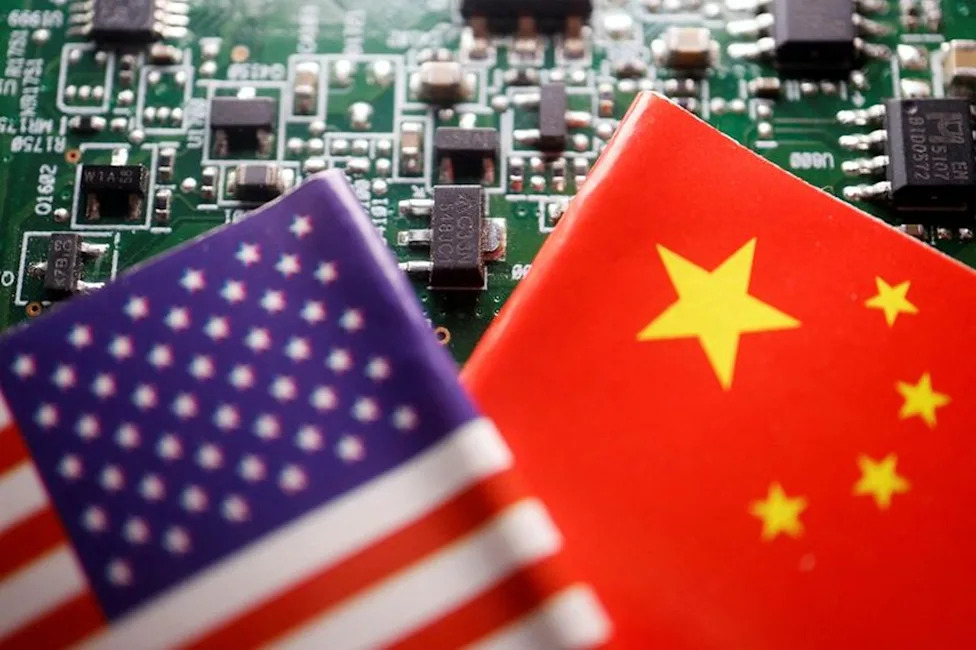
The Trump administration authorized the export of approximately 879,000 advanced artificial intelligence chips manufactured by Nvidia and AMD to Chinese companies during a six-month period spanning December 2025 through May 2026, according to information disclosed by the House Foreign Affairs Committee.
The committee's chair, Brian Mast, exercised authority under the Export Control Reform Act to publicly release export control license application data that had previously remained confidential. The disclosures reveal the scale of semiconductor shipments approved by the Bureau of Industry and Security despite ongoing concerns about technology transfer to China.
Breakdown of Approved Shipments
The approved licenses covered substantial volumes for major Chinese technology firms. Alibaba received authorization for 75,000 semiconductors, while Tencent secured approval for 150,000 chips. Baidu obtained licenses for 43,000 units, and electric vehicle manufacturer BYD was cleared to receive 4,000 advanced AI chips.
These approvals represent a fraction of the total requests submitted. According to the committee's findings, Chinese entities requested licenses for 3.4 million AI chips in total, meaning the Bureau of Industry and Security approved roughly 26 percent of the requested volume.
Military Company Designations
The committee emphasized that some recipients of approved chip exports carry designations as Chinese Military Companies by the Department of Defense. Both Alibaba and Tencent fall into this category, raising questions about the administration's approach to balancing commercial interests with national security considerations.
The Export Control Reform Act grants congressional committees oversight authority over sensitive technology exports. Mast's decision to make this licensing information public represents an unusual exercise of that power, bringing transparency to export decisions that typically remain shielded from public view.
Why it matters
These disclosures illuminate the tension between U.S. semiconductor export restrictions and the commercial realities of the global AI chip market. While policymakers have increasingly focused on limiting China's access to cutting-edge AI capabilities, the approval of nearly 900,000 chips to companies with military ties suggests implementation challenges. For AI companies and chip manufacturers, the revelations underscore the unpredictability of export control enforcement and the political scrutiny surrounding sales to Chinese customers.
The information was first reported by Reuters correspondents Alexandra Alper and Katharine Jackson.