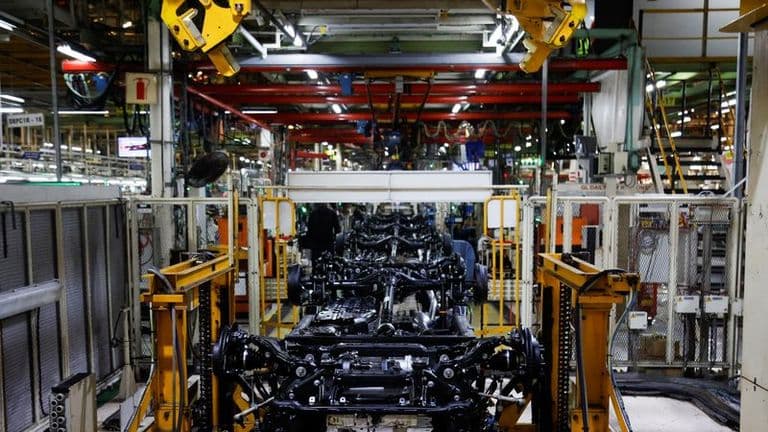
Toyota projects $6.4B annual automation spend starting 2028
The world's largest automaker plans massive robotics deployment across its factories and supplier network to address labor shortages and aging infrastructure.
Toyota plans trillion-yen automation overhaul
Toyota Motor has disclosed that modernizing its global manufacturing footprint could require approximately 1 trillion yen ($6.4 billion) in annual investment beginning in 2028, according to details shared with investors earlier this month.
The estimate encompasses Toyota's own facilities, group companies, and major suppliers. The automaker indicated that roughly 400,000 robots would be needed to drive factory automation across these operations, though it stopped short of committing definitively to the investment or specifying its duration.
The robot count includes both replacements for existing machinery and new installations, spanning industrial robots, automated logistics systems, and future human-robot collaboration capabilities. The scope covers both traditional industrial robots and emerging humanoid designs.
Why it matters
Toyota's automation roadmap signals a fundamental shift in how the world's largest automaker views manufacturing investment. The scale of the projected spending—potentially sustained over multiple years—reflects industrywide pressures from labor shortages and aging production infrastructure. More significantly, analysts see this pivot toward robotics as opening revenue streams beyond vehicle sales, potentially reshaping how investors value automotive manufacturers in an era of manufacturing transformation.
Industry-wide robotics push
Toyota's automation plans align with broader industry trends. Automakers globally are deploying robotics to reduce costs while addressing workforce challenges and outdated facilities.
Analysts at Bernstein noted in a Friday research note that Toyota's increasing emphasis on robotics could shift investor perception of the company's growth potential beyond traditional automobile manufacturing. They anticipate more frequent robotics-related announcements as Toyota accelerates these efforts.
Other major automakers are pursuing similar strategies. Hyundai, which owns humanoid robot manufacturer Boston Dynamics, has announced plans to deploy humanoid robots at its Georgia manufacturing plant starting in 2028.
Strategic implications
The investment discussion with investors represents Toyota's most concrete public disclosure of automation costs to date. While the company presented the figures as estimates tied to specific automation goals rather than approved capital expenditures, the scale underscores the financial commitment required to modernize automotive manufacturing.
The planned deployment would represent one of the largest industrial robotics initiatives in automotive history, potentially establishing new benchmarks for automation density in vehicle manufacturing.
The details were first reported by Reuters.
This is an original analysis by the Omega editorial team. Source reporting: Automation Watch.
Want systems like this working for your business?
Book a Call