Enterprise
Swedish AI Data Center Tests Local Benefits at Scale
EcoDataCenter's expansion from 80MW to 250MW will show whether heat recovery and grid investments deliver lasting value to host communities.
Key takeaways
- EcoDataCenter's new Borlänge campus will have 250MW initial capacity, triple its Falun site's 80MW allocation, with potential expansion to 600MW.
- Heat recovery at Falun currently represents just 0.5% of total energy consumption, with the company acknowledging limits to expanding the system.
- Mistral committed €1.2 billion to the Borlänge project in February 2026, with the first data center scheduled to open in early 2027.
- The company invested 50 million Swedish kronor in grid reinforcement work to strengthen regional electricity infrastructure.
- Measuring actual local benefits requires tracking permanent jobs, supplier contracts, and hourly data on surplus renewable energy absorption.
Swedish operator scales up renewable-powered AI infrastructure
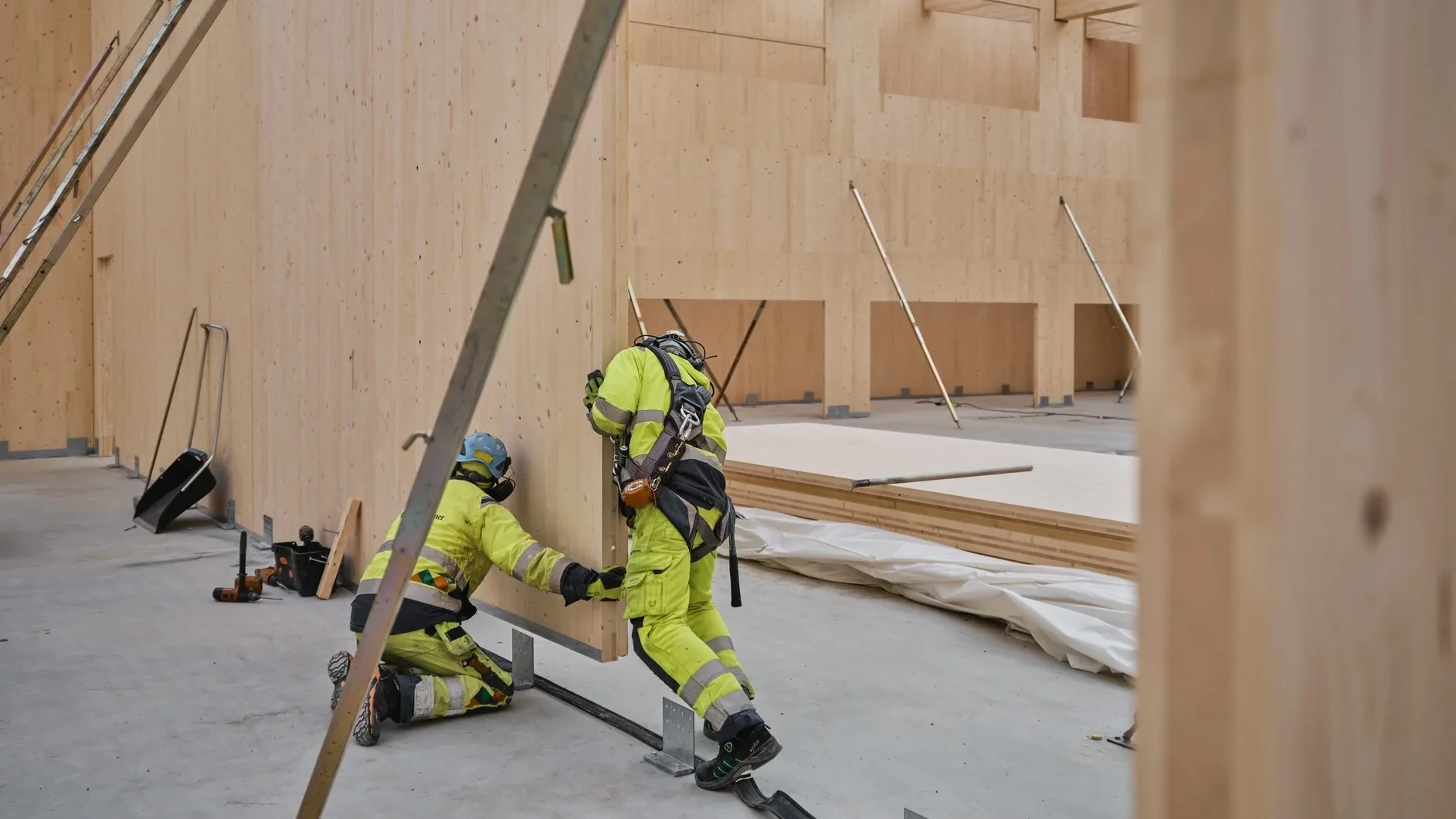
EcoDataCenter is expanding its Swedish operations with a 250MW campus in Borlänge, more than triple the 80MW capacity secured for its existing Falun site. The growth will test whether the company's model of timber construction, renewable energy procurement, and waste heat recovery can deliver proportional local benefits as AI power demands escalate.
The Rundown first reported on the Falun campus in November, highlighting its timber-panel construction and electricity sourced from hydropower and wind. The company's 2025 sustainability report shows purchased electricity split 75% hydro and 25% wind.
Heat recovery remains a small fraction of total consumption
At Falun, EcoDataCenter channels server heat to a neighboring energy plant that uses it for wood pellet drying. The company's 2025 figures show approximately 531,000 kWh of energy reused externally against 112.5 million kWh consumed—roughly 0.5% of total campus energy use.
The company connected a liquid-cooled AI cluster to its heat recovery system in late 2025 and projects increased recovery hours in 2026. Still, EcoDataCenter acknowledges limits to expanding the existing system, with actual reuse dependent on whether recipients can absorb additional heat and the energy required for transport.
Borlänge campus anchored by Mistral partnership
Construction began in September 2025 at the former Kvarnsveden paper mill site in Borlänge, with the first data center scheduled for early 2027 completion. In February 2026, French AI company Mistral announced a €1.2 billion investment commitment for the project. Under the arrangement, EcoDataCenter will design, build, and operate infrastructure while Mistral deploys computing capacity. The companies did not disclose how much of the campus's power allocation Mistral will consume.
The 250MW initial capacity represents potential for 600MW expansion, positioning Borlänge as a significantly larger operation than Falun.
Why it matters
Data centers frequently claim to provide local economic benefits, but measuring those claims requires concrete evidence. The Guardian reported in November that renewable generation around Falun sometimes exceeds grid demand, suggesting data centers could absorb surplus power. However, validating that benefit would require hourly data showing how much electricity would otherwise go unused.
EcoDataCenter's 2022 investment of approximately 50 million Swedish kronor in grid reinforcement with utilities Ellevio and Falu Energi & Vatten offers a more tangible mechanism for local value. The company states this work will strengthen grid stability and increase municipal electricity capacity between Borlänge and Falun.
As the Borlänge campus scales to three times Falun's capacity, the proportional growth of local benefits becomes the critical question. The company classified 58% of its 2025 capital spending as local, though this figure covers all operations. Lasting community value will ultimately depend on permanent employment, training programs, and ongoing supplier contracts beyond the construction phase.
Details were first reported by The Rundown.