States Push Forward on AI Regulation Despite Trump Warning
More than six months after the White House threatened legal action, state legislatures are advancing targeted AI laws focused on children, employment, and catastrophic risk prevention.
State legislatures across the U.S. are accelerating efforts to regulate artificial intelligence, defying a White House executive order issued six months ago that warned states against creating what the administration called a cluttered regulatory landscape.
The push comes as Congress remains gridlocked on federal AI legislation, leaving states to address concerns about how AI systems interact with children, make employment decisions, and pose catastrophic risks. According to Fortune, which first reported these details, more AI bills have been introduced at the state level this year than last, with support from both Republican and Democratic lawmakers.
The Trump Administration's Position
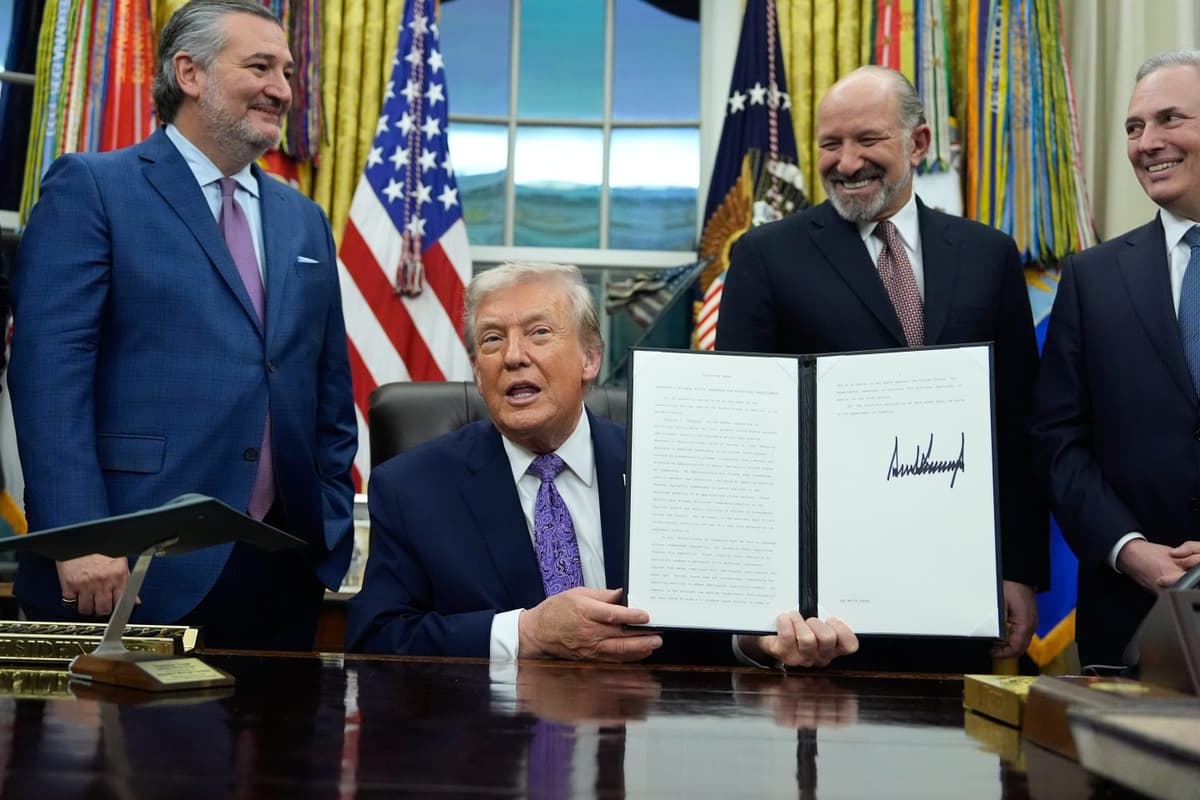
President Trump issued an executive order in late 2025 directing the attorney general to establish a task force to challenge state AI laws deemed more than "minimally burdensome." The order also instructed the Commerce Department to compile a list of problematic state regulations and threatened to withhold federal broadband and grant funding from states with AI laws the administration opposes.
The White House has framed AI as a national and economic security priority, arguing that allowing states to regulate independently risks undermining America's competitive position against China. The administration released a national policy framework urging Congress to preempt state laws that conflict with its regulatory approach.
However, the White House has not yet taken legal action against any state AI law or withheld funding, and it indicated exemptions for state laws preventing fraud and protecting consumers and children.
What States Are Actually Doing
State lawmakers have shifted away from broad AI regulation attempts that governors previously vetoed as too burdensome. Instead, they're pursuing targeted legislation addressing specific use cases.
Illinois has advanced legislation requiring developers of large AI models to establish protocols preventing catastrophic events like biological weapons attacks or large-scale infrastructure failures. The bill adds a novel requirement: independent auditors must verify that developers comply with their own safety policies. The measure received near-unanimous bipartisan support.
Multiple states including Colorado, Connecticut, Idaho, Iowa, Nebraska, and Oregon have enacted laws governing AI chatbot interactions, particularly with minors. Connecticut's new provisions for companion chatbots prohibit interactions with anyone under 18 unless the system is programmed to discourage self-destructive behavior and provides parental controls.
Colorado now requires companies deploying AI in employment, education, housing, or banking to disclose when AI influences decisions about individuals. Connecticut mandates that employers inform workers and job applicants when employment-related AI systems are in use.
California lawmakers are advancing the "No Robo Bosses Act of 2026," which would prohibit employers from using AI alone to fire or discipline workers.
Why It Matters
The divergence between federal inaction and state-level momentum creates a critical test case for AI governance in a federal system. States are filling a regulatory vacuum on issues where Americans encounter AI daily but may lack awareness or protection. The bipartisan nature of many state efforts suggests consensus exists on specific AI risks even as broader federal frameworks remain politically deadlocked. How the Trump administration responds—or doesn't—to this state activity will shape whether the U.S. develops a patchwork of AI regulations or eventually converges on national standards.
Federal Resistance Meets State Independence
Some state efforts have stalled under federal pressure. Utah shelved legislation modeled on New York and California laws after the White House sent lawmakers a one-sentence memo stating it was "categorically opposed" to the bill. Florida's House refused to advance Governor Ron DeSantis's AI "Bill of Rights" legislation, with House Speaker Daniel Perez citing Trump's position that federal government should control AI regulation.
Yet other states have pressed ahead. Illinois state Senator Mary Edly-Allen, the sponsor of that state's catastrophic risk bill, dismissed the Trump administration's threats: "I don't know if you've met Illinois, but we're pretty independent."
Justine Gluck, policy director of the Future of Privacy Forum, noted that Trump's executive order has not discouraged state legislative activity, with Republicans joining Democrats in introducing AI bills this year.
These details were first reported by Fortune.
This is an original analysis by the Omega editorial team. Source reporting: AI Watch.
Want systems like this working for your business?
Book a Call
