Stanford Removes Campus Banners After AI Altered Student Photos
University violated its own policy by using artificial intelligence to change race, gender, and facial features in promotional materials.
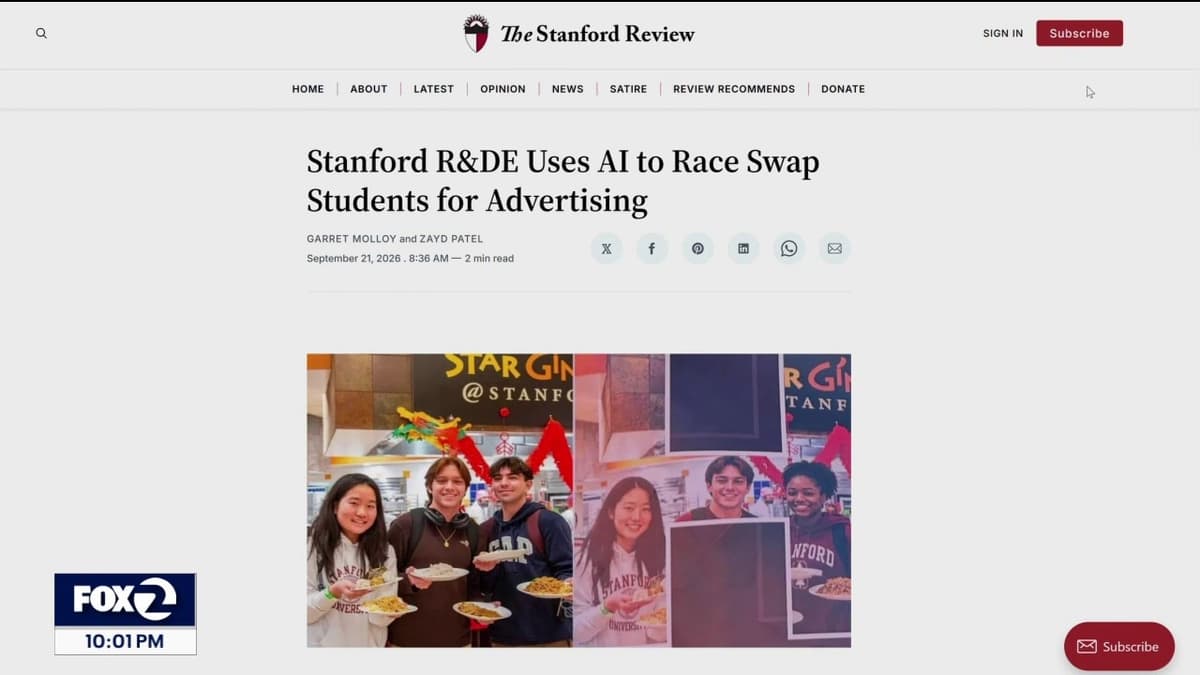
Stanford acknowledges unauthorized AI alterations
Stanford University has taken down promotional banners displayed across campus after confirming that staff used artificial intelligence to alter photographs of students without authorization, directly violating the institution's own policies.
The Stanford Review first reported the incident, publishing comparison images that revealed the extent of the digital manipulation. An original photograph showing three students in a campus dining hall underwent significant AI-driven changes before appearing in promotional materials. One student was completely replaced with an AI-generated person of a different race and gender, while the facial features of the remaining two students were digitally slimmed and modified.
Policy violations and student response
University officials acknowledged that the alterations broke two explicit rules: Stanford's prohibition against using AI to modify images of community members, and requirements to disclose any digital edits made to promotional photographs.
The manipulated images sparked immediate backlash on campus social media. Students questioned both the decision-making process and the message sent by the alterations. One student, identified only as Maggie, characterized the approach as contradictory: "Welcome home. We want you all here, but not you. We are going to switch you out for someone else."
Other students interviewed on campus emphasized the consent issue, noting that changing someone's appearance without permission crosses ethical boundaries. Several pointed to what they viewed as institutional hypocrisy, given that Stanford's student honor code specifically addresses responsible AI use.
Why it matters
This incident highlights the governance challenges universities face as generative AI tools become more accessible to staff and students. Stanford's case demonstrates that even institutions with explicit AI policies can struggle with enforcement and awareness. The episode also raises questions about representation in marketing materials—whether institutions should use AI to manufacture diversity rather than authentically reflecting their actual student populations. As more organizations adopt AI tools for content creation, clear policies and consistent training become essential to prevent similar violations.
University response and next steps
Stanford officials stated they have removed all affected promotional banners from campus. The university announced plans to provide additional AI policy training for staff members and implement more rigorous review procedures for promotional materials before publication.
The incident was first reported by The Stanford Review, which documented the alterations through side-by-side image comparisons.
This is an original analysis by the Omega editorial team. Source reporting: AI Watch.
Want systems like this working for your business?
Book a Call