Texas Democrat Files Criminal Complaint Over AI Attack Ads
State Rep. Vikki Goodwin alleges Lt. Gov. Dan Patrick violated Texas deepfake law with manipulated campaign videos posted within 30 days of voting.
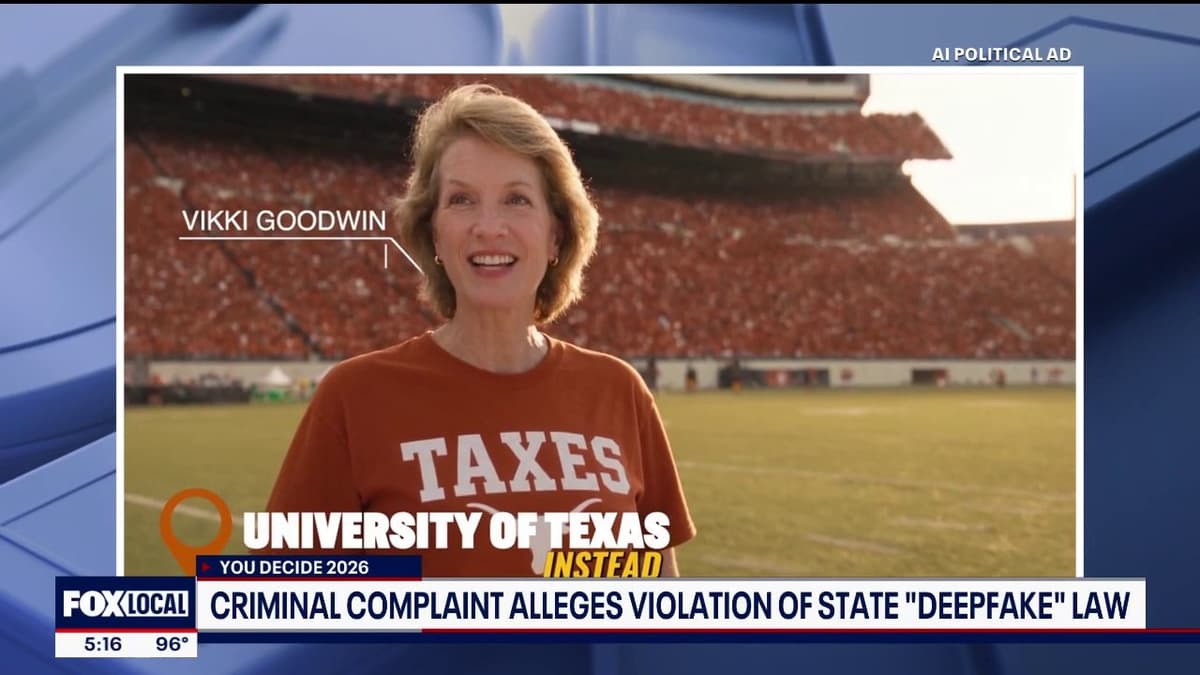
Texas lieutenant governor race tests state's deepfake restrictions
Texas State Rep. Vikki Goodwin has filed a criminal complaint with the Travis County Sheriff's Office accusing Lt. Gov. Dan Patrick of violating state law by publishing AI-manipulated attack ads within 30 days of early voting.
The complaint, filed September 19, targets two political advertisements featuring digitally altered images of Goodwin, the Democratic nominee challenging Patrick for lieutenant governor. The videos depicted Goodwin at a University of Texas football game wearing a burnt orange shirt reading "taxes" instead of "Texas." Similar ads also targeted Democratic candidates James Talarico and Gina Hinojosa.
Goodwin's complaint invokes a 2019 Texas law passed by the Republican-controlled legislature that prohibits publishing deepfake videos in political campaigns within 30 days of an election. The complaint was filed exactly 30 days before early voting begins in Texas.
Why it matters
This case represents one of the first major tests of state-level deepfake regulations as AI-generated content becomes increasingly sophisticated and accessible to political campaigns. The outcome could establish precedent for how election integrity laws apply to synthetic media and whether "parody" defenses hold up against explicit statutory restrictions on manipulated political content.
Patrick's response and legal questions
Patrick has since removed both videos from social media platforms. A spokesperson told the New York Times the content was "obvious parody produced to entertain," suggesting the campaign may argue the ads fall outside the law's scope.
Legal experts note the complaint's success may hinge on technical interpretation of the statute. Rice University political science professor Mark Jones pointed out that the law's enforcement depends on how "election day" is defined—whether it means the first day of early voting or the official election date itself.
"Texas does have a strict law that you can use these AI ads in the final 30 days, but, of course, it requires enforcement, which Goodwin is seeking," Jones said, adding that AI-generated political content "can be effective" in shaping voter perceptions.
In her complaint, Goodwin stated she did not personally do or say the things depicted in the manipulated videos.
The Travis County Sheriff's Office has not publicly commented on the complaint's status or whether an investigation has been opened.
These details were first reported by Fox 4 News and the Texas Tribune.
This is an original analysis by the Omega editorial team. Source reporting: AI Watch.
Want systems like this working for your business?
Book a Call