Stanford Pulls Promo Photo That Used AI to Replace Student
The university violated its own policy by digitally swapping a Hispanic male student for an AI-generated Black female student without disclosure.
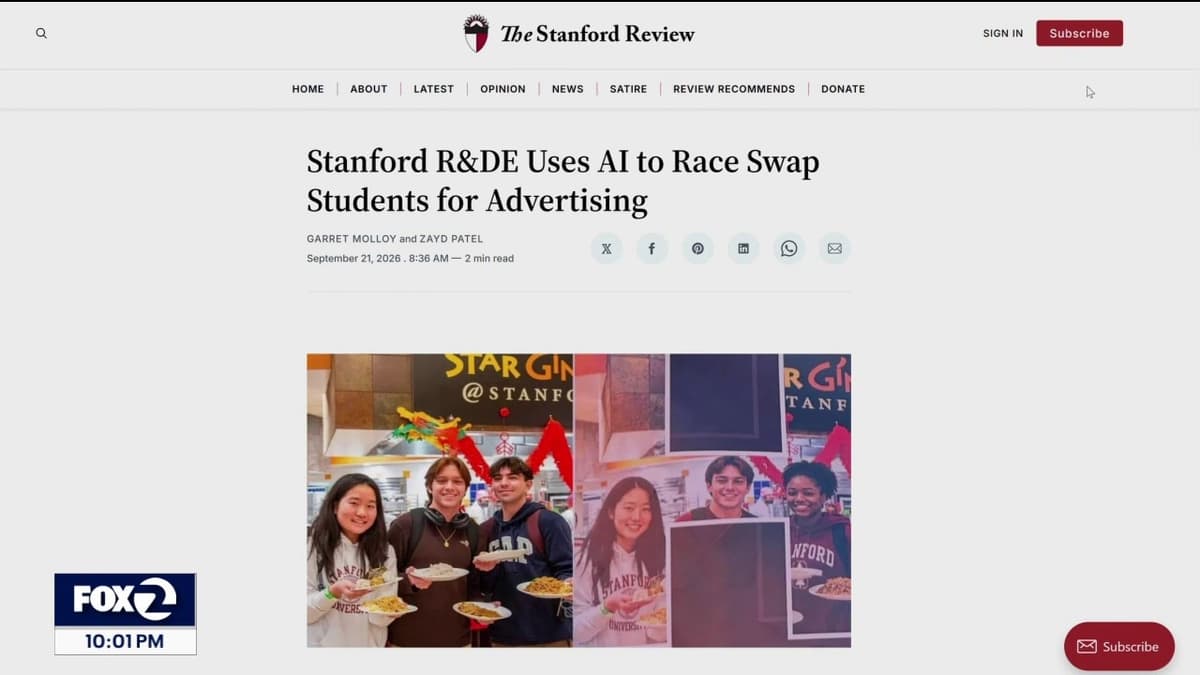
Stanford University has removed a promotional photograph after discovering it violated the institution's policy on artificial intelligence use in imagery.
The photo originally featured a male Hispanic student but was digitally altered to show an AI-generated Black female student instead. The substitution was made without disclosure, directly contravening Stanford's established guidelines.
According to NBC Bay Area, which first reported the details, the university maintains a clear policy prohibiting the use of artificial intelligence in photographs that depict people or events. The policy appears designed to ensure authenticity in institutional communications and prevent misleading representations of campus life.
The university's response
Once the violation came to light, Stanford acted swiftly to pull the image from circulation. University officials also announced plans to implement additional staff training aimed at preventing similar incidents in the future.
The training initiative suggests the breach may have stemmed from insufficient awareness of existing policies rather than intentional misconduct. As AI image-generation tools become more accessible and sophisticated, institutions face growing challenges in maintaining visual authenticity standards.
Why it matters
This incident highlights the tension universities face between leveraging AI capabilities and maintaining authentic representation of their communities. For an institution like Stanford—a technology hub that both develops and studies AI—the violation is particularly notable. It underscores how even organizations with AI expertise must establish clear guardrails and ensure staff understand when and how these tools can be used in official communications. The case also raises questions about diversity representation in marketing materials and whether AI manipulation crosses ethical lines that traditional photo editing might not.
Broader implications for institutional communications
The episode arrives as colleges and universities increasingly grapple with how to incorporate generative AI into their operations while maintaining trust and transparency. Promotional materials that misrepresent campus demographics—whether through traditional staging or AI manipulation—can mislead prospective students and undermine institutional credibility.
Stanford's policy against AI use in photographs depicting people or events represents a conservative approach that prioritizes authenticity over technological convenience. Other institutions will likely watch how Stanford's additional training efforts unfold as they develop their own AI governance frameworks.
The details were first reported by NBC Bay Area.
This is an original analysis by the Omega editorial team. Source reporting: AI Watch.
Want systems like this working for your business?
Book a Call