Software-Defined Manufacturing Beats Humanoid Hype, Says Schneider
Industrial automation executive argues companies should focus on data infrastructure and agentic AI rather than chasing robot form factors.
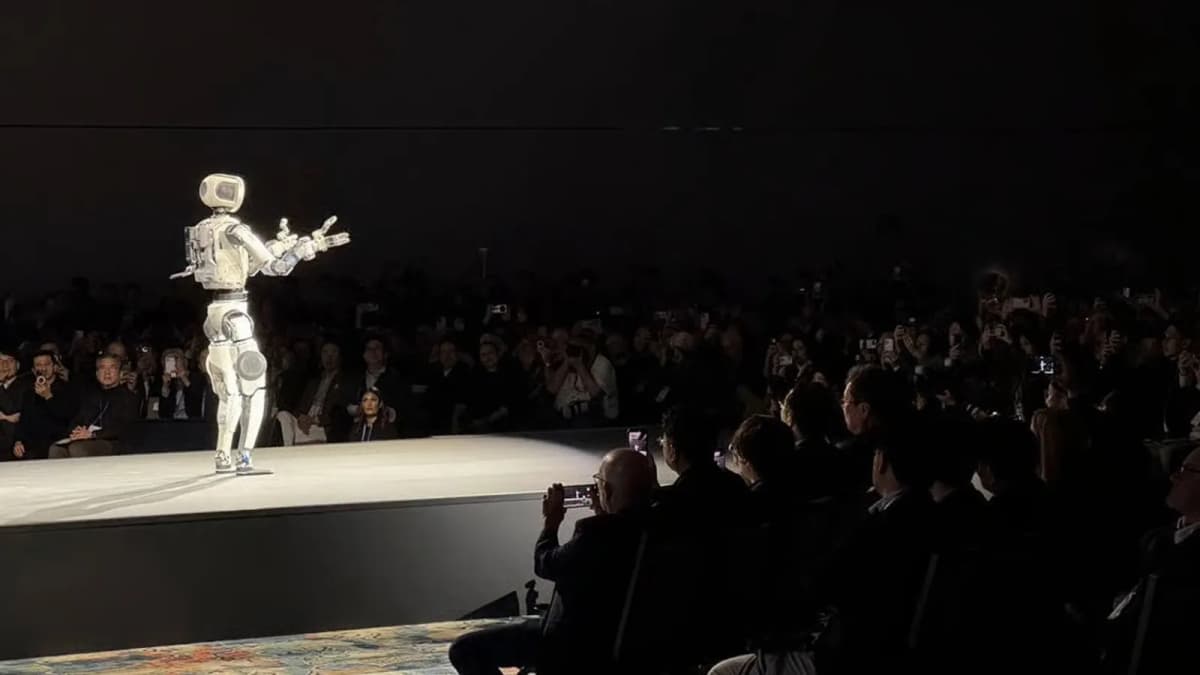
Software infrastructure matters more than robot shape
Manufacturers fixated on humanoid robots are missing the real transformation needed for autonomous operations, according to Andre Marino, senior vice president of industrial automation for North America at Schneider Electric.
In an interview with Manufacturing Dive, Marino argued that humanoids receive disproportionate attention relative to their near-term utility. While recent demonstrations show robots sprinting faster than humans, other trials reveal basic tasks like hammering nails remain challenging. More importantly, the focus on robot form distracts from fundamental questions about which automation approach suits specific manufacturing problems.
"Companies should ask 'do I really need a humanoid to solve my problem' and 'what's the problem that I'm trying to solve?'" Marino said.
The path to autonomous manufacturing
Mmarino, who joined Schneider through its 2010 acquisition of industrial software company SoftBrasil, outlined a different roadmap centered on software-defined automation. This approach decouples programmable logic controllers and hardware from software layers, keeping data contextualized across operations rather than siloed.
The architecture enables what Marino calls "agentic AI" — systems where AI agents make coordinated decisions across manufacturing processes. But reaching that capability requires structured proprietary data, not just publicly available information used to train general-purpose large language models.
"Industrial secrets are not publicly available. So the models are not trained on real data that can react fast enough to a manufacturing process," Marino explained.
Schneider is seeing rapid adoption of software-defined approaches in water infrastructure, petrochemical facilities, and power generation for data centers. The company reports its Lexington, Kentucky smart factory achieved 90% paper reduction and 25% energy cost savings after implementing IoT connectivity and digital supply chain tracking.
Why it matters
The gap between large manufacturers with resources to invest in digital infrastructure and smaller operations risks widening as AI capabilities advance. Marino emphasized that transformation cannot remain limited to the top tier of companies, particularly when software-defined systems also address labor challenges by allowing manufacturers to hire programmers familiar with Python rather than specialized PLC experts. Without broader adoption of data foundations, mid-sized manufacturers may find themselves unable to leverage the next generation of AI-driven automation regardless of which robot form factors eventually prove most useful.
Avoiding perpetual pilots
Mario warned against two common failure modes: endless pilot projects that never scale, and paralysis from fear of new technology. His prescription starts with clearly defining problems before selecting automation tools.
Schneider operates over 150 factories globally and has recognized facilities in Lexington and El Paso, Texas as smart manufacturing showcases. The company manufactures energy management equipment, data center infrastructure, and automation hardware while expanding its software business.
These details were first reported by Manufacturing Dive.
This is an original analysis by the Omega editorial team. Source reporting: Automation Watch.
Want systems like this working for your business?
Book a Call