Singapore Doubles GDP Forecast to 5.5% on AI Surge, Oil Stability
The city-state's Ministry of Trade and Industry now expects growth more than twice its initial projection after strong first-half performance.
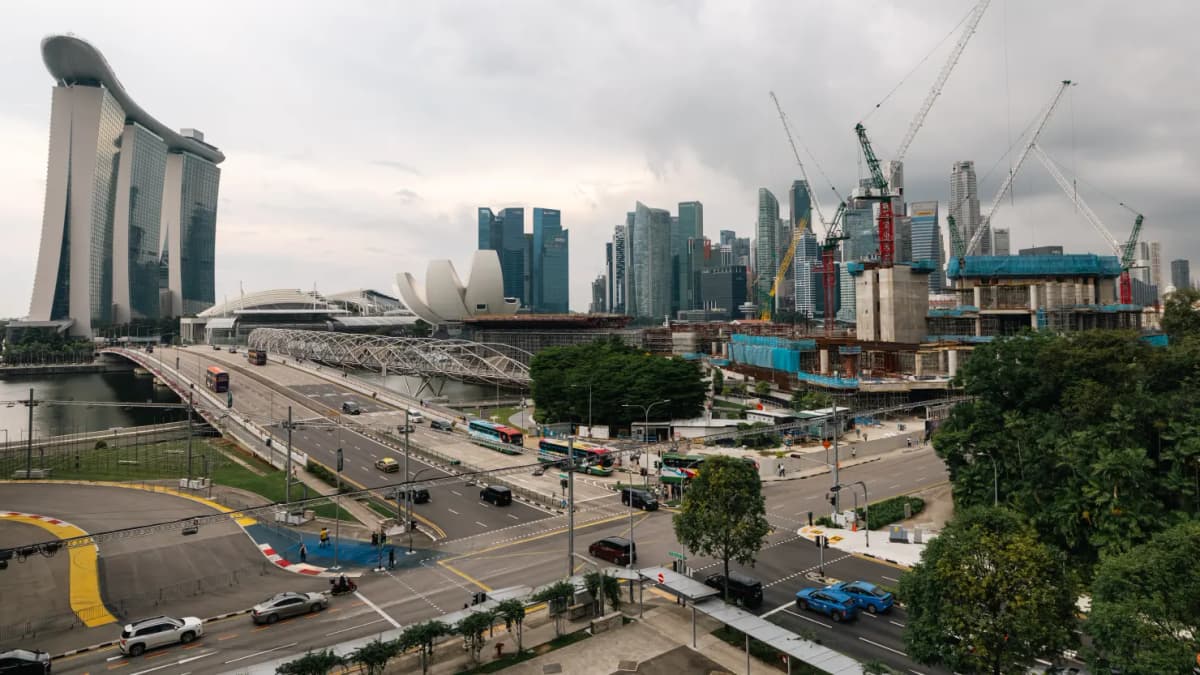
Singapore Raises Growth Outlook Amid AI Momentum
Singapore has sharply increased its economic growth forecast for 2026, now projecting GDP expansion between 4.5% and 5.5%—more than double the lower bound of its previous 2% to 4% estimate. The Ministry of Trade and Industry announced the upgrade Tuesday, pointing to stronger-than-expected first-half results and sustained momentum in AI-related industries and export sectors.
The revision marks the second time this year Singapore has lifted its growth projections. At the beginning of 2026, MTI had forecast growth of just 1% to 3%, reflecting initial caution about global economic conditions.
The announcement accompanied revised second-quarter figures showing the economy expanded 5.9%, slightly above the 5.7% advance estimate. Manufacturing, wholesale trade, and the finance and insurance sectors drove the quarterly performance, according to MTI.
Why it matters
Singapore's upgraded forecast signals that AI-driven economic activity is translating into measurable GDP gains beyond tech hubs like the United States. For multinational companies evaluating regional expansion, the city-state's outperformance suggests its infrastructure and policy environment are successfully capturing value from the AI transition. The growth also provides fiscal headroom that could support further investments in digital infrastructure and talent development.
Oil Prices Stabilize Despite Regional Conflict
MTI noted that economic fallout from the U.S.-Iran conflict has been less severe than initially anticipated. The ministry credited drawdowns of oil inventories and shifts to alternative energy sources with preventing sharp spikes in global energy prices—a key concern for Singapore's import-dependent economy.
The relative stability in energy markets has helped contain inflationary pressures, though the Monetary Authority of Singapore remains vigilant. MAS tightened monetary policy in late July in an unexpected move, citing concerns about rising imported costs from higher fuel and electronic input prices, as well as adverse weather conditions affecting import sources.
Inflation Remains Near Target Range
Singapore's core inflation, which excludes accommodation and transportation, reached 1.6% in June, up from 1.4% in May. The figure sits near the bottom of MAS's 1.5% to 2.5% forecast range for the year. Headline inflation stood at 1.9% in June.
The stronger-than-expected growth may give MAS additional room to manage inflation through monetary policy adjustments without risking economic momentum. The central bank uses exchange rate policy rather than interest rates as its primary tool, adjusting the Singapore dollar's nominal effective exchange rate to influence price stability.
These details were first reported by CNBC.
This is an original analysis by the Omega editorial team. Source reporting: AI Watch.
Want systems like this working for your business?
Book a Call