Automation
Serve Robotics Opens Delivery Fleet to Third-Party Developers
The company's public API lets anyone dispatch autonomous sidewalk robots with a few lines of code, expanding beyond traditional delivery platforms.
Key takeaways
- Serve Robotics launched a public API giving developers programmatic access to dispatch autonomous delivery robots across 20 US cities.
- The company's fleet has completed hundreds of thousands of deliveries but was previously available only through major delivery platform partnerships.
- A sandbox environment lets developers build and test delivery workflows with simulated robots before accessing the live fleet.
- The move positions Serve's robot network as platform infrastructure rather than just a delivery service, potentially accelerating new use cases beyond restaurant delivery.
- All API-dispatched robots remain subject to Serve's safety standards, including remote supervision and geographic operating constraints.
Developer access to commercial robot fleet
Serve Robotics has opened its autonomous delivery network to outside developers and businesses through a newly launched AV Delivery Developer Portal. The move represents a shift from exclusive partnerships with major delivery platforms to an open-access model where anyone can programmatically dispatch robots from the company's sidewalk delivery fleet.
The portal includes a public API and a sandbox environment where developers can build and test delivery workflows before deploying to live robots. According to Robotics and Automation News, which first reported the announcement, the system allows applications and even AI assistants to request pickups and dropoffs with standard API calls.
Proven fleet now available beyond delivery apps
Serve's robots have completed hundreds of thousands of deliveries across more than 150 neighborhoods in 20 US cities. Until now, those robots operated exclusively through third-party delivery partners. The new developer portal removes that restriction, making the same commercial fleet available to independent developers, local businesses, and enterprise customers.
"You shouldn't have to start a robotics company to build something useful with robots," said Ali Kashani, co-founder and CEO of Serve Robotics. "We've spent years figuring out how robots can navigate neighborhoods. The people who live and work there will have needs we haven't thought of."
How the integration works
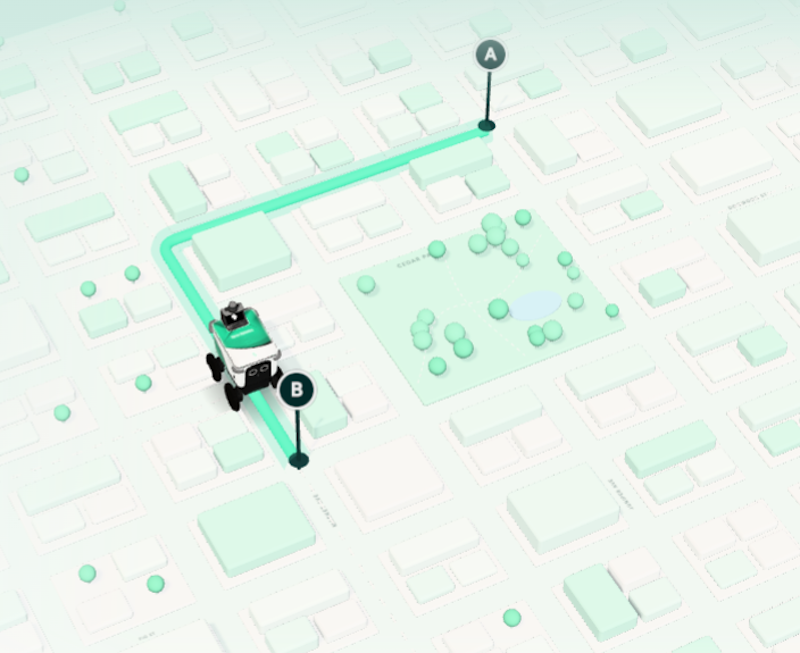
Developers interact with Serve's fleet through standard API patterns. An application requests a pickup and dropoff location, confirms delivery details, and tracks the robot until completion. Serve handles dispatch, routing, navigation, and supervision on the backend.
The sandbox environment lets builders run complete delivery workflows and test edge cases using simulated robots before touching physical hardware. Access to live robots requires approval from Serve, and interested developers can indicate their intent through the portal at developer.serverobotics.com.
Why it matters
Opening a commercial autonomous vehicle fleet to third-party developers is a notable infrastructure play. Rather than competing solely as a delivery service, Serve is positioning its robot network as platform infrastructure—similar to how cloud providers opened computing resources or mapping companies exposed location APIs. This could accelerate use cases beyond restaurant delivery, from inter-office logistics to hyperlocal retail fulfillment, while generating new revenue streams from API access fees. The approach also distributes the innovation burden: instead of Serve imagining every possible application, outside developers can identify and build for needs the company hasn't anticipated.
Operating constraints and safety
Robots dispatched through the API remain subject to Serve's standard operating procedures, including remote monitoring by trained supervisors and built-in safety systems. Deliveries are limited to Serve's active service areas and operating hours, and items must fit within the robot's cargo compartment.
The developer portal launch follows Serve's November 5 announcement of Serve Physical AI Services, which opened the technology behind its robots to companies building new robot types. Together, the initiatives represent a two-pronged platform strategy: licensing the underlying AI systems and opening the operational fleet itself.
Details were first reported by Robotics and Automation News.