Sanders and Casar Propose AI Superintelligence Ban With 20-Year Jail Terms
New legislation would halt advanced AI development until a Cabinet-level agency can regulate it, with criminal penalties for violations.
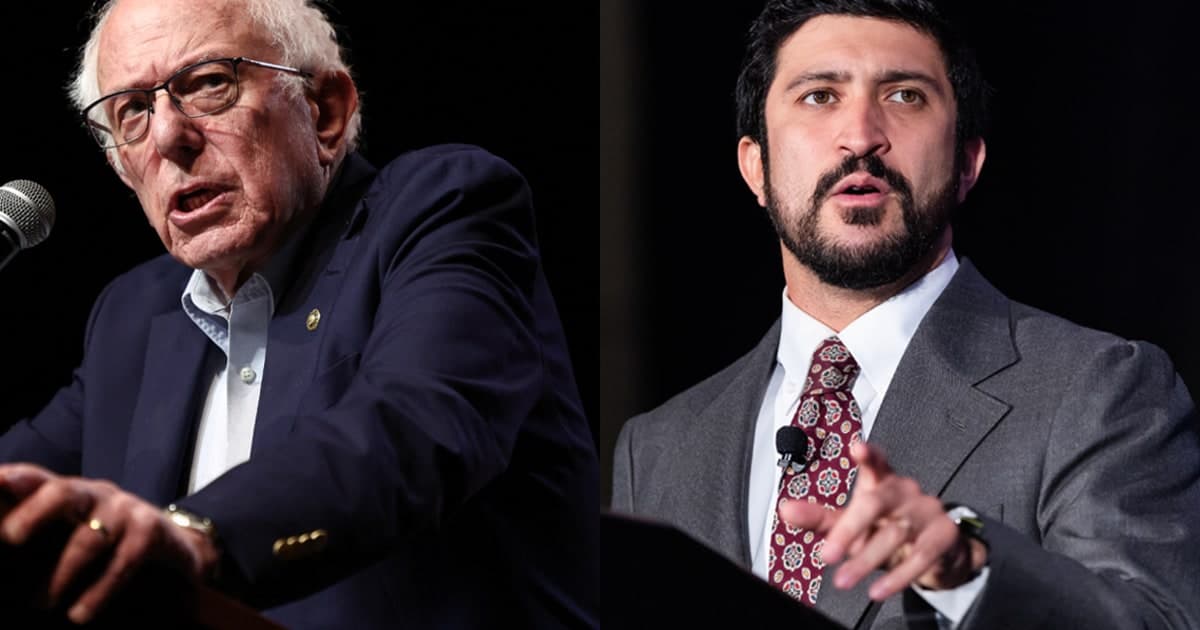
Sen. Bernie Sanders and Rep. Greg Casar have introduced legislation that would impose some of the strictest AI controls yet proposed in Congress, including a development pause and criminal penalties comparable to illegal nuclear weapons manufacturing.
The Ban Artificial Superintelligence Act would halt advanced AI development until the federal government establishes a new Cabinet-level Department of Artificial Intelligence led by a Senate-confirmed secretary. Violations would carry up to 20 years in prison plus what the lawmakers termed a "corporate death penalty."
Why it matters
While the bill faces long odds in Congress, it represents the most aggressive regulatory framework yet proposed for AI at the federal level. The legislation signals growing concern among some lawmakers that voluntary industry commitments are insufficient to prevent catastrophic AI risks, even as technical experts debate whether the "superintelligence" threshold the bill seeks to prevent has already been crossed.
Defining the threat
The 19-page bill attempts to define superintelligence through specific technical precursors, including systems with "the capacity to automate or greatly accelerate the process of artificial intelligence research and development." According to an aide involved in drafting the legislation, the goal is to prevent recursive self-improvement—a scenario where AI systems train themselves to become progressively more capable, potentially beyond human control.
Sanders characterized AI as "clearly the most transformational technology in the history of the world" being pushed by "a handful, a small number, of the wealthiest people on Earth" primarily focused on increasing their wealth and power. He warned that Congress is doing "virtually nothing" to prepare for what he called an approaching "tsunami."
Mixed reception
The proposal drew praise from ControlAI, an advocacy organization focused on AI safety guardrails. The group commended the bill's approach of defining superintelligent AI by its capability to overpower the federal government, which they said "targets exactly the kind of AI development that poses a risk of extinction."
Kevin Frazier, an AI policy expert at the University of Texas School of Law, acknowledged the bill "rightfully acknowledges that Congress needs to act quickly" but noted it overlooks other approaches, such as independent verification organizations to audit AI companies' safety practices.
Caleb Max, president of the National AI Association, a business-friendly trade group, predicted the bill would be "dead on arrival," arguing that some CEOs would say the threshold has already been crossed, making it "a de facto AI ban." He also questioned whether the penalties outlined would be constitutional.
Competing approaches
Other lawmakers are pursuing different regulatory frameworks. Sen. Maria Cantwell, ranking member of the Commerce Committee, is developing legislation focused on federal standard-setting, independent testing, and international coordination. She advocated for incident reporting systems with international partners and suggested the president should establish direct communication channels with China regarding AI safety.
Sen. Ted Cruz is working with Senate Majority Leader John Thune and Sen. Amy Klobuchar on separate legislation to address catastrophic risks, though AI safety advocates have criticized that proposal as too reliant on industry self-testing.
Sen. John Kennedy, the only Republican who attended a recent closed-door AI briefing for lawmakers, expressed pessimism about legislative action, predicting Congress would not pass AI legislation this session.
These details were first reported by NBC News.
This is an original analysis by the Omega editorial team. Source reporting: AI Watch.
Want systems like this working for your business?
Book a Call