Automation
PTC Adds Natural-Language CAD Automation to Onshape Platform
The FeatureScript MCP Server lets engineers generate reusable design tools through AI without recurring costs, deepening workflow automation.
Key takeaways
- PTC's FeatureScript MCP Server enables engineers to create custom CAD features using natural language without recurring AI costs.
- The release is part of a broader AI upgrade cycle across PTC's product portfolio including Creo, Windchill, and ServiceMax.
- Analysts project PTC revenue of $3.3 billion by 2029 but expect earnings to decline from current $1.2 billion levels.
- The tool converts one-time AI interactions into reusable automation, addressing enterprise concerns about unpredictable AI operational costs.
- Execution risk centers on PTC's ability to align multiple AI initiatives and convert workflow integration into revenue growth.
PTC extends AI capabilities into CAD automation
PTC has released the FeatureScript MCP Server for its Onshape CAD and product data management platform, introducing natural-language capabilities that allow engineers to generate, test, and refine custom CAD features through AI-powered large language models.
The tool converts design practices into reusable, shareable automation without requiring ongoing AI interactions or subscription costs. Engineers can describe what they need in plain language, and the system generates code in FeatureScript—Onshape's scripting language—that can be deployed across manufacturing organizations to standardize workflows and extend product data utility.
Part of broader AI integration strategy
The Onshape release follows PTC's June launch of PTC NEXT and a comprehensive AI upgrade cycle spanning its product portfolio, including Creo, Windchill, Arena, Codebeamer, and ServiceMax. According to Simply Wall St, which first reported the details, these coordinated releases demonstrate PTC's strategy to embed AI into routine engineering tasks across its platform ecosystem.
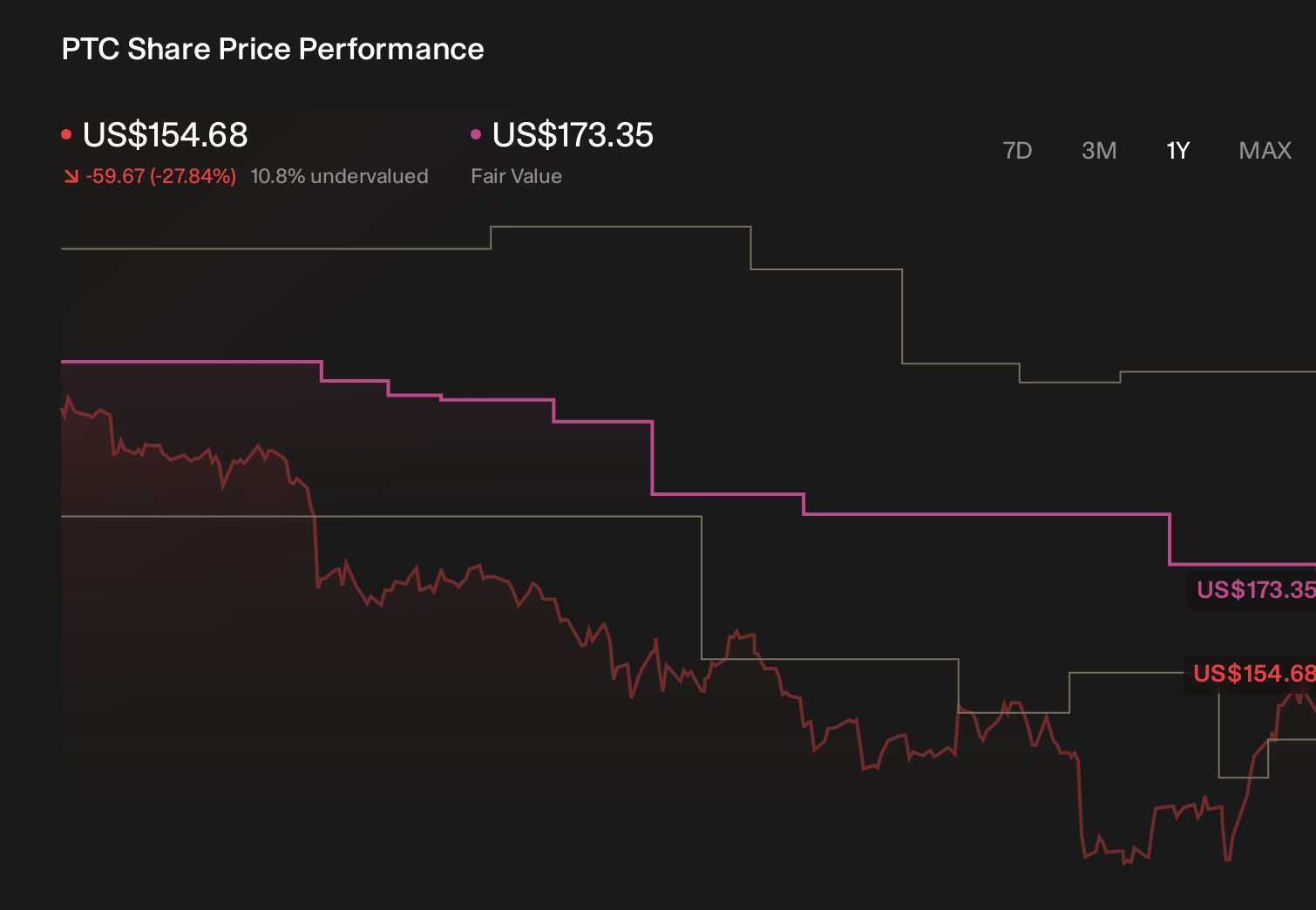
The company's investment narrative centers on whether AI-infused product lifecycle tools can deepen customer workflow integration quickly enough to counter competitive pressures and macroeconomic headwinds. Analyst consensus projects revenue of $3.3 billion and earnings of $904.2 million by 2029, requiring 4.1% annual revenue growth but a decline in earnings from current levels of $1.2 billion.
Why it matters
This release signals a shift from AI as a standalone feature to AI as infrastructure for creating reusable automation. By eliminating recurring costs for AI-generated tools once they're created, PTC addresses a key barrier to enterprise AI adoption: unpredictable operational expenses. The approach could accelerate standardization across distributed engineering teams while reducing the friction of deploying custom workflows at scale.
Execution risk remains central concern
While the technical capability appears sound, Simply Wall St notes that PTC faces execution risk in aligning and monetizing multiple simultaneous AI initiatives across its portfolio. The company's dependence on a few core platforms represents a structural vulnerability if customer adoption doesn't match the pace of product releases.
Analysts had already incorporated aggressive assumptions into their forecasts before this announcement, with the most optimistic projecting revenue near $3.3 billion by 2029. Whether natural-language CAD automation reinforces or challenges those projections will depend on adoption rates and the company's ability to convert workflow depth into pricing power.
The FeatureScript MCP Server is now available to Onshape users. Details of the release were first reported by Simply Wall St.