Physical AI Deployment Accelerates in Industrial Settings
Companies are moving beyond software-only automation to deploy robots in factories, warehouses, and infrastructure amid labor shortages and supply chain pressures.
Industrial Automation Enters New Phase
Artificial intelligence is shifting from purely digital applications into physical environments, according to Automation Watch. While generative AI has reshaped knowledge work and software development, the technology's next frontier involves factories, warehouses, logistics networks, construction sites, and critical infrastructure.
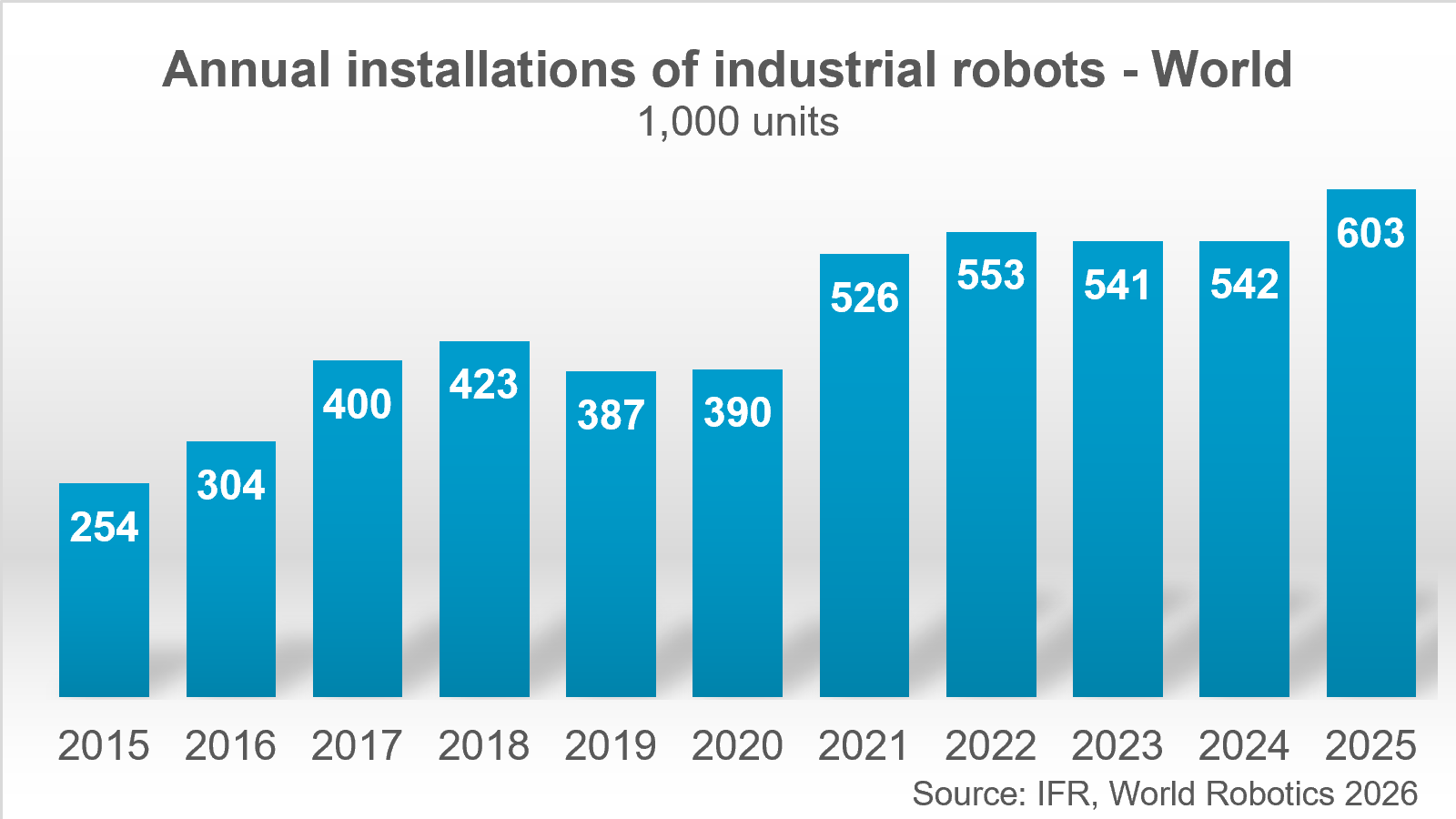
Businesses are increasing investments in robotic systems as they confront persistent labor shortages, rising operational costs, and the need for more resilient supply chains. Rather than wholesale workforce replacement, companies are targeting specific repetitive tasks where efficiency improvements can be quantified and measured.
Why it matters
This transition represents a fundamental shift in how AI creates business value. Software-based AI can scale instantly through cloud deployment, but physical AI requires coordinated investments across hardware manufacturing, maintenance infrastructure, safety certification, and customer support networks. Companies that successfully navigate these operational complexities could establish durable competitive positions in their industries.
Deployment Complexity Exceeds Software AI
Physical AI systems face challenges that don't exist in purely digital environments. Success depends on integrating hardware, sensors, robotics, power systems, and operational data into cohesive systems. Machines must operate safely alongside human workers, adapt to changing conditions, and maintain consistent performance across different locations.
This operational reality makes commercial deployment substantially more complex than launching a cloud-based application. Scaling physical AI requires parallel investments in manufacturing capacity, field service networks, safety testing, and ongoing technical support—all while continuing to refine the underlying software models.
Operational Data Becomes Strategic Asset
While digital AI models train on massive online datasets, physical AI systems improve through direct operational experience. Each completed task, equipment failure, and environmental variation generates data that enhances future performance.
Companies that accumulate large volumes of high-quality operational data may develop sustainable advantages as their robotic systems become progressively more efficient. This creates a potential flywheel effect where early deployment leads to better data, which drives improved performance and justifies further investment.
Broader Infrastructure Opportunity
The expansion of physical AI extends beyond robot manufacturers to encompass a wider industrial ecosystem. Automation projects require sensors, industrial networking equipment, motion control systems, embedded software, advanced semiconductors, battery technology, and machine vision capabilities.
Suppliers of these enabling technologies stand to benefit as automation deployments become more widespread. Many businesses continue prioritizing specialized machines designed for specific applications—warehousing, manufacturing, inspection, and logistics—where return on investment can be demonstrated more quickly than with general-purpose humanoid robots.
These details were first reported by Automation Watch.
This is an original analysis by the Omega editorial team. Source reporting: Automation Watch.
Want systems like this working for your business?
Book a Call