Pentagon AI Push Reshapes Military Training, NTSA Chief Says
Retired Vice Adm. Sean Buck warns that autonomous systems require new focus on cognitive training and ethical decision-making.
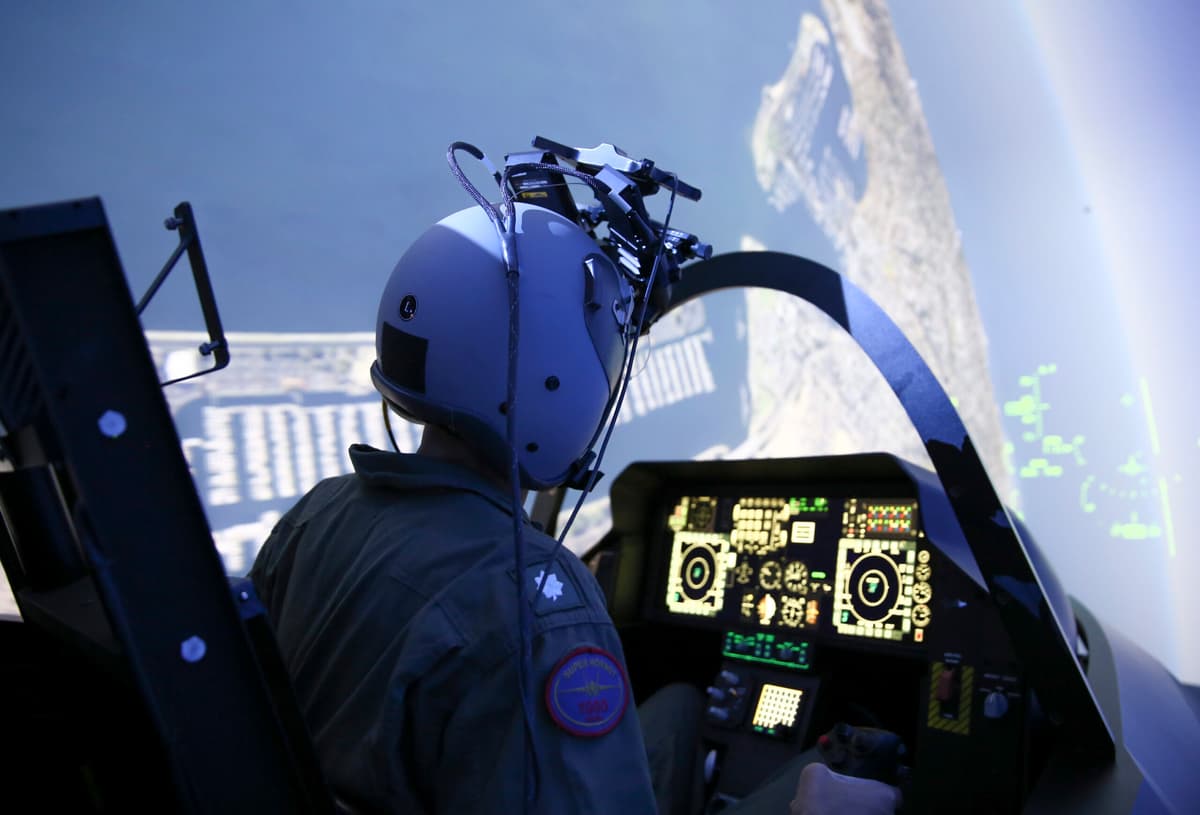
The Pentagon's accelerating adoption of artificial intelligence is fundamentally changing how the military trains personnel, requiring new approaches that extend beyond physical skills to cognitive and ethical decision-making, according to retired Vice Adm. Sean Buck.
As president of the National Training & Simulation Association, Buck oversees efforts to integrate AI into defense training systems while grappling with the psychological implications of increasingly autonomous weapons platforms. In an August interview at MODSIM World, he outlined both the promise and perils of this technological shift.
Why it matters
As military systems become more autonomous, training programs must evolve beyond teaching operators to fly aircraft or fire weapons. The cognitive and ethical dimensions of commanding AI-powered systems that engage adversaries remotely represent uncharted territory for defense training—with implications for both combat effectiveness and the mental health of service members.
Compute power enables high-fidelity simulation
Buck emphasized that modern computing capabilities have transformed what was theoretically possible decades ago into practical reality. The military has understood the value of simulation-based training for 60 to 70 years, he noted, but lacked the processing power to create realistic synthetic environments.
"Now, we're in the day and age of massive compute power, and that's why we can create such high-fidelity, realistic synthetic environments," Buck said. This allows every team member to train more efficiently and effectively than traditional methods permit.
AI shifts focus to decision-making training
When Buck assumed his role in 2024 after 40 years in the U.S. Navy, he initially focused on training physical skills—flying aircraft, operating weapons systems, using equipment. That perspective has evolved.
"Now, what I see is we're using simulation and AI to help with decision-making," he explained. "The cognitive aspect of training a decision-maker is a very, very powerful aspect of training."
This represents a fundamental expansion of training objectives as AI systems increasingly participate in operational decisions, not just vehicle control.
Autonomy creates psychological challenges
Buck expressed particular concern about the human factors involved in operating autonomous systems. While drones are often called "unmanned," he pointed out they require extensive human infrastructure for construction, maintenance, and operation.
As technology enables truly autonomous operation after launch, new questions emerge. "We need to listen to them to see how they're doing emotionally, psychologically as they employ weapon systems against an adversary they don't physically see," Buck said. "That's a heck of a dilemma."
For the foreseeable future, Buck advocates keeping humans in the decision-making loop, particularly as AI moves beyond vehicle operation into tactical choices. He acknowledged skepticism about AI-assisted decision-making in combat scenarios.
Governance and bias concerns
Buck identified significant risks in AI adoption that require active management. Organizations deploying AI on military networks must maintain compliance, govern usage, and establish warning systems when bias exceeds acceptable bounds. Post-deployment assessment to verify beneficial outcomes is equally critical.
The details were first reported by Aerospace America in coverage of the MODSIM World conference.
This is an original analysis by the Omega editorial team. Source reporting: AI Watch.
Want systems like this working for your business?
Book a Call