Startups
Palo Alto Networks Bets $4.5B on Custom AI Training
The cybersecurity giant's acquisition of 18-month-old Applied Compute signals that proprietary data, not generic models, creates competitive advantage.
Key takeaways
- Palo Alto Networks is acquiring 18-month-old Applied Compute for $4.5 billion, betting that AI trained on proprietary data beats generic models.
- Applied Compute was founded by three former OpenAI researchers under 25 who believed the future lies in custom-trained models, not commodity AI.
- The startup reached $100 million in annualized revenue by training open-source models on clients' internal data for companies like DoorDash and Harvey.
- Small businesses can apply the same strategy by compiling customer questions, objections, and feedback to differentiate their AI-generated content.
- As foundation models commoditize, competitive advantage shifts to whoever leverages unique internal knowledge most effectively.
Palo Alto Networks announced Wednesday it will acquire Applied Compute for $4.5 billion in stock, placing a massive bet that the future of enterprise AI lies not in off-the-shelf models but in systems trained on proprietary company knowledge.
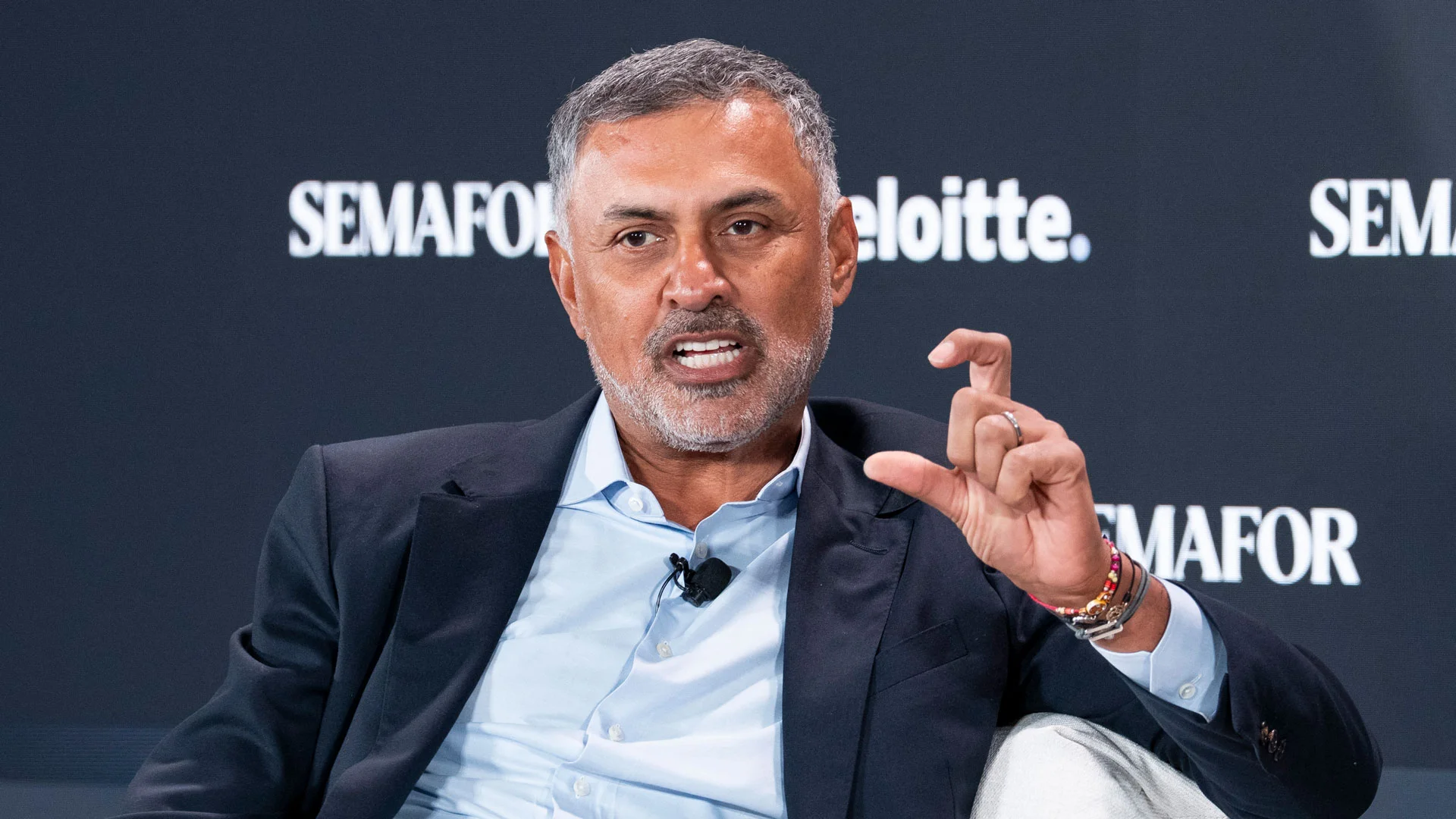
The startup, founded just 18 months ago by three former OpenAI researchers all under 25, had already reached $100 million in annualized revenue. CEO Nikesh Arora told analysts that if the acquisition succeeds, "this will dwarf the abilities that we have in cybersecurity."
Why it matters
This deal validates a thesis that applies far beyond billion-dollar acquisitions: as foundation models become commoditized, competitive advantage shifts to whoever trains AI on unique internal data. Small businesses with customer emails, sales call notes, and support tickets possess the same strategic asset—they just need to use it.
The bet against generic AI
Applied Compute was founded by Yash Patil, Rhythm Garg, and Linden Li after they concluded their worldview diverged from colleagues at OpenAI. According to Forbes, the concept crystallized during a January 2025 ski trip to Lake Tahoe, shortly after Chinese lab DeepSeek released a powerful open-source model. The founders left OpenAI roughly five months later.
Their company takes open-source models and trains them on clients' internal data, then operates those customized systems. DoorDash used the platform to build a model helping restaurants generate accurate menus during onboarding. Legal AI firm Harvey developed an agent that reviews litigation documents and contracts—a project Harvey's head of applied research told Forbes took under two months instead of the typical several months to years.
Patil argues that organizations with valuable proprietary information will protect it. Banks like JPMorgan, he noted, "are never going to give that data away."
The small business parallel
Every company faces the same challenge Applied Compute solves at enterprise scale: when all competitors use identical AI tools for marketing emails and social content, output becomes indistinguishable. The differentiator is the information fed into those tools.
Most businesses already possess untapped knowledge assets—customer questions from phone calls, objections that surface before purchases, language from five-star reviews, cancellation reasons. This information typically remains scattered across individual memories and unsearched inboxes.
The solution requires no research lab. Start by reviewing the last 50 customer emails or call notes and identify recurring phrases. Compile them into a single document alongside pricing and policies. Use that document as the source material whenever AI tools generate customer-facing content.
The Applied Compute acquisition demonstrates that proprietary data creates value whether the company has three employees or three thousand. The principle scales down as effectively as it scales up.
Details of the acquisition were first reported by Forbes and Inc.